Las Fallas and Flowers: Two Days When All of Valencia Walks with Bouquets, Carnations for a Giant Floral Cloak, and How to Give a Bouquet in the Week the Centre Is Closed to Cars
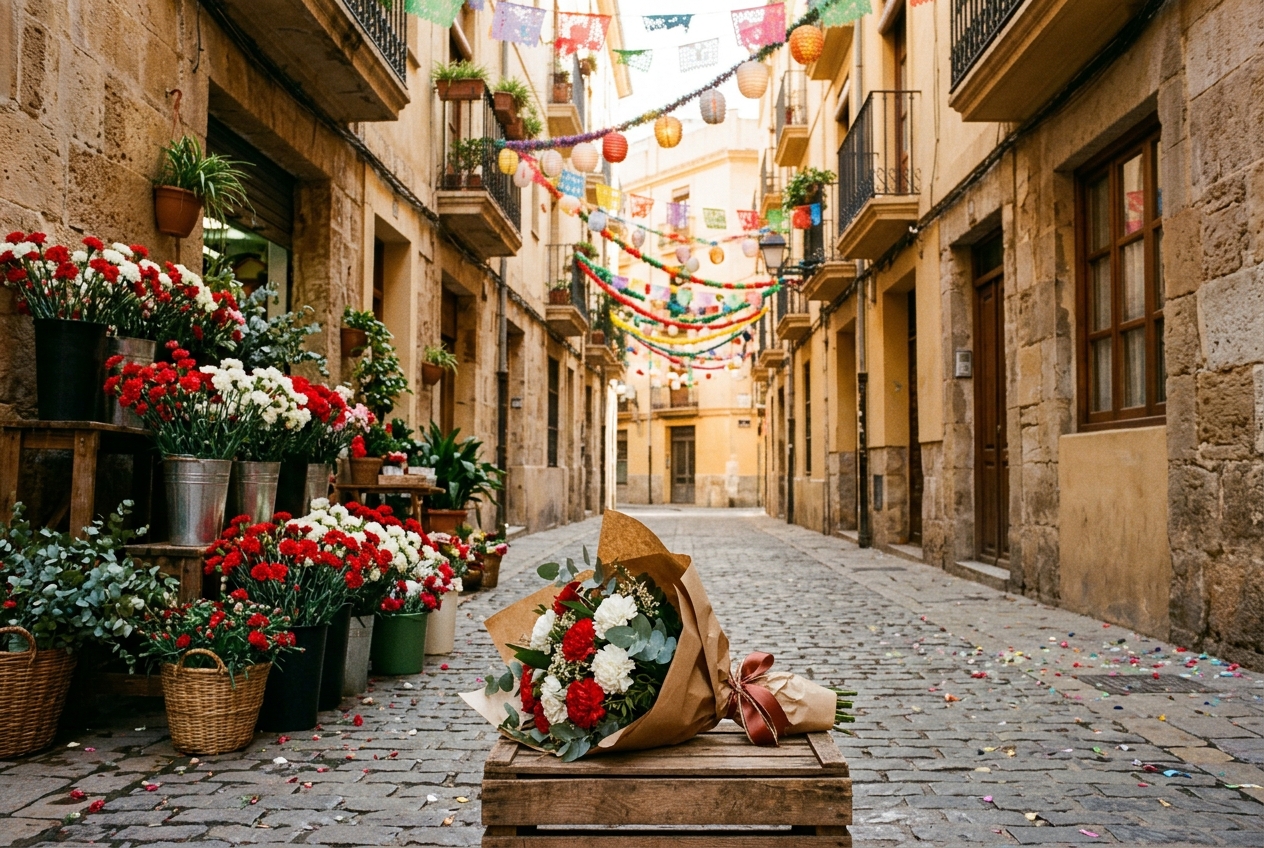
In short: Las Fallas is the only major festival in Europe where flowers are not decoration but the main event. On 17 and 18 March some hundred thousand Valencians — grandmothers, parents, teenagers and babies in pushchairs — put on traditional dress, take bouquets of carnations in their hands and for two days running, from half past three until deep into the night, walk from their neighbourhoods to the main square of the old town. There, on a frame the height of a five-storey building, their bouquets are built into a giant floral cloak: the design is new every year, and the city sees it whole only on the last night, when the last bouquet goes in. This is the Ofrenda — the flower offering to the city, a tradition since 1945 — and for it hundreds of thousands of carnations are brought into Valencia in a week. For anyone who wants to give a bouquet in Valencia in mid-March this means three things: carnations vanish from the shops and double in price; the historic centre is closed to cars from 15 to 19 March, and a bouquet to a hotel by Plaza del Ayuntamiento travels on foot or by bike; and 19 March is not only the night of the Cremà, when the sculptures burn, but also Father's Day, when flowers go to every dad and grandad. Below: the Fallas calendar day by day and where flowers sit in it, who to give what, what to eat, Valencia's other flower dates (the Battle of Flowers in July, the mocadorà on 9 October) and how it connects to Alicante, Barcelona and Madrid. Bouquets delivered across Valencia — €126–243 compact, €250–490 medium, €562–1,778 premium; in Fallas week order 3–5 days ahead.
Catalogue and euro prices are on the flower delivery in Valencia page. Neighbouring cities: Alicante, Barcelona, Madrid, Costa Brava, Mallorca. A general guide to the city — why Valencia is underrated; prices across Spain — how much flowers cost in Barcelona, San Sebastián, Mallorca and Ibiza.
Two Days When All of Valencia Walks with Bouquets
Imagine a city where, for two days, everything else is cancelled. From the morning of 17 March, in flats in Ruzafa, El Carmen, Benimaclet and El Cabanyal, silk dresses handed down from grandmother to granddaughter are being ironed, hair is pinned into three buns and fixed with golden combs, boys have their waistcoats buttoned, toddlers are settled into pushchairs decorated with carnations. Every neighbourhood — a falla, the association that spends the whole year building its sculpture — gathers at the appointed hour outside its casal, and the column sets off: the band in front, then the children, then the adults, each holding a bouquet of carnations tied with a ribbon bearing the name of the quarter.
Two streams cross the whole centre — one through Plaza del Ayuntamiento, the other through Plaza de la Reina — and meet in the main square of the old town, by the Turia fountain. A wooden frame the height of a five-storey building stands there, and people on scaffolding take the bouquets from below and fit them into the frame one by one. By the night of 18 March tens of thousands of bouquets have become a giant floral cloak — a pattern of stars, waves and ribbons that a designer drew a year earlier and that the city sees whole only on the final night. People cry. That is not an exaggeration: ask any Valencian what they feel when their three-year-old daughter hands her bouquet up for the first time, and they will not be able to answer at once.
The tradition dates from 1945. Since 2016 Las Fallas has been UNESCO intangible heritage, and the flower offering is named in the decision as one of the festival's central elements. For first-timers: stand on Calle de la Paz or in Plaza de la Reina around six in the evening on 17 March — and stay until midnight, because leaving will not be possible: the next neighbourhoods are already coming up behind you.
Carnations: Why Them, and How Many Are Needed
The carnation is the official flower of the Ofrenda, and not by chance: it takes the March sun and the night cold, holds its shape on the frame for four days and gives an even colour you can "paint" with. The colours are dictated by the cloak's designer: most often red and white, sometimes pink, sometimes yellow or lilac — the neighbourhoods are told in advance which colour of bouquet to bring so the design comes together. The count runs to hundreds of thousands of stems in two days.
Where they come from: Valencia's carnations are the south of Spain (Murcia, Almería, Chipiona in Cádiz) and Colombia via Madrid and Amsterdam. Valencia's wholesalers buy them for the Ofrenda from February, and by 10 March carnations in the city's ordinary floristerías have either run out or cost double — €1.50–2.50 a stem instead of €0.80–1.20. If you need a bouquet of carnations to take part in the procession, order a week ahead and collect on the 16th; roses, peonies, tulips and lisianthus barely move in price, because they are not carried in the offering.
The Fallas Calendar Day by Day — and Where the Flowers Are
- Last Sunday of February — the Crida. Valencia's head fallera opens the festival from the Serranos Towers before tens of thousands of people. For her and her court — the first official bouquets of the year.
- From 1 March — the mascletà. Every day at 14:00 in Plaza del Ayuntamiento a five-minute rhythmic barrage you feel in your ribcage; by 13:00 the square is full, the hotels around it — Ayre Astoria, Meliá Plaza, One Shot Mercat — are booked months ahead. Delivery to them at that hour is impossible; until 12:30, on foot.
- February – 15 March — the Exposició del Ninot at the Science Museum in the City of Arts: the public votes for the figure to be saved from the fire.
- 15 March — Plantà of the children's fallas, 16 March — Plantà of the big ones. Overnight, sculptures the height of a five-storey building rise at the crossroads. From this moment the centre is closed to cars.
- 17–18 March — the Ofrenda. From 15:30 until deep into the night both days. The main square of the old town, La Paz, Plaza de la Reina — for the procession only.
- Night of 18 March — the Nit del Foc. The year's main fireworks over the Turia gardens by the Alameda, around one in the morning.
- 19 March — Father's Day and the Cremà. In the evening, flowers and gifts for fathers; at 22:00 the children's fallas burn, at midnight the big ones, at one in the morning the municipal falla in Plaza del Ayuntamiento. The year ends in fire; the next begins the following day.
Flowers appear in this calendar three times: bouquets for the head fallera and her court at every official event, the hundreds of thousands of Ofrenda carnations — and 19 March, below.
19 March Is Not Only the Cremà: Father's Day and All the Pepes of Valencia
In Spain Father's Day is 19 March, and Valencia is the only city in the country where it coincides with the climax of its main festival. On the morning of the 19th children bring gifts to their fathers, and in families where the father or grandfather is called José, Pepe or Josep — every third Valencian family of the older generation — the same day is a name day: a bouquet for grandad Pepe and grandmother Josefa is obligatory. The floristerías of Ruzafa and El Carmen work late on the 18th and until lunch on the 19th. If your father, father-in-law or a friend bears one of these names and lives in Valencia, it is the best occasion of the year for a bouquet from abroad: we deliver on the morning of the 19th, before the family leaves to watch the Cremà. Fathers in Valencia are given not roses but arrangements in a basket or box — "Luxury Basket" (€382), "Sunny Mix" (€428) — or flowers together with a box of buñuelos.
How to Deliver a Bouquet in Valencia in Fallas Week, When the Centre Is Closed
From the Plantà on 16 March until the morning of the 20th, Ciutat Vella — the old town inside the ring of Guillem de Castro, Colón and Xàtiva — is closed to cars almost entirely, and during the mascletà and the Ofrenda to pedestrians on certain streets too. What that means for a bouquet:
- Hotels in the centre (Plaza del Ayuntamiento, Plaza de la Reina, La Paz, El Carmen, Mercado de Colón) — delivery on foot or by bike from the edge of the zone; the window is morning until 12:30 or after 17:00, but not during the Ofrenda. Handed to reception by the guest's name; to the room via the concierge.
- Flats in Ruzafa, El Cabanyal, by the City of Arts — normal service: these districts are not closed, only individual streets with fallas.
- The main square of the old town on 17–18 March — delivery impossible; a meeting instead, in Plaza de la Reina before 15:00 or by the Serranos Towers.
- Timing. Orders in Fallas week — 3–5 days ahead; 19 March — a week ahead. A photo of the finished bouquet before the courier leaves, the delivery window before payment.
- Wrapping. In March Valencia is +18…+22 °C by day and +10 °C at night; the bouquet is in no danger, but the streets are thick with firecracker haze and confetti — the courier carries the flowers in a closed box.
Who to Give Flowers to in Fallas, and What: the Fallera, Your Hosts, a Father, Guests
- A fallera — a friend, colleague, friends' daughter walking in the procession. The bouquet of carnations for the offering she will get from her neighbourhood, but a bouquet "for her" after the Ofrenda is rare and therefore precious: the night of the 18th, as she comes down from the square tired and happy — roses or garden roses, "Pink Roses" (€200) or "Tender Kiss" (€180). Nobody gives flowers on the night of the Cremà — everyone is watching the fire.
- Hosts you are staying with. In Fallas week everyone who has moved away comes home to relatives; a bouquet for the lady of the house on the day you arrive is the Valencian norm. Not carnations (the city is full of them) and not chrysanthemums (in Spain they are the flowers of 1 November) — an arrangement in a box, "Spring Box" (€180).
- A father, grandfather, father-in-law on 19 March — a basket or box, as above.
- Partners and clients. Valencian companies congratulate their partners at Fallas rather than in December; arrangements to offices on Colón or in the City of Arts district — a week ahead.
- What to avoid. Odd or even numbers do not matter in Spain; chrysanthemums are for the cemetery only; a bouquet of carnations "as a gift" in Ofrenda week looks like a misunderstanding — they are carried to the square, not given to each other.
What to Eat During Fallas
Fallas smells of gunpowder and hot oil. Buñuelos de calabaza — pumpkin-dough fritters fried in kiosks on every corner of the centre and eaten with thick hot chocolate; the queue at the kiosk in Plaza del Ayuntamiento is part of the ritual. Horchata with fartons — an iced drink of tiger nuts from Alboraya and long sweet buns to dip in it; the oldest horchatería by Plaza de la Reina has been open since the nineteenth century. Paella valenciana — the real one, with chicken, rabbit, green beans and garrofó beans, in El Palmar by the Albufera or in El Cabanyal, at lunch only and, for locals, only on Sundays. Esgarraet — roasted peppers with salt cod, coca de llanda — a lemon sponge for breakfast, arnadí — a pumpkin-and-almond sweet. Lunch for two in Fallas week — €40–60, booked several days ahead.

Heart's Secret

Spring Box
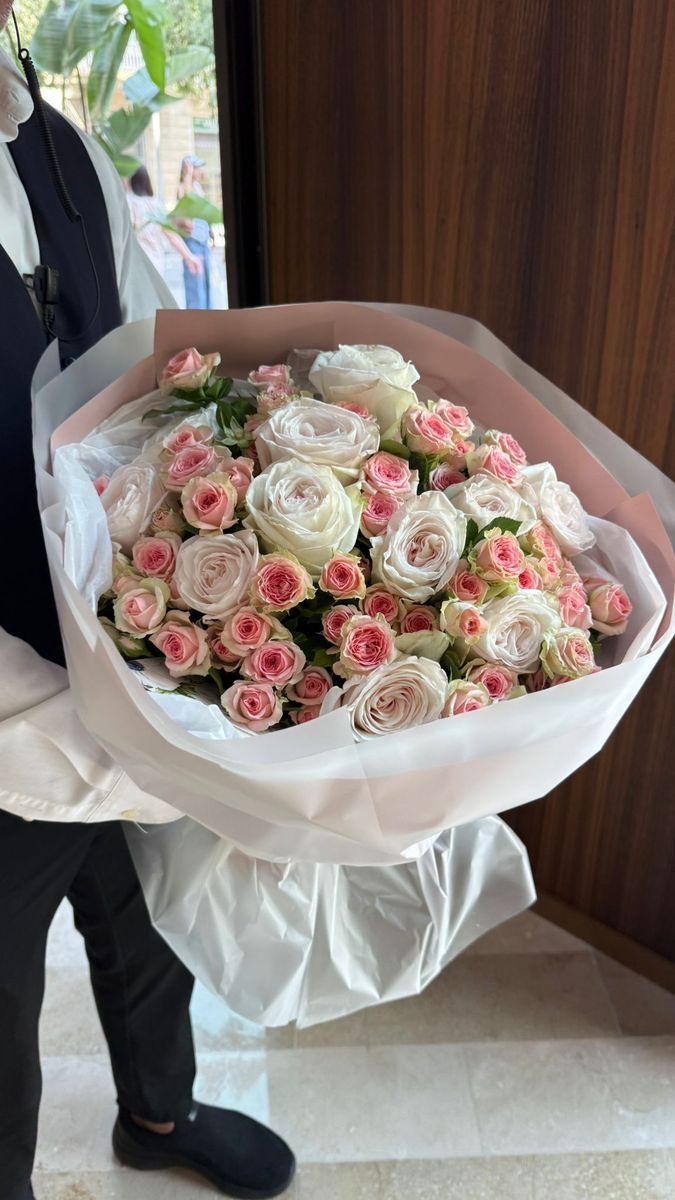
Pink Roses
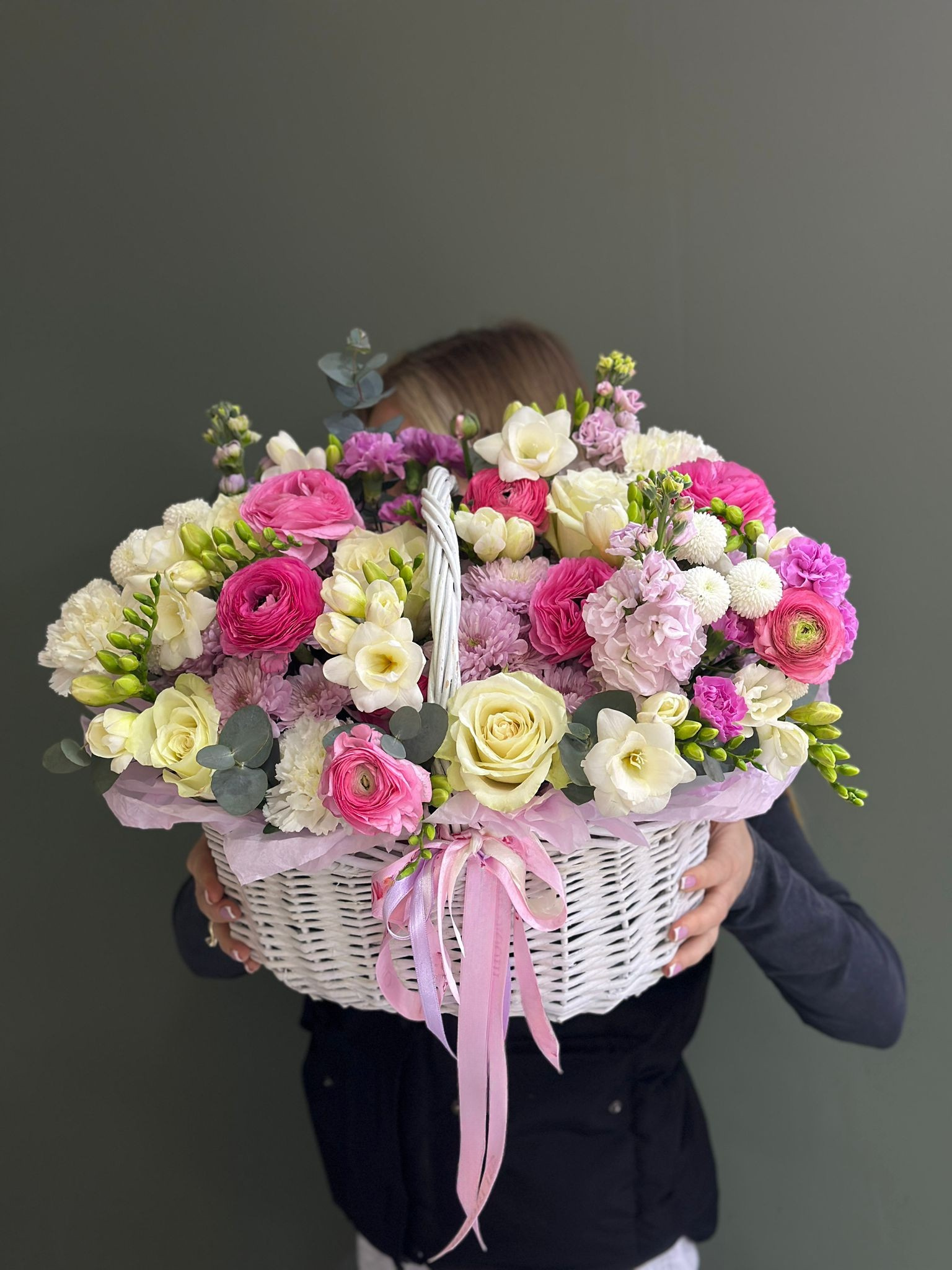
Luxury Basket

Red Velvet

51 Roses
Valencia's Other Flower Days That Tourists Do Not Know
- Late July — the Batalla de Flores. The finale of the July Fair on Paseo de la Alameda: floats covered in flowers roll down the avenue while the public and the participants pelt each other with carnations — tens of thousands of stems in an evening. A tradition since 1891, the only flower battle of this scale in Spain.
- 9 October — the mocadorà. The Day of the Valencian Community and the local lovers' day: a man gives a woman a mocadorà — marzipan fruits and vegetables tied in a silk handkerchief, to which in recent years a bouquet is more and more often added. Valencia's alternative to 14 February — an occasion nobody outside the region knows.
- First Sunday of May — Mother's Day across Spain; in Valencia the streets of Ruzafa smell of peonies that day.
- 23 April — in neighbouring Catalonia the day of the rose and the book, and Valencia's florists work until night that day too.
Flower Prices in Valencia in March: How Fallas Changes the Market
Valencia is one of Spain's most affordable flower cities: closer to Murcia and Almería than Madrid, with the Mercavalència wholesale market and its own flower hall, and with Ruzafa, a district with more floristerías than any other quarter of its size in the country. The usual price of a rose is €2.50–4 a stem, of a bouquet at a neighbourhood floristería €25–45. Fallas changes one thing: carnations double and disappear; everything else costs as usual, but the florists have no hands free — the whole city is preparing the Ofrenda. So in Fallas week the scarce resource is not price but time: order 3–5 days ahead.
Our Valencia catalogue does not change in March: compact bouquets €126–243 ("Elixir of Happiness" €126, "Heart's Secret" €144, "Spring Box" €180, "Pink Roses" €200, "Golden Hour" €238), medium €250–490 ("Luxury Basket" €382, "Sunny Mix" €428, "Red Velvet" €472), premium €562–1,778 ("51 Roses" €563, "Duo 101 Roses" €878, "101 Roses" €1,012, "Royal Ball" €1,778). Delivery across Valencia is included; in Fallas week only the time limits and the walking stretches in the centre apply.
Fallas and the Neighbouring Cities: Where to Go Next on the Flower Map
- Alicante — 170 km south: on the night of 24 June they burn the Hogueras, Fallas' younger sister, with a flower procession of its own the day before. If you missed March — June in Alicante.
- Barcelona — 350 km north: 23 April is the day Catalans give each other a rose and a book; red roses in Barcelona sell by the million that day.
- Madrid — an hour and a half on the AVE; in mid-May, at the city's own festival, Madrid women wear carnations in their hair: the same flower, a different capital.
- Costa Brava — in May Girona holds "Temps de Flors", when the courtyards of the old town are dressed in flowers: Valencia's Ofrenda and Girona's flower courtyards are Spain's two biggest flower weeks.
- Mallorca — seven hours by ferry from the port of Valencia; the January bonfires in Sa Pobla are another festival of fire.
Frequently Asked Questions
What is the Ofrenda at Las Fallas? A two-day flower offering on 17 and 18 March: some hundred thousand Valencians in traditional dress carry bouquets of carnations to the main square of the old town, where they are built into a giant floral cloak the height of a five-storey building. A tradition since 1945, from 15:30 until deep into the night.
Which flowers are carried to the Ofrenda? Carnations — usually red and white, the colour set each year by the cloak's designer. Hundreds of thousands of stems in two days; roses, peonies and tulips are not carried in the offering.
Can a tourist take part in the Ofrenda? Only members of a falla in traditional dress can carry flowers in the procession, but many neighbourhoods accept bouquets from visitors and carry them on your behalf — ask at your neighbourhood's casal a few days ahead.
Does flower delivery work in Valencia during Fallas? Yes, but from 16 to 19 March the centre is closed to cars: to hotels by Plaza del Ayuntamiento and Plaza de la Reina the bouquet is carried on foot, in the morning until 12:30 or after 17:00; to Ruzafa, El Cabanyal and the City of Arts — normal service. Order 3–5 days ahead.
Why are flowers given to fathers in Valencia on 19 March? It is Spain's Father's Day and the name day of every José and Pepe — in Valencia it coincides with the night of the Cremà. Fathers get baskets and arrangements, not roses.
Do flowers get more expensive in Valencia at Fallas? Carnations double, to €1.50–2.50 a stem, and vanish from sale by 10 March. Roses, peonies and tulips cost as usual; the bouquets in our catalogue do not change in price in March.
What to give your hosts in Valencia in Fallas week? An arrangement in a box or basket — not carnations and not chrysanthemums. Chrysanthemums in Spain are the flowers of 1 November.
What is the mocadorà and what do flowers have to do with it? On 9 October, the Day of the Valencian Community, men give women marzipan fruits tied in a silk handkerchief — more and more often with a bouquet. It is Valencia's lovers' day.
What other flower festivals does Valencia have? The Battle of Flowers on the Alameda in late July, the mocadorà on 9 October, Mother's Day on the first Sunday of May — and the Ofrenda in March.
How much does a bouquet with delivery cost in Valencia? Compact €126–243, medium €250–490, premium €562–1,778; delivery across Valencia is included; in Fallas week order 3–5 days ahead, for 19 March a week ahead.
Where Next
- Choose a bouquet — flower catalogue in Valencia: from €126, photo before the courier leaves.
- How delivery works by district and timing — flower delivery in Valencia; what else to see — why Valencia is underrated.
- Neighbours on the map — Alicante, Barcelona, Madrid, Costa Brava, Mallorca; ordering from abroad — how to order flowers from another country.
- Send the hotel or district and the date on WhatsApp — in Fallas week we will name the walking delivery window and send a photo of the bouquet.
See also: flower delivery in Valencia, why Valencia is underrated, flower prices in Spain, how to order flowers from another country.
READER EXCLUSIVE
5% off your first order
Because you came from our blog, enjoy 5% off your first order. Just mention promo code BLOG5 to the florist on WhatsApp.
Popular bouquets in Valencia
Same-day delivery · photo before sending