Festa das Tochas Floridas in the Algarve: How the Town of São Brás de Alportel Turns into a Flower Carpet in One Spring Morning
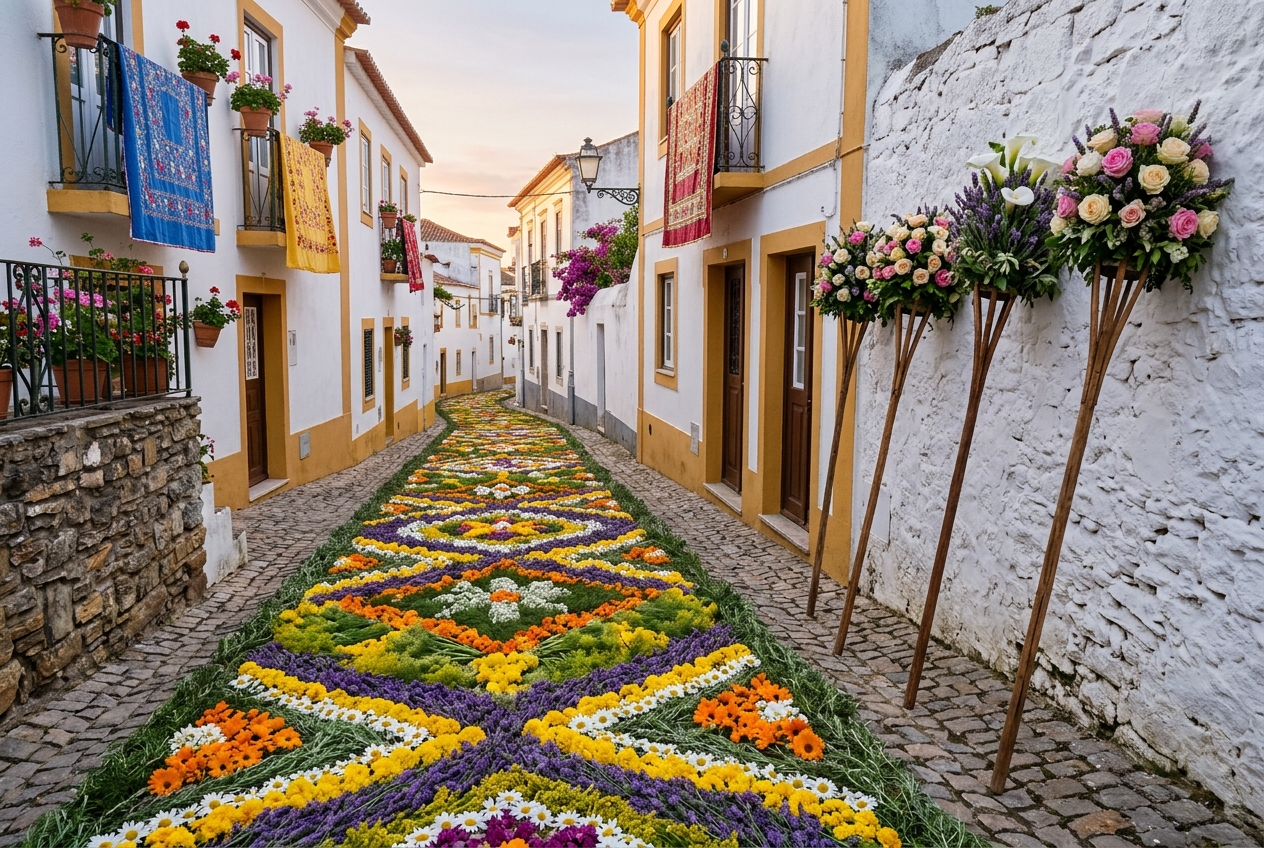
In short: Festa das Tochas Floridas — the 'festival of flower torches' — takes place on one Sunday a year, between late March and late April, in São Brás de Alportel, a quiet cork-country town 17 kilometres north of Faro. The day before, hundreds of residents bring about three tonnes of wild flowers and greenery down from the hills of the Serra do Caldeirão, and from dawn they lay them into a carpet more than a kilometre long through the streets of the old centre, square to square. At noon the men of the town step onto that carpet in suits and ties carrying 'tochas' — two-metre poles topped with dense domes of roses, calla lilies, lavender, daisies and fennel — and walk over the flowers while the whole town watches. The tradition is more than three hundred years old, it is the only one of its kind left in the Algarve, and local memory ties it to the summer of 1596, when townspeople drove off a raiding party with farm tools and then decorated them with flowers. Below: the legend, how a torch is built, how the carpet is made, the flowers of the Serra, the day hour by hour, how to get there from Faro, Albufeira and Lagos, what it means for ordering a bouquet in the Algarve, and fourteen answers to frequent questions.
Bouquets delivered across the region — on the flower delivery in the Algarve page: Faro, Albufeira, Lagos, Vilamoura, Portimão. The capital — flower delivery in Lisbon. Prices in euros.
What Festa das Tochas Floridas Is and Where São Brás de Alportel Lies
São Brás de Alportel is a town of ten thousand people at the foot of the Serra do Caldeirão, where the resort beaches end and the cork-oak woods begin. A century ago it was the capital of Portuguese cork: bark left here for the ports of Faro and Lisbon, and half the surnames in town are still tied to the trade. Tourists rarely come — which is exactly why, once a year, the town surprises more than any resort.
Festa das Tochas Floridas means, literally, 'festival of flower torches'. On one spring Sunday a year the streets of the old centre are covered with an unbroken carpet of flowers, and the men of the town walk over it with 'tochas' — poles topped with bouquets. The date moves: the festival follows the spring calendar and falls on a different Sunday each year between late March and late April; the town announces it months ahead. Several Algarve villages once had similar festivals, but only the one in São Brás has survived — and it is listed in Portugal's national inventory of intangible cultural heritage.
The Legend of 1596: How Farm Tools Became Flower Torches
The festival has a documented history going back to the seventeenth century — and a legend that São Brás tells more readily. In July 1596 an English raiding force landed on the Algarve coast and sacked Faro; some of the soldiers pushed inland towards the hills. The people of São Brás, so the story goes, met them with whatever was to hand: pitchforks, scythes, hoes, poles — and drove them off. When the danger had passed, they decorated their improvised 'spears' with flowers from the hills and walked through the streets with them — a sign that nothing threatened the town any more.
Historians treat the story with caution, but for the festival itself it matters more than any archive: the tocha is that very 'tool turned flower'. The pole is held upright, the way you would hold a pitchfork, and the floral 'head' on top is what replaced the iron. That is why the torches are carried by men, and why they wear suits: this is not a carnival but a solemn file.
How a Flower Torch (Tocha) Is Built: Structure, Flowers, Makers
A tocha is a family's handwork, and every family has its secrets. The base is a pole of cane or wood, one and a half to over two metres tall. A frame is fixed on top: once wire and twigs, today often floral foam in netting so the flowers drink and do not droop by noon. Flowers are set into the frame densely, with no gaps, to form a ball or dome 30–50 centimetres across.
What goes in depends on the year and on taste. The classics are roses, calla lilies, carnations, daisies and lilies; the compulsory Algarve accent is wild lavender (rosmaninho), rosemary, fennel, flowering gorse and sprigs of orange blossom if it is still holding. Lower down, the pole is wound with greenery and ribbons. Tochas are made on Saturday evening and through the night into Sunday — the flowers must be as fresh as possible. In recent years the town has run the Concurso de Tochas Floridas — a competition for the most beautiful torch: the jury judges composition, freshness and how much local plant material is used. Winners are announced after the parade.
Three Tonnes of Flowers in One Night: How the Carpet Is Born
The carpet is the festival's main spectacle, and it has its own technique. All week before the Sunday, volunteers — from schoolchildren to pensioners — drive into the Serra do Caldeirão and the surrounding fields to gather material. It is brought to sheds and courtyards, sorted by colour, the foliage chopped, the petals stripped. The town council and the São Brás cultural association coordinate who does which street, but the design of each section is the residents' own: geometry, flowers, cork oaks, almond trees, ocean waves.
| Material | Where it comes from | Role in the carpet |
|---|---|---|
| Wild lavender (rosmaninho) | Hills of the Serra do Caldeirão | Purple outlines and background, the festival's signature scent |
| Yellow gorse and broom | Roadsides and slopes | Bright yellow fields of the design |
| Calendula, daisies, chamomile | Fields and gardens around town | Orange and white elements |
| Rosemary, fennel, myrtle | The Serra and kitchen gardens | Green background, chopped foliage |
| Rose and carnation petals | Garden and bought flowers | Red and pink details at the centre of compositions |
| Orange and almond blossom | Orchards around São Brás | White accents when the season allows |
| Cork bark and granules | Local workshops | Brown outlines, 'frames' for sections |
On Saturday evening the design is chalked onto the asphalt and cobbles. From four or five on Sunday morning the laying begins: first the outlines in bark and lavender, then the fields are filled in. By ten or eleven the carpet, over a kilometre long, is finished, and the balconies along the route are already hung with traditional bedspreads — colchas — the way great-grandmothers decorated streets for celebrations. Nobody walks on the carpet before the parade.
The Festival Day Hour by Hour: What a Visitor Sees
- 05:00–10:30. The carpet is laid. You can stand at the edge, watch and talk to the makers — many work as families and happily show their sketches.
- 09:00–11:00. The tochas gather on the main square: hundreds of flower domes on poles — the best time for photographs, while the flowers are in shade.
- Around noon. The parade begins. The men with tochas form two columns and walk over the carpet; at several points along the route, on the leader's call, they raise the torches above their heads all at once and answer him in chorus — the moment the whole town gathers on pavements and balconies for.
- After the parade. The carpet is opened to everyone: families walk over it, children gather petals, and the tochas are lined up along the streets. The competition winners are announced.
- Afternoon. Folk music on the squares, local almond and fig sweets, a craft fair with cork and ceramics. By evening the town sweeps the streets and the flowers go to compost — until next spring.
Which Algarve Flowers Are Gathered for the Festival and Where They Grow
The festival works because the whole Algarve blooms in spring. Almond trees start in January–February and have finished by March — which is why their white petals make it into the carpet only in some years. The orange groves around São Brás and Silves flower in March–April: small white blossoms with a powerful scent, a rare prize for a tocha. Wild lavender covers the slopes of the Serra in purple from March to May, yellow gorse at the same time. The fields near the coast are full of daisies, calendula and poppies.
Among garden flowers, the Algarve is strong in roses and calla lilies: the region is warm, and callas grow by every house near water, so by spring there are plenty and they are inexpensive. Florists from Faro and Loulé bring in carnations and lilies for the festival — used in tochas for density and colour. These are the same flowers that will be in your bouquet if you order one in the Algarve in spring.
How to Visit: Dates, Roads, Parking, Etiquette
- Date. One Sunday between late March and late April; check the exact day on the São Brás de Alportel municipality website or regional listings a month ahead. Arrive by 9–10 in the morning to see both the laying and the gathering of the tochas.
- Getting there. From Faro — 17 km along the N2 (the famous road across the whole of Portugal starts right here), 25 minutes by car; from Albufeira — 45 minutes via the A22 and N2; from Vilamoura — 35 minutes; from Lagos and Portimão — just over an hour. Sunday public transport is sparse — a car or taxi is better.
- Parking. The centre is closed from the night before; leave the car on the approaches to town and walk 10–15 minutes — that is what the locals do.
- Etiquette. Do not step on the carpet before the parade, do not touch the tochas — that is someone's night of work. Photograph anything; balcony owners gladly let you shoot their colchas. Any clothes, but the day is almost always sunny: a hat and water help.
- With children. Excellent: after the parade the carpet is handed over to the children, and gathering petals is part of the festival.
Algarve Flowers All Year Round: What It Means for Ordering a Bouquet
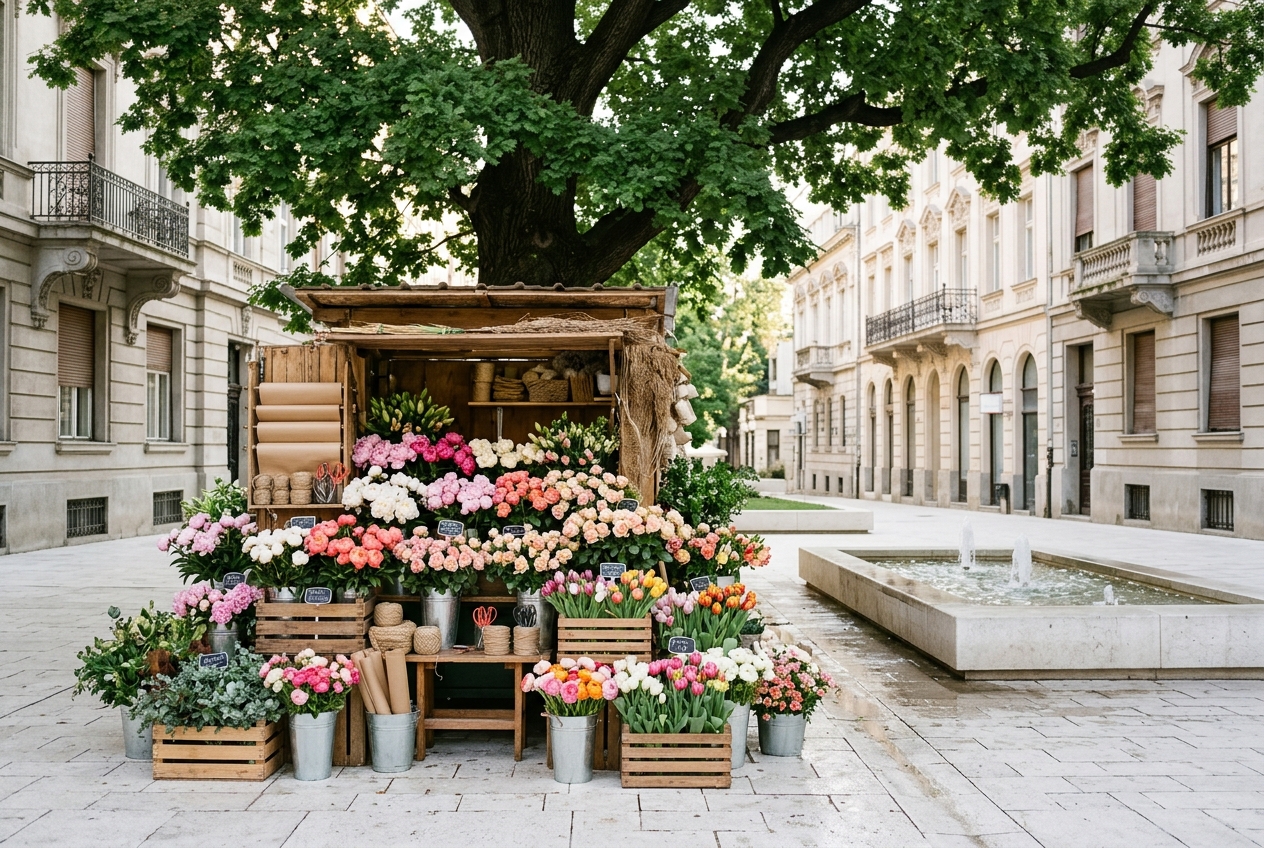
São Brás shows the essential thing about the Algarve: flowers here are not scarce but part of the landscape. For anyone ordering a bouquet into the region from another country, that means roses, callas, lilies and greenery are available all year, and in spring lavender, orange blossom and wild herbs join them — a florist will happily weave them in if you ask for 'like at the festival'. The region is compact: Faro to Lagos is an hour and a half, and same-day delivery along the coast is realistic.

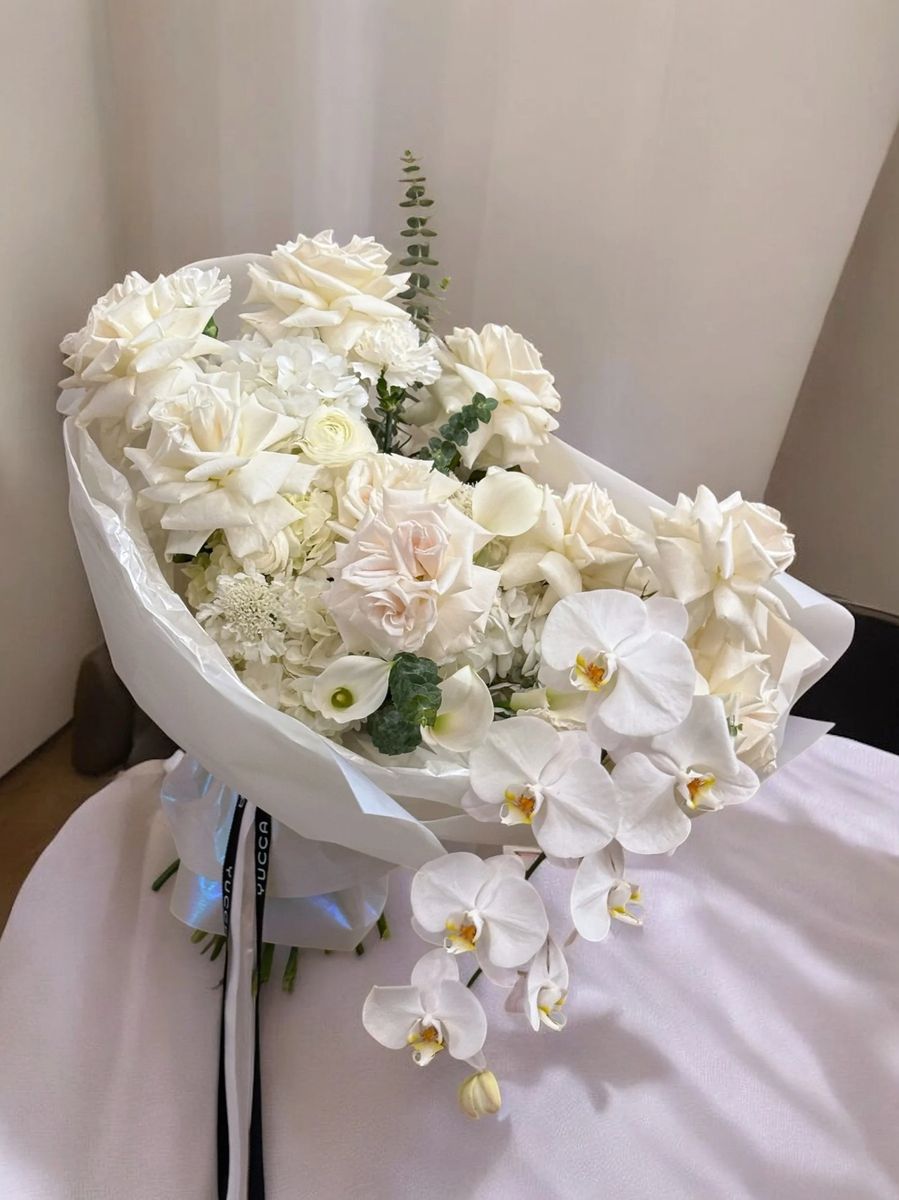
White Étude

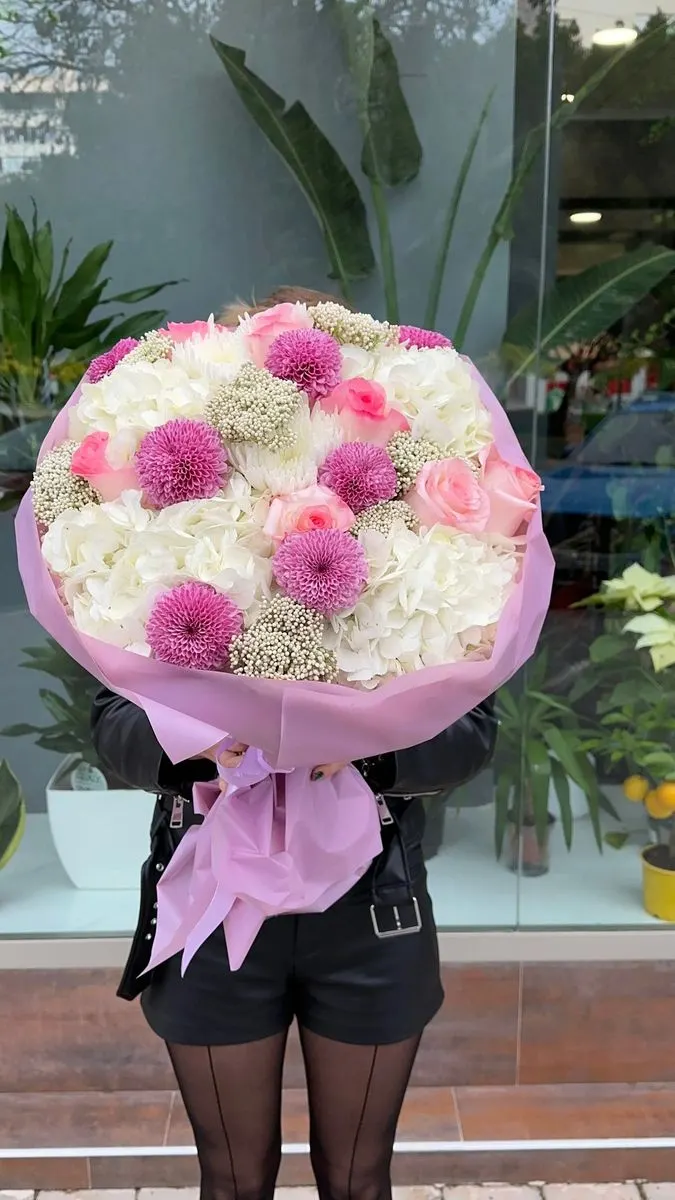
Pink Waltz

Honey Dawn

Red Cliffs of the Algarve
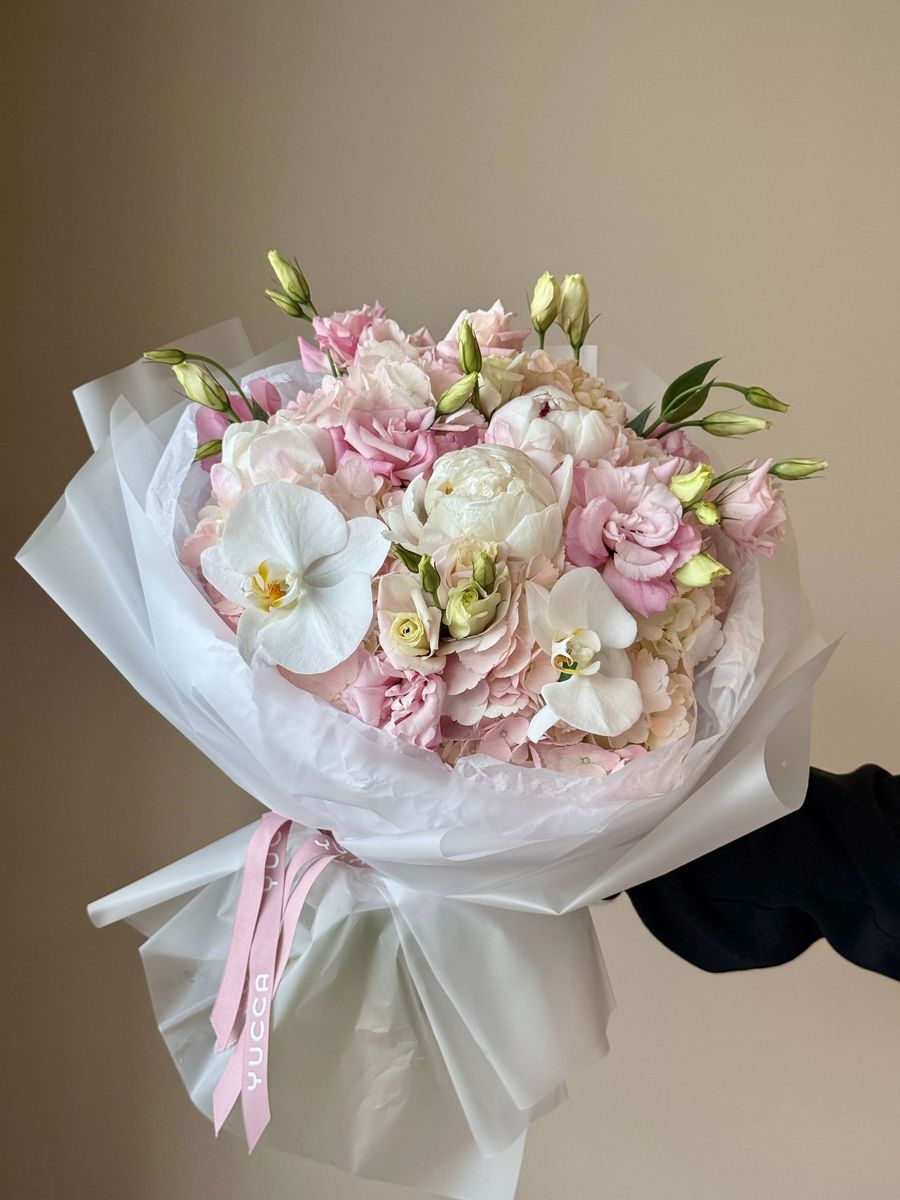
Morning in Tavira

Algarve Gold
| Bouquet | What's inside | Price | When it fits |
|---|---|---|---|
| 'White Étude' | white roses and lisianthus | €97 | a thank-you, a first meeting, 'just because' |
| 'Pink Waltz' | pink roses with spray roses | €116 | a birthday, an anniversary |
| 'Honey Dawn' | peach and cream roses | €145 | a spring greeting, for a mother |
| 'Red Cliffs of the Algarve' | red roses with greenery | €286 | a declaration, a proposal |
| 'Morning in Tavira' | pastel roses, lisianthus, greenery | €396 | a wedding, a jubilee, a villa for the week |
| 'Algarve Gold' | a large premium arrangement | €610 | a resort celebration, corporate |
Payment is by a card from any country in euros, Apple/Google Pay, bank transfer or crypto; the recipient pays nothing. A photo of the finished bouquet reaches you before the courier leaves; the card can be in Portuguese, English or Russian.
Frequently Asked Questions About Festa das Tochas Floridas
What is Festa das Tochas Floridas? A spring festival in São Brás de Alportel (Algarve): the streets of the old centre are covered with a carpet of wild flowers, and the men of the town walk over it carrying flower torches — 'tochas'. The tradition is more than three hundred years old.
When is the festival of flower torches held? On one Sunday between late March and late April; the date changes every year. The exact day is published by the São Brás municipality months ahead.
Where is São Brás de Alportel? In the Algarve, 17 km north of Faro along the N2, at the foot of the Serra do Caldeirão. It is the capital of Portuguese cork.
What is a tocha? A pole 1.5–2.5 m tall with a dense floral ball on top — roses, calla lilies, carnations, lavender, fennel, greenery. Made at home, by families, on the night before the festival.
Why are the torches carried by men in suits? By tradition the tochas are carried by the men of the town in formal dress — suit and tie. It recalls the legend of 1596, when townspeople defended the town with farm tools and then decorated them with flowers.
How many flowers go into the carpet? About three tonnes of flowers and greenery for a route over a kilometre long. Gathered all week, laid from 4–5 on Sunday morning.
Which flowers are used? Wild lavender (rosmaninho), yellow gorse, calendula, daisies, chamomile, rosemary, fennel, myrtle, rose and carnation petals, orange and almond blossom, cork bark for outlines.
Can you walk on the carpet? Not before the parade. Once the tochas have passed, the carpet is opened to everyone and gathering petals is allowed.
Is it the only festival of its kind in Portugal? In the Algarve — yes, the only survivor of several the region once had. It is listed in the national inventory of intangible cultural heritage.
How do I get there from Faro, Albufeira or Lagos? Faro — 25 minutes along the N2; Vilamoura — 35 minutes; Albufeira — 45 minutes; Lagos and Portimão — just over an hour via the A22. On a Sunday a car or taxi is best.
Where do I park? The centre is closed from the night before. Cars are left at the entrances to town, followed by a 10–15-minute walk.
Is the festival suitable for children? Yes. The laying of the carpet, hundreds of flower domes on the square and petal-gathering after the parade — children love it.
What else is there to see in São Brás that day? The Museum of Algarve Traditional Costume, cork workshops, old streets with colchas on the balconies; after the parade — a craft fair and almond sweets on the squares.
Can I order a bouquet in the Algarve 'like at the festival' — with lavender and wild flowers? Yes, in spring the florist will add wild lavender, rosemary and field herbs to any bouquet in the catalogue. Mention it in the order comment on the flower delivery in the Algarve page.
Where Next
- Order a bouquet into the region — flower delivery in the Algarve: Faro, Albufeira, Lagos, Vilamoura, Portimão — from €97, prices in euros.
- Recipient in the capital — flower delivery in Lisbon.
- How we work in the region — how to order flower delivery in the Algarve and Algarve hotels and golf resorts.
- A question about the festival date or an address in São Brás — message us on WhatsApp, we answer in English and Russian.
See also: flower delivery in the Algarve, Faro, Lagos, Lisbon, how to order flower delivery in the Algarve.
READER EXCLUSIVE
5% off your first order
Because you came from our blog, enjoy 5% off your first order. Just mention promo code BLOG5 to the florist on WhatsApp.
Popular bouquets in Algarve
Same-day delivery · photo before sending