The Infiorata of Genzano: How Pictures Are Made from Hundreds of Thousands of Flower Petals Outside Rome
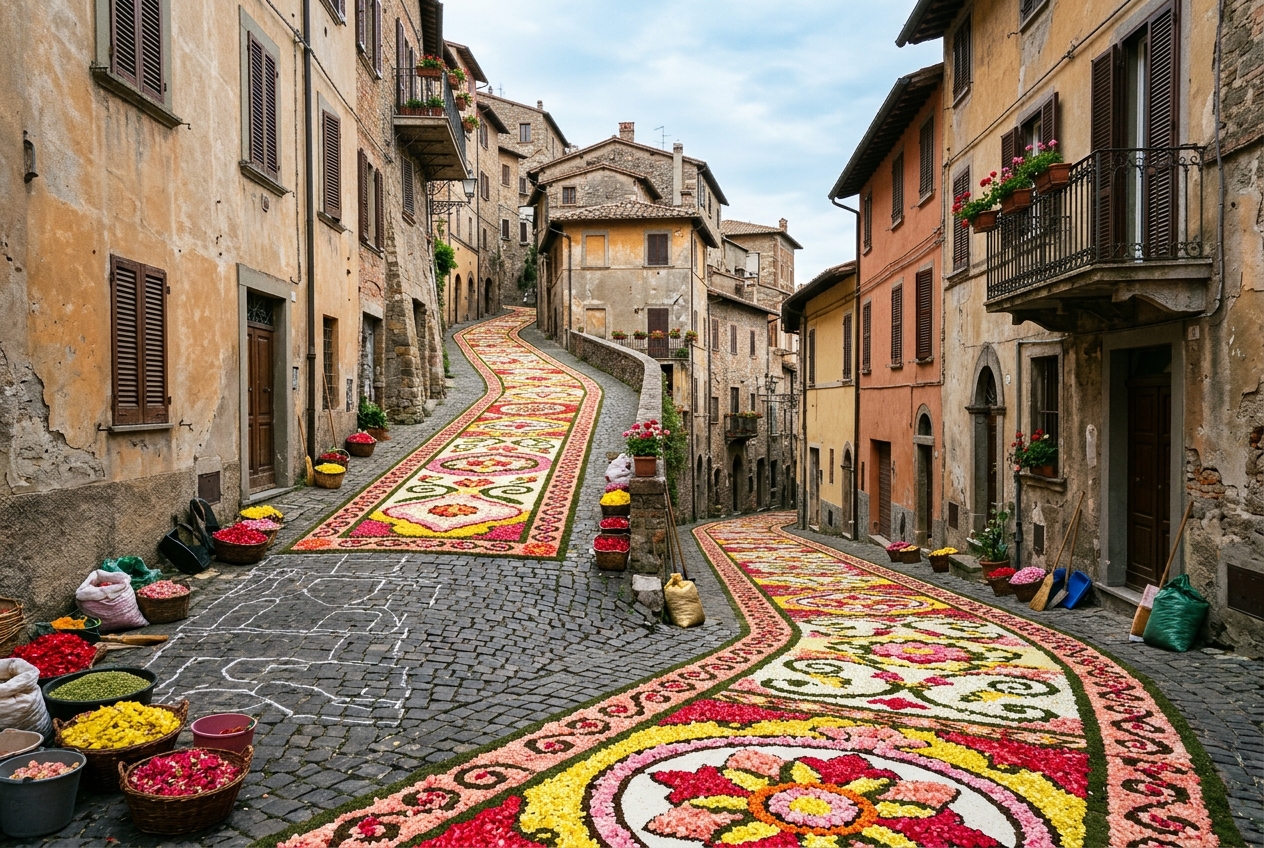
In short: thirty kilometres south-east of Rome, in the small town of Genzano di Roma on the rim of the volcanic Lake Nemi, one street 250 metres long is covered every June with pictures made of petals. Not drawings on asphalt but pictures: about two thousand square metres, fourteen or fifteen panels, 350,000 to 400,000 flowers — mostly carnations — plus yellow broom, fennel seed, bark and earth for the shades flowers do not have. The tradition dates from 1778, and the carpet has been laid on the present street, Via Italo Belardi, since 1875. The work takes a year: designs are drawn in winter; in early June hundreds of residents strip petals for days on end — the spelluccamento — and store them in cool cellars under the town hall; on Friday the paving is marked out in chalk; on Saturday night the petals are laid; on Sunday the carpet is shown; and on Monday evening the town's children run down the carpet at full tilt and destroy it — the spallamento, the strangest and best-loved moment of the festival. Below: how it works step by step, what the palette is made of, how to get there from Rome and when to come, where else in Italy petal carpets are laid, and how to carry the idea of Genzano into a bouquet or a gift. At the end — answers to frequent questions.
Bouquets delivered across Rome and to the Castelli Romani — on the flower delivery in Rome page, prices in euros. Across Italy: Milan, Venice, Florence, Verona, Bologna, Genoa, Portofino, Lake Como, Naples, Sorrento, Amalfi, Capri, Bari, Palermo, Catania, Porto Cervo, Porto Rotondo.
What an Infiorata Is and Why Genzano Is Its Capital
The Italian word infiorata means 'strewn with flowers'. It is the name for the flower carpets laid in the streets of various Italian towns at the start of summer. There are many carpets — from Liguria to Sicily — but Genzano di Roma is considered the capital of the genre for three reasons. It has the longest unbroken history: the first carpets were laid as far back as 1778, and Via Italo Belardi has hosted them since 1875. It has the largest scale — about two thousand square metres on a single street. And it has the most complex pictures: not ornaments but multi-figure compositions with perspective and chiaroscuro, created every year by local master infioratori who pass the craft down through families.
The street was not chosen by chance: Via Italo Belardi climbs uphill to a square at the top, so a viewer standing at the bottom sees all the panels at once — a picture gallery unrolled down a slope. It is the gradient that turns the paving into a canvas; on a flat square the effect would be impossible.
The Numbers of One Carpet
| Parameter | Value |
|---|---|
| Length of the street | about 250 metres |
| Area of the carpet | 1,890–2,000 m² |
| Number of panels | 14–15 plus an opening composition and the upper steps |
| Flowers | 350,000–400,000 |
| Main material | carnation petals — up to 80 % of the palette |
| Also | broom, fennel seed, bark, earth, green leaves, sometimes rose petals |
| Teams | dozens of groups of masters, each with its own panel |
| Life of the carpet | about 36 hours: from Saturday night to Monday evening |
A Palette of Petals: Where the Colours Come From
The main flower of the Infiorata is the carnation. Its petal is firm, dry and uncrushable; it lies on stone for two days without water and does not change colour; and the carnation gives almost the whole spectrum — scarlet, burgundy, pink, white, yellow, orange, purple. Carnations are bought by the hundreds of thousands of stems from growers in Lazio and Liguria and brought in a few days before the festival.
What the carnation lacks is green and brown. Green comes from the seeds of wild fennel, gathered on the slopes around Lake Nemi in May, and from finely chopped leaves. Brown comes from bark, ground chestnuts and sifted earth. Gold comes from the flowers of broom, ginestra, which blooms on the Castelli Romani hills just in time for June. The black outline is charcoal or dark earth. The result is a palette of several dozen shades, and the masters work with it as with tempera: light petals for highlights, dark ones for shadows, a mix of two colours for half-tones.
A Year of Work for One Day: How the Carpet Is Made
Winter — the design. Each team chooses a subject and draws its panel to scale; subjects change every year — from copies of famous paintings to tributes to anniversaries, cities and events. A town commission approves the designs so the panels do not repeat and form a single 'gallery'.
Spring — the materials. Fennel seed, bark and earth are gathered, dried and sifted; stencils are prepared — large sheets cut along the outlines of the design.
Early June — the spelluccamento. The most laborious part: hundreds of residents — families, schoolchildren, pensioners — sit at long tables and strip the petals from every flower by hand, sorting them by colour into baskets. The baskets are carried to cool grottoes and cellars under the town hall, where the petals rest at a constant temperature for several days without wilting.
Friday — marking out. A grid and the outlines of the design are drawn on the paving in chalk and lime, transferring the sketch to scale 1:1 — sometimes with a projector at night, sometimes the old way, square by square.
Saturday night into Sunday — laying. The masters lay the petals on their knees along the outlines, starting with the dark lines and finishing with the light fills. The petals are poured, not glued: they are pressed down by hand and lightly misted with water so the wind does not lift them. Laying goes on until dawn; only the masters walk the street.
Sunday — the showing. From the morning the carpet is open to visitors; nobody walks on it — it is viewed from the edges of the street and from the upper terrace. By afternoon the petals dry a little and the colours deepen — the best hour for photographs.
Monday evening — the spallamento. The carpet is not cleared away — it is destroyed: the town's children line up on the steps at the top and at a signal run down over all the panels, raising a cloud of petals. Within a minute a year's work becomes a multicoloured pavement, swept clean by morning. The residents explain it simply: the beauty of the Infiorata is that it lasts one day.
How to Get There from Rome and When to Come
Genzano di Roma lies in the Castelli Romani — the hills with volcanic lakes south-east of the capital. From Rome it is about an hour: a regional train from Termini to Albano or Cecchina and then a bus, or by car along the Via Appia Nuova (SS7), or a Cotral bus from the Anagnina metro station. On the Infiorata weekend the centre is closed to cars; parking is at the edge of town, then on foot uphill.
The Infiorata takes place in June, on a mid-month weekend; the town announces the exact date in advance on the festival's website. The best time to see it is Sunday morning from 9:00 to 12:00, while the light is soft and the petals fresh; Sunday evening brings the thickest crowds. Monday is for those who want to see the spallamento and the children's run — arrive by 18:00. Saturday is for the curious: you can watch the marking out and the start of the laying, but there is no whole carpet yet. Nearby, Lake Nemi is worth a visit for its strawberries — June is the season, and neighbouring Nemi holds a strawberry festival — and so is the panorama from Genzano's upper terrace.
Italy's Other Flower Carpets
| Town | Region | What sets it apart |
|---|---|---|
| Genzano di Roma | Lazio | the longest history and the most complex pictures; about 2,000 m² |
| Spello | Umbria | carpets run through the whole medieval centre, over a kilometre |
| Noto | Sicily | Via Nicolaci in the baroque town; a style closer to ornament, May |
| Bolsena | Lazio | a carpet along Lake Bolsena, intimate in scale |
| Pietra Ligure | Liguria | the Ligurian school with carnations from Sanremo |
| Camaiore | Tuscany | petals combined with sawdust, a long street in the centre |
From Rome, Genzano and Bolsena are the closest; Spello is three hours north; Noto is a separate trip to Sicily, where we also deliver flowers — to Catania and Palermo.
How to Carry the Idea of Genzano into a Gift
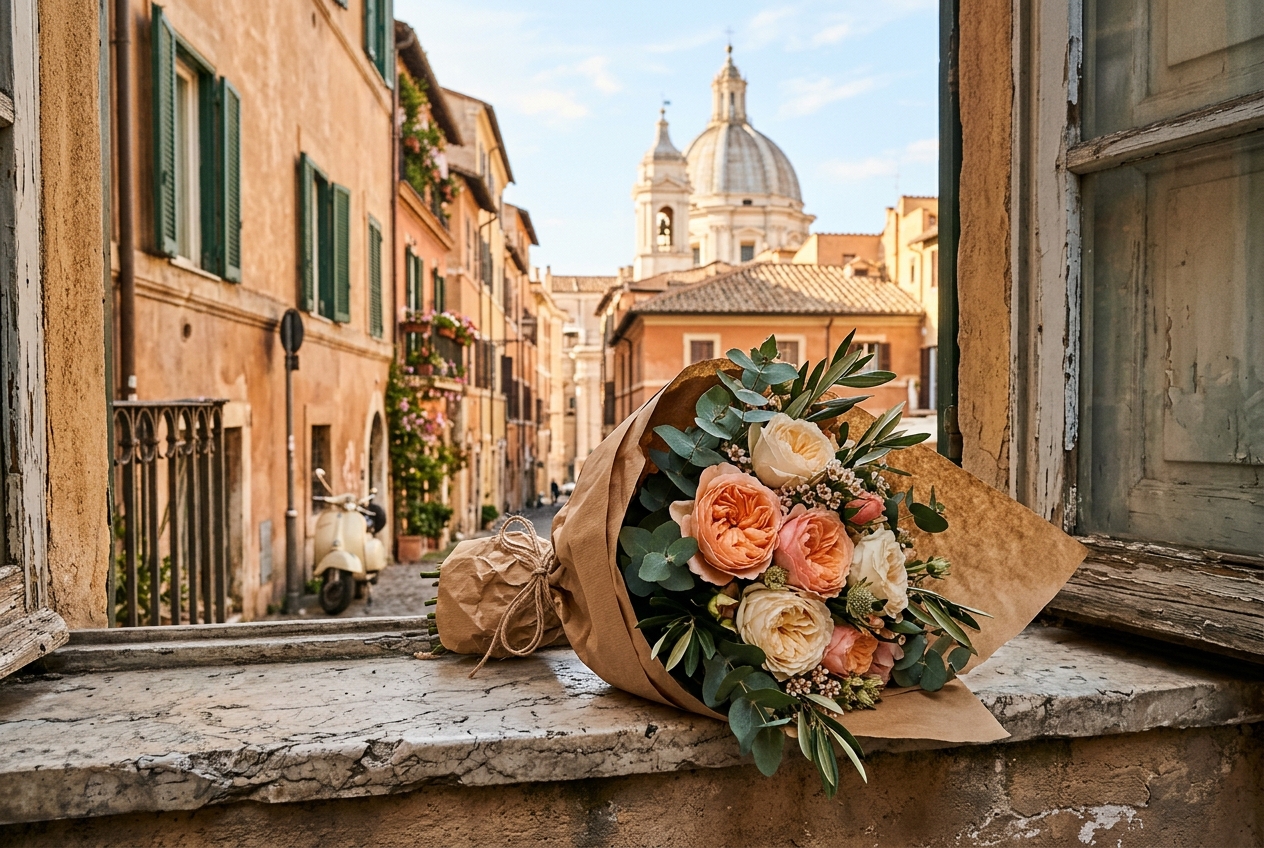
The Infiorata teaches three things that work in a bouquet too. First — colour as material: the masters do not look for 'a beautiful flower', they collect shades as if they were paints. Monochrome boxes are built the same way: twenty shades of pink in one arrangement look richer than ten different flowers. Second — the carnation. A flower northern Europe considers modest is the workhorse of Italian floristry: it lasts a week, has no sharp scent and comes in any colour; a bouquet of spray carnations in two or three shades is an honest Roman gift. Third — impermanence as meaning: the petals on the paving live a day, and that is exactly why they are remembered. A path of petals in a hotel room or on a table, laid in the Infiorata colours — scarlet, gold, white — works the same way.
If you are going to the Infiorata or want to congratulate someone who lives in Rome or the Castelli Romani, we bring the bouquet to a hotel, an apartment or a villa by the lake — in Genzano, Nemi, Ariccia, Albano, Frascati — with a transfer quoted before payment. In June we add carnations and broom to the palette of the Infiorata.

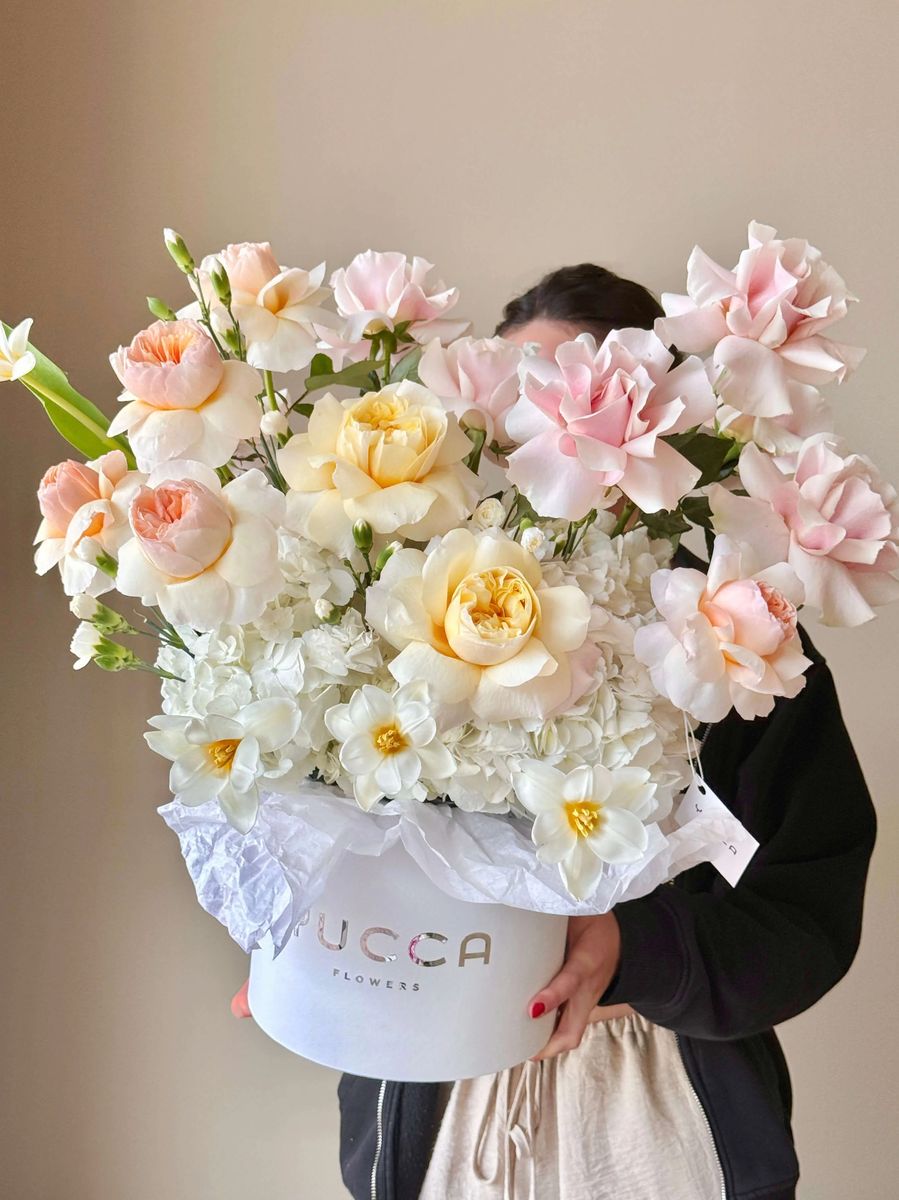
Campo de' Fiori Morning
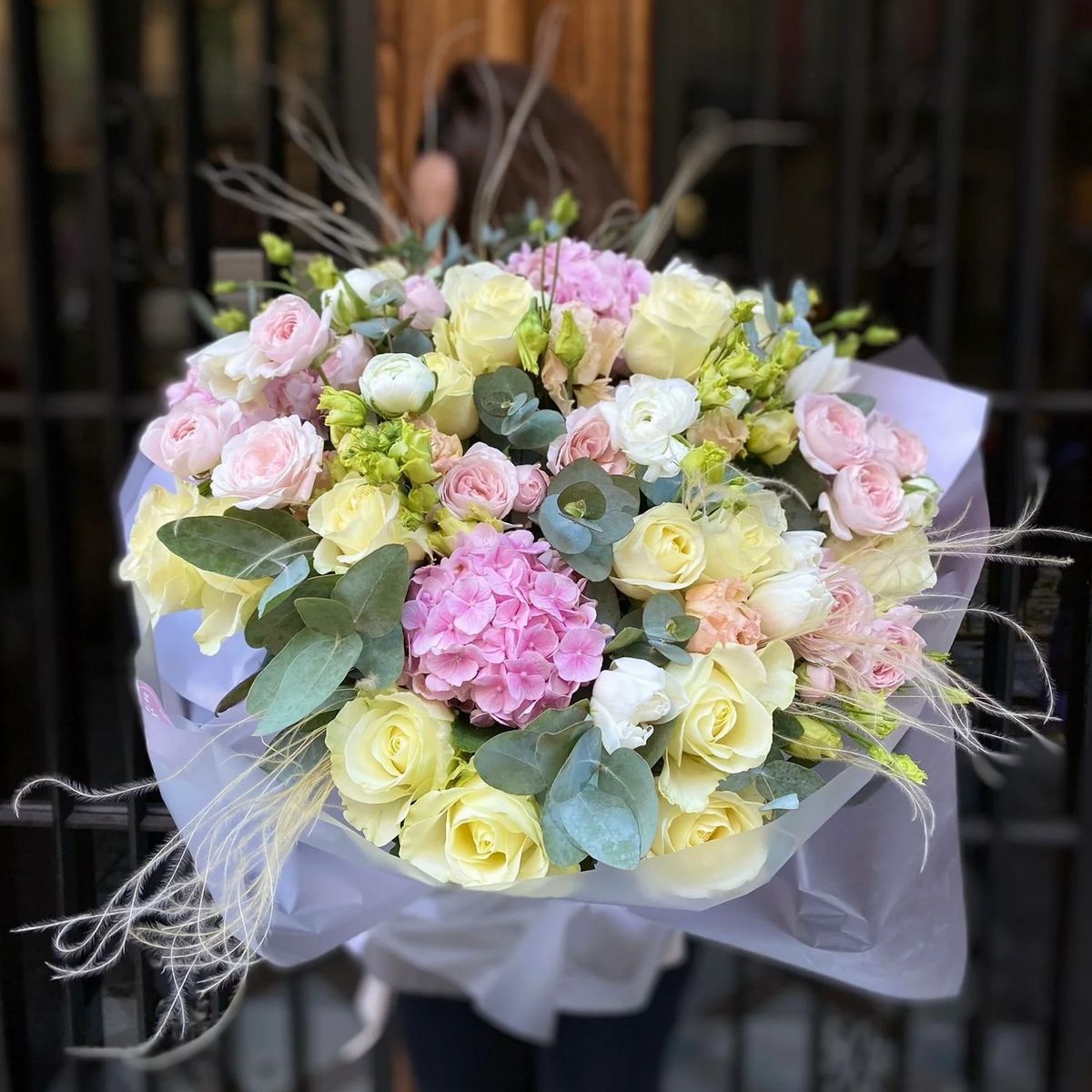
Borghese Gardens
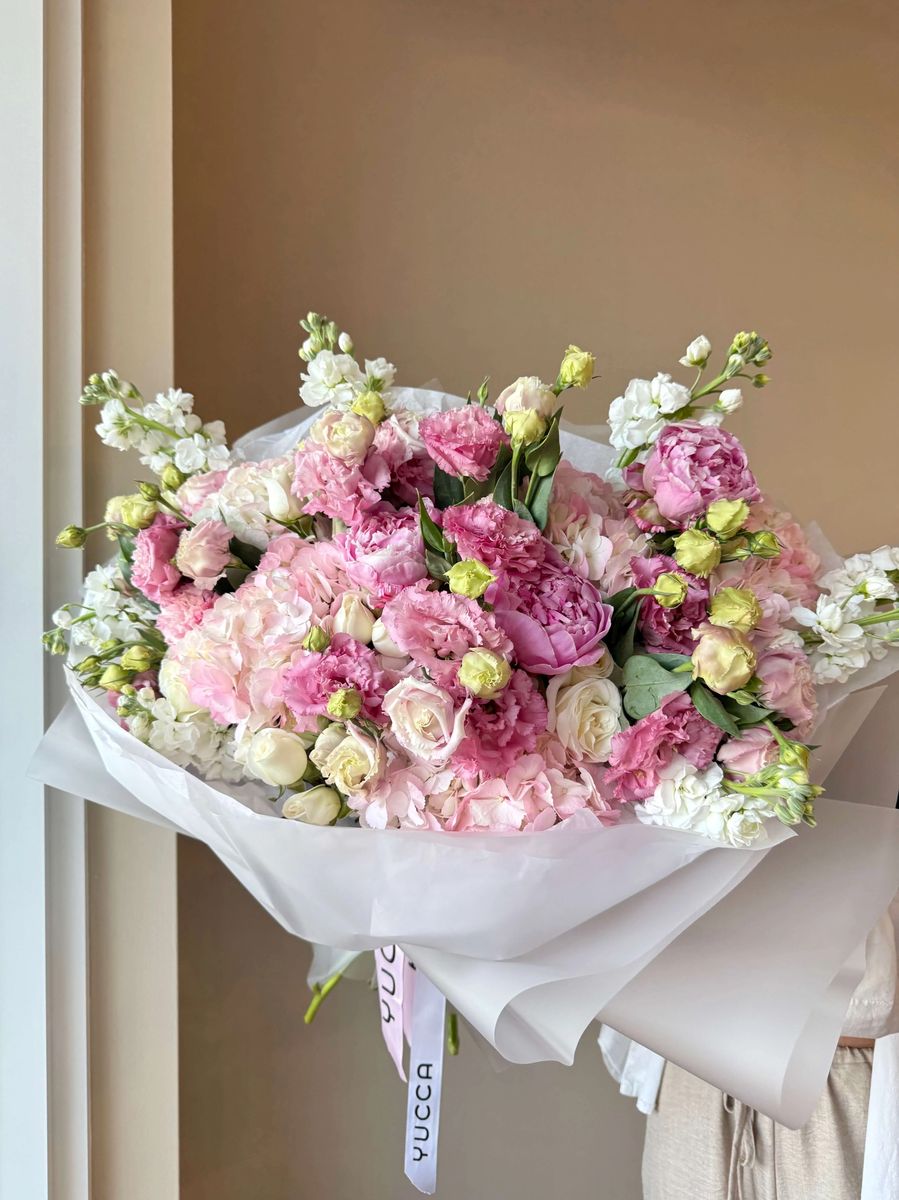
Trastevere Blush

Coral Rome
Borghese Box
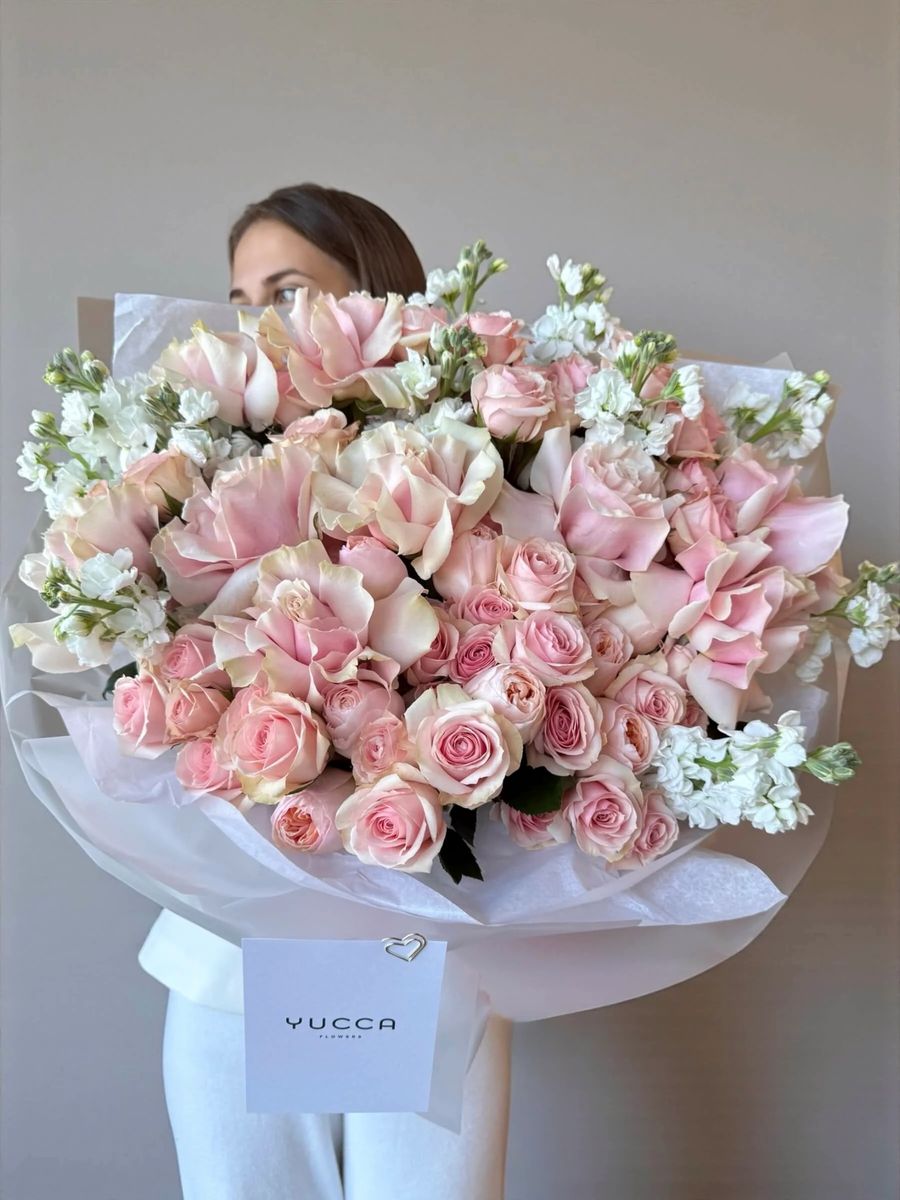
Royal Prati
| Bouquet | What's inside | Price | In the spirit of the Infiorata |
|---|---|---|---|
| 'Campo de' Fiori Morning' | a compact pastel bouquet | €115 | carnation and ranunculus petals — the palette of a Sunday morning |
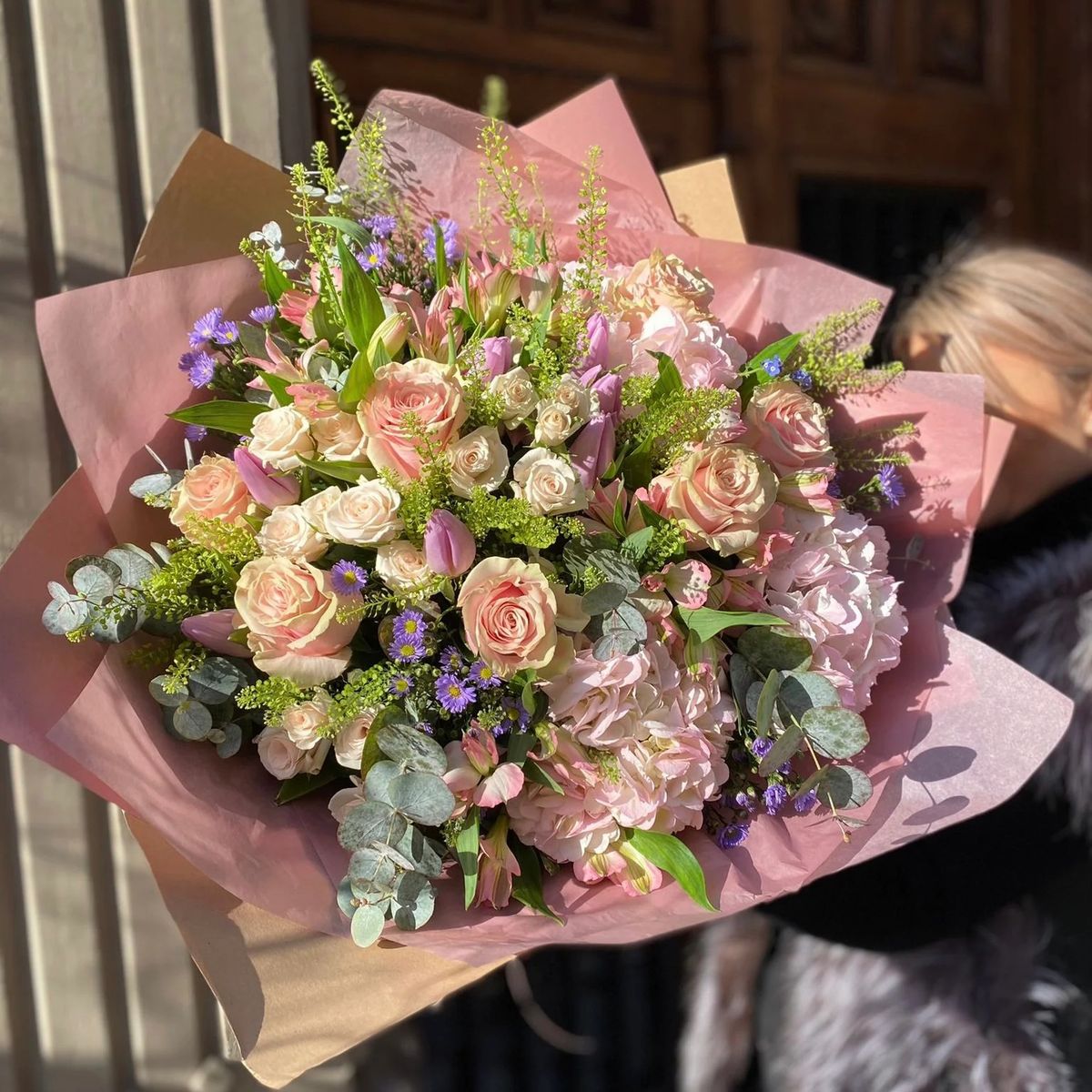
| 'Borghese Gardens' | roses and greenery | €225 | a green fennel outline and a pink fill |
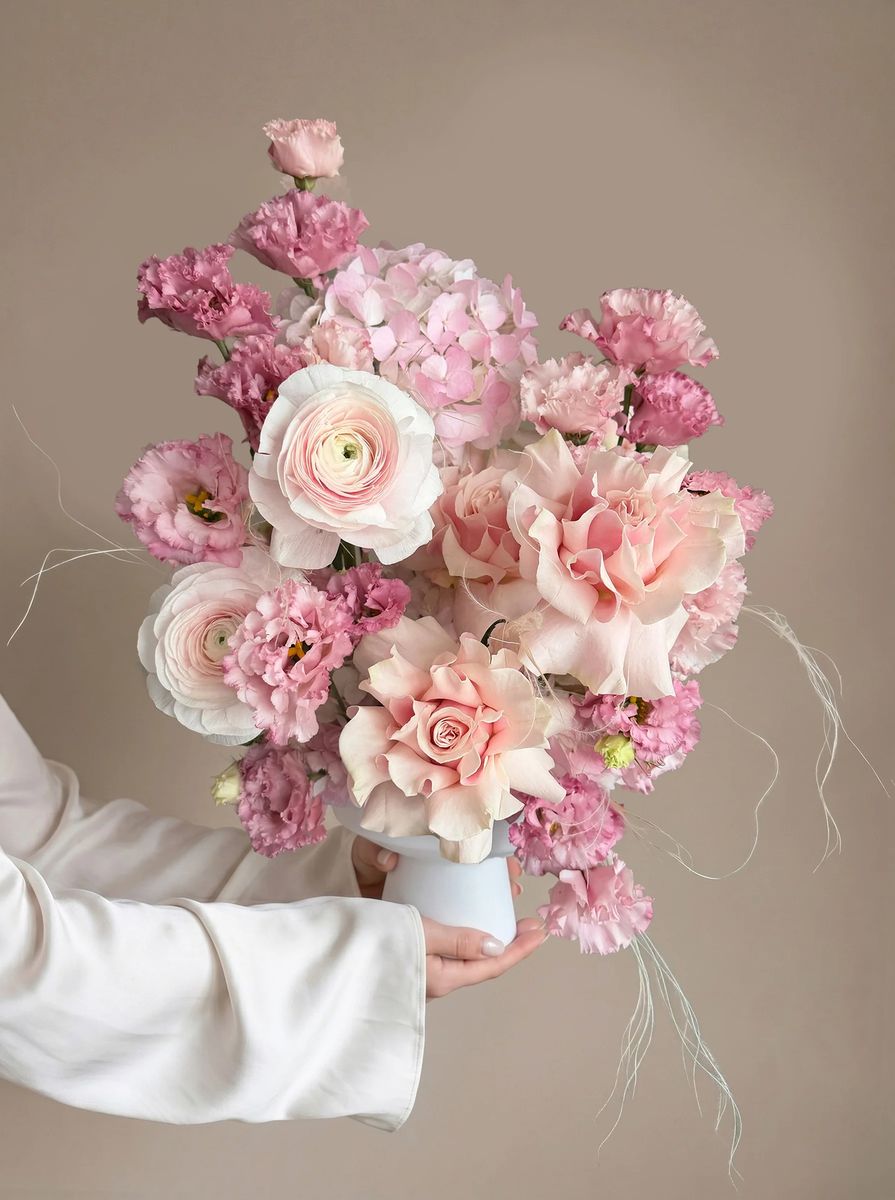
| 'Trastevere Blush' | pink roses and hydrangea | €358 | twenty shades of pink in one box |
| 'Coral Rome' | coral and orange roses | €412 | broom and orange carnation — the gold of the Castelli |
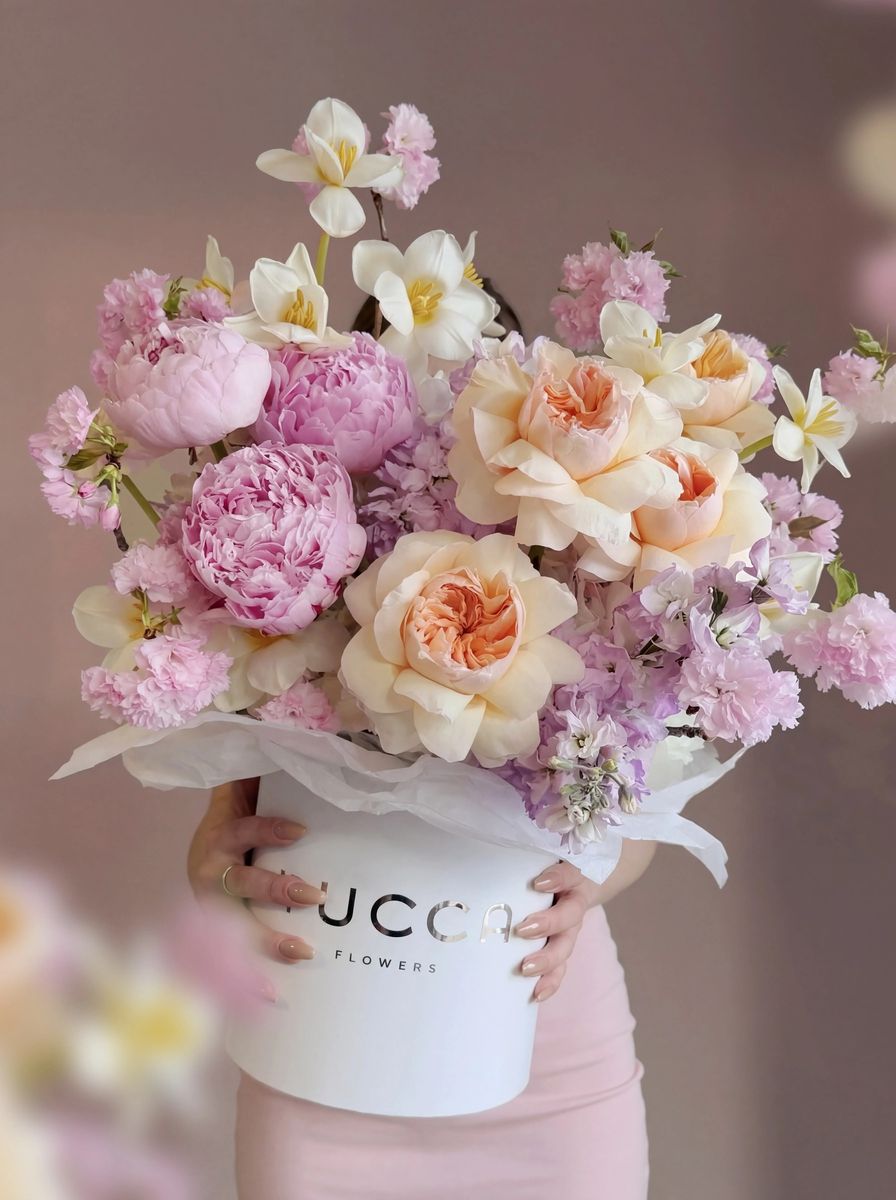
| 'Borghese Box' | roses in a box | €459 | a 'panel' in a box: colour as material |
| 'Royal Prati' | a premium rose arrangement | €718 | a large panel — for a jubilee or a wedding |
Frequently Asked Questions About the Infiorata of Genzano
What is the Infiorata di Genzano? A carpet of flower petals laid every June on Via Italo Belardi in Genzano di Roma outside Rome: about 2,000 m², 14–15 pictures, 350,000–400,000 flowers.
When does the Infiorata in Genzano take place? In June, on a mid-month weekend; the town announces the date in advance. Laying — Saturday night into Sunday; showing — Sunday; the children's destruction of the carpet — Monday evening.
Which flowers are the pictures made from? Mostly carnation petals — up to 80 %. Green comes from wild fennel seed and leaves, brown from bark and earth, gold from broom flowers, outlines from charcoal.
How many flowers go into the carpet? From 350,000 to 400,000 flowers for one street 250 metres long.
What is the spelluccamento? The stripping of petals by hand from hundreds of thousands of flowers a few days before the festival; hundreds of residents take part, and the petals are stored in cool cellars under the town hall.
What is the spallamento? The finale on Monday evening: the children of Genzano run down the carpet from top to bottom and destroy the pictures. The tradition underlines that the carpet's beauty is for one day.
Can you walk on the carpet? No: only the masters during the laying and the children during the spallamento. Visitors watch from the edges of the street and from the upper terrace.
How do I get to Genzano from Rome? About an hour: a train from Termini to Albano or Cecchina and a bus, a Cotral bus from the Anagnina metro, or a car along the Via Appia Nuova. On festival days the centre is closed to cars.
When is the best time to see it? Sunday from 9:00 to 12:00 — fresh petals and soft light; Monday by 18:00 — if you want to see the children's run.
Since what year has the Infiorata been held? The first carpets — 1778; on the present Via Italo Belardi — since 1875. The festival is recognised as a heritage of Italy.
Where else in Italy are there flower carpets? Spello in Umbria, Noto in Sicily, Bolsena in Lazio, Pietra Ligure in Liguria, Camaiore in Tuscany.
Do you deliver flowers to Genzano and the Castelli Romani? Yes: to Genzano, Nemi, Ariccia, Albano, Frascati — from Rome with a transfer quoted before payment. In June we add carnations and broom to the bouquets — the palette of the Infiorata.
Where Next
- A bouquet to Rome or the Castelli Romani — flower delivery in Rome: from €115, prices in euros, photo before hand-over.
- How much flowers cost in Rome and what makes up the price — flower prices in Rome.
- Across Italy — Milan, Venice, Florence, Verona, Bologna, Genoa, Portofino, Lake Como, Naples, Sorrento, Amalfi, Capri, Bari, Palermo, Catania, Porto Cervo, Porto Rotondo.
- A question about a date, an address or a bouquet in the Infiorata palette — message us on WhatsApp, we answer in English and Russian.
See also: flower delivery in Rome, Milan, Venice, Florence, Verona, Bologna, Genoa, Portofino, Lake Como, Naples, Sorrento, Amalfi, Capri, Bari, Palermo, Catania, Porto Cervo, Porto Rotondo.
READER EXCLUSIVE
5% off your first order
Because you came from our blog, enjoy 5% off your first order. Just mention promo code BLOG5 to the florist on WhatsApp.
Popular bouquets in Rome
Same-day delivery · photo before sending