The Vienna Flower Ball: How 100,000 Flowers Turn the City Hall into a Palace of Flowers
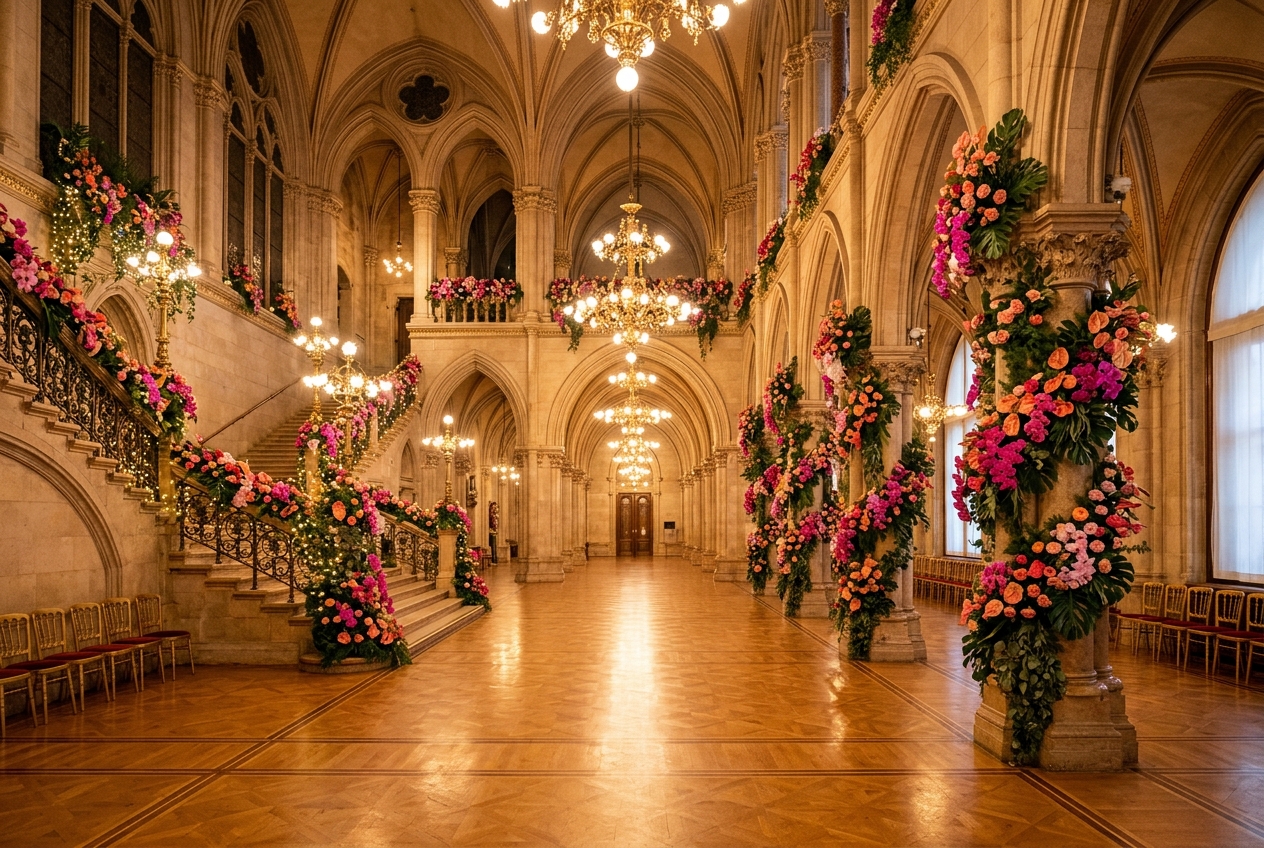
In short: the Flower Ball — the Blumenball — is the only ball of the Viennese season staged not by musicians, doctors or lawyers but by the city's gardeners: Vienna's parks and gardens department (Wiener Stadtgärten, MA 42). Once a year, in January, they spend several days turning the neo-Gothic City Hall on the Ringstrasse into a palace of flowers: around one hundred thousand fresh blooms — orchids, anthuriums, roses, lilies, carnations — wind around the columns of the Festival Hall, the balustrades of the Grand Staircase and the vaults of the People's Hall. The ball traces its history to the city gardeners' dance evenings in the Prater in the 1920s, has been held at the City Hall since 1988, celebrated its hundredth edition in January 2024, was held for the 102nd time on 16 January 2026 and will be held for the 103rd on 15 January 2027. Below: how it works, who does it, which flowers they use and how to get in if you are not from Vienna; at the end — twelve short answers to frequently asked questions.
Flowers delivered across Vienna are in the flower delivery in Vienna catalogue, prices in euros, from €176. If you need not a ball but simply a bouquet to a Viennese hotel or flat — how to order flowers to Vienna. Nearby on the map: Munich, Prague, Zurich, Berlin, Venice.
What is the Vienna Flower Ball, and why do the city's gardeners stage it?
Vienna holds more than four hundred balls a season, and almost every one has a professional 'host': the Philharmonic Ball, the Coffee-House Owners' Ball, the Lawyers' Ball, the Confectioners' Ball, the Hunters' Ball. The Flower Ball is the ball of the city gardeners. It is organised by the Wiener Stadtgärten, municipal department MA 42, which on weekdays mows the lawns of the Volksgarten, plants the spring beds in front of the City Hall and tends the Volksgarten rose garden. Once a year the same people pick up not secateurs but floristry knives and wire — and do what no other ball in the world does: decorate an entire palace with fresh flowers.
Hence the defining feature of the Flower Ball. At other Viennese balls flowers are a detail: a garland on a box, a debutante's posy. Here the flowers are the point. A guest buys a ticket not for the orchestra or the polonaise but to climb the Grand Staircase through a corridor of orchids and enter a hall where columns the height of a three-storey house have become flowering trunks. The gardeners treat the ball as their annual report: their exhibition, their shop window and their celebration in one.
A hundred years of history: from dance evenings in the Prater to the City Hall
| Period | Where it was held | What matters |
|---|---|---|
| 1920s | the 'Weisse Rose' restaurant in the Prater | the City of Vienna stages the first dance evenings for its gardeners and their families — the seed of the future ball |
| 1958–1987 | the Sofiensäle, a hall in the third district | the ball becomes a city event with floral decoration as its main attraction |
| since 1988 | the City Hall on the Ringstrasse | the gardeners are given the state rooms of the municipal government — and the scale of the decoration grows to a hundred thousand flowers |
| January 2024 | City Hall | the hundredth Flower Ball |
| 16 January 2026 | City Hall | the 102nd ball: theme 'United by Flowers', in honour of the music contest Vienna hosted in May 2026 |
| 15 January 2027 | City Hall | the 103rd ball: theme — 165 years of Vienna's city gardens, 'from park paths to climate gardener' |
The editions are numbered from those dance evenings of the 1920s, which is why the centenary fell in 2024. There were interruptions — otherwise the hundredth ball would have come earlier — but the tradition never left the city and never changed hands: the Flower Ball has always been the ball of Vienna's gardeners.
How 100,000 flowers turn the City Hall into a palace of flowers: the halls, the staircase, the People's Hall
The City Hall was built in 1872–1883 to the design of Friedrich von Schmidt as a neo-Gothic palace of municipal government: a tower of almost a hundred metres topped by the iron Rathausmann with his banner, and inside a suite of state rooms. The Flower Ball takes them all, but three spaces are the main ones.
The Grand Staircase (Feststiege). The guest enters from the Ringstrasse and steps straight into a corridor of flowers: the handrails and balustrades are wound with garlands, and on every landing stands an arrangement the height of a person. This is where the first photographs are taken, so the staircase is designed with the flowers at face level, not underfoot.
The Festival Hall (Festsaal). Seventy-one metres long, with a row of pointed arches and columns down both sides. The columns are wrapped from floor to capital — in 2026 they became trunks of pink and orange orchids and anthuriums with copper-toned foliage. At the end of the hall is the orchestra stage, in front of it the dance floor that fills with the quadrille at midnight. The chandeliers are left alone: flowers at height read as canopies, the light as sun through them.
The People's Hall (Volkshalle) and the smaller rooms. The People's Hall under the ground-floor vaults is given to freer music and younger guests; the Coat-of-Arms Hall, the Stone Hall, the Grey Salon, the city senate chamber and the gallery become the 'rooms' of the palace, each with its own floral theme. So one palace becomes several gardens that the guest walks through all night.
A hundred thousand flowers is not an exaggeration but the gardeners' working figure: that many stems and blooms pass through their hands during the build-up days. For comparison, a large Viennese flower shop sells a few thousand in an ordinary week.
Which flowers are they, and how are they chosen: orchids, anthuriums, roses, lilies, carnations
| Flower | Role in the decoration | Why this one |
|---|---|---|
| Orchids (phalaenopsis, cymbidium) | garlands on columns and balustrades, 'canopies' | last all night without water in the warmth of the hall, give large planes of colour |
| Anthuriums | accents in arrangements, shine | the lacquered surface reflects the chandeliers and does not wilt in the heat |
| Roses | masses in the floor arrangements | the classic of the ball, set the main tone of the year's theme |
| Lilies | verticals, scent on the staircase | a large flower visible from afar, opens towards evening |
| Carnations | dense filling, fields of colour | hardy, inexpensive, allow volume in tens of thousands of stems |
| Amaryllis | January accents | the seasonal flower of winter, one stem — four large trumpets |
The palette changes every year with the theme: in 2026 it was pink, orange, green and copper; in earlier years the ball has been white, gold, violet. The flowers are ordered months ahead from Dutch and Austrian growers, but most of the foliage — branches, fern, ivy — the gardeners take from their own nurseries and parks. January is no accident: it is when the city gardens have the least outdoor work, and when the market offers its peak winter range, from amaryllis to early tulips.
Who does it: the MA 42 gardeners, floristry apprentices and boutonnieres for the debutantes
The decoration is the collective work of three teams. The base is made by the city gardeners themselves: parks engineers design the structures, the department's florists direct the installation, the park workers haul garlands and carry water. They are helped by floristry apprentices from the 'Youth at Work' programme (Jugend am Werk): for teenagers learning the trade, several days in the City Hall are the main placement of the year, and many of them later join the city gardens.
The third team is the Vocational School for Horticulture and Floristry: its students make the boutonnieres and small posies for the young ladies and gentlemen who open the ball. These are hundreds of identical miniatures — one for every debutante, in the colours of the year's theme, built so as not to shed during four hours of dancing. The installation runs for several days and nights in a row, because the City Hall is a working building: the city council sits there by day, and some of the rooms are only freed in the evening.
How the ball night unfolds: doors at 20:00, the fan polonaise at 21:00, the quadrille at midnight
The doors open at 20:00, and for the first hour the guests simply walk through the palace: looking at the flowers, taking photographs on the staircase, finding their tables. At 21:00 comes the ceremonial opening: the committee of young ladies and gentlemen, in recent years from the Rueff dance school, enters the Festival Hall and dances the Fan Polonaise by Carl Michael Ziehrer, a Viennese bandmaster of the late nineteenth century, followed by waltzes and polkas. The debutantes wear white dresses with floral corsages, their partners tailcoats with a matching boutonniere.
After the opening the hall belongs to everyone. At midnight and at two in the morning comes the quadrille: hundreds of couples in six figures at the dance master's command, a tradition of every Viennese ball. Different music plays in the People's Hall, chamber ensembles in the smaller rooms. The ball ends at 5:00 — another Viennese tradition: with the last waltz the guests step out onto the Ringstrasse, and the gardeners are already starting to take the flowers down.
How to get to the Flower Ball: dates, tickets, dress code
| What | Ball 2026 | Ball 2027 |
|---|---|---|
| Date | Friday, 16 January 2026 | Friday, 15 January 2027 |
| Edition | 102nd | 103rd |
| Theme | 'United by Flowers' | '165 years of Vienna's city gardens' |
| Sales start | 11 November 2025 | 11 November 2026 |
| Admission without a seat | about €90–130 | €130 (reduced €90) |
| Ticket with a table seat | by hall | €170 (Grey Salon, Stone Hall, North Buffet), €190 (Coat-of-Arms Hall, senate chamber, People's Hall, gallery), €210 (Festival Hall, by the dance floor and in the boxes) |
| Where to buy | wien.gv.at/blumenball, Wien Ticket | the same, plus the Wien Ticket pavilion on Herbert-von-Karajan-Platz |
The dress code is ballroom: a long evening gown for ladies; tailcoat, dinner jacket or dark suit for gentlemen — at Viennese balls this is checked at the door. Book early: the Flower Ball is one of the best-attended of the season, and the table seats in the Festival Hall go weeks ahead. For guests from other countries the hotels on the Ring are the most convenient — the City Hall is ten minutes on foot from the Opera along the Volksgarten, and at five in the morning you can walk back to the hotel without calling a taxi.
Which flowers are given for a ball in Vienna — and how to get them to a hotel or a front door
The Viennese tradition is simple: you do not bring a lady flowers to the ball — she has a clutch and a fan in her hands, and a lavish bouquet gets in the way of dancing. Flowers are given before and after. Before the ball — on the morning of the ball, to the hotel or home: a small 'good luck' bouquet for a debutante, or an arrangement in a box for a lady who will put on her gown that evening. A box is more convenient than a bouquet: a hotel room does not always have a vase, and by evening the flowers should be standing, not lying in the basin. After the ball — the next day at noon, when everyone has slept: the most Viennese gesture of all — a bouquet with a note 'thank you for the night' or 'for the polonaise', delivered to the door.
For a Viennese ball orchids are fitting — in the colours of the City Hall decoration; white and cream roses for a debutante; a single-colour box if the recipient is not a close one. Red roses — for a loved one only. If you are in another country and the ball is in Vienna, the bouquet can be ordered remotely: we make it in Vienna on the morning of the ball, send a photo and hand it to the reception of a hotel on the Ring under the guest's surname, or deliver it to a flat — we wrote in detail about Viennese addresses, hotels and paying with a foreign card in how to order flowers to Vienna.
Flowers in Vienna beyond the ball: catalogue bouquets with delivery
The Vienna catalogue starts at €176; delivery across Vienna is included, payment by a card from any country in euros, a photo of the bouquet before the courier leaves.
Volksgarten Garden
Evening at the Opera
Albertina Orchid
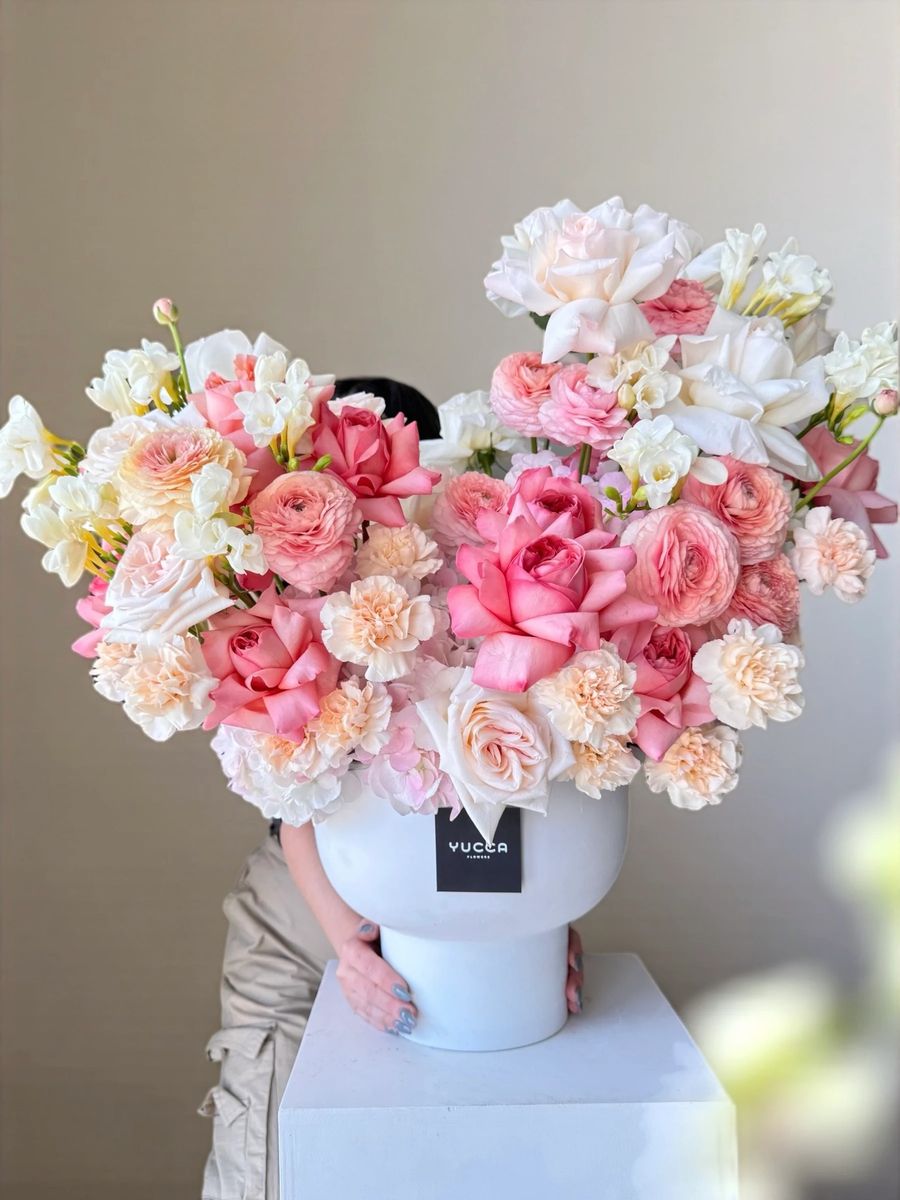
Ring White Box
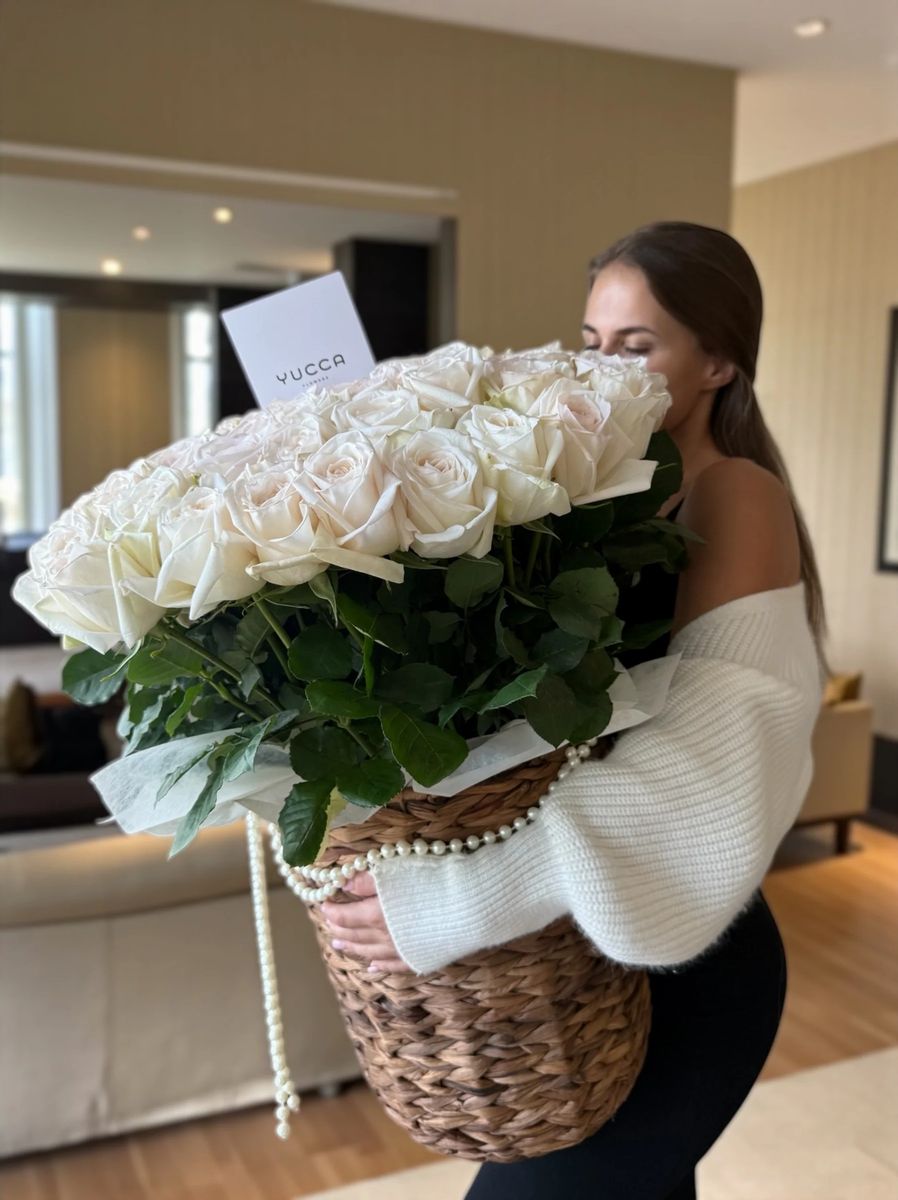
Hofburg Basket
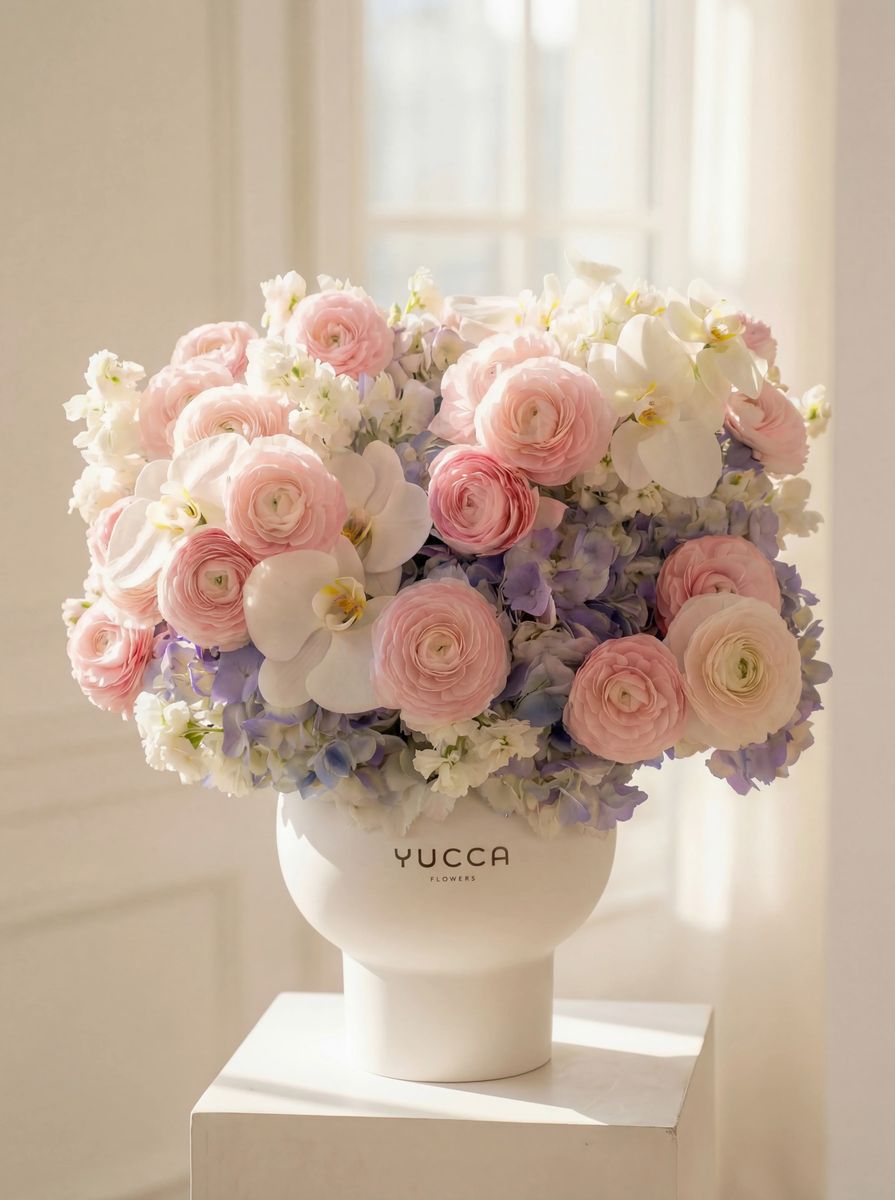
Viennese Ball Vase
| Bouquet | What is inside | Price | For which moment of the ball |
|---|---|---|---|
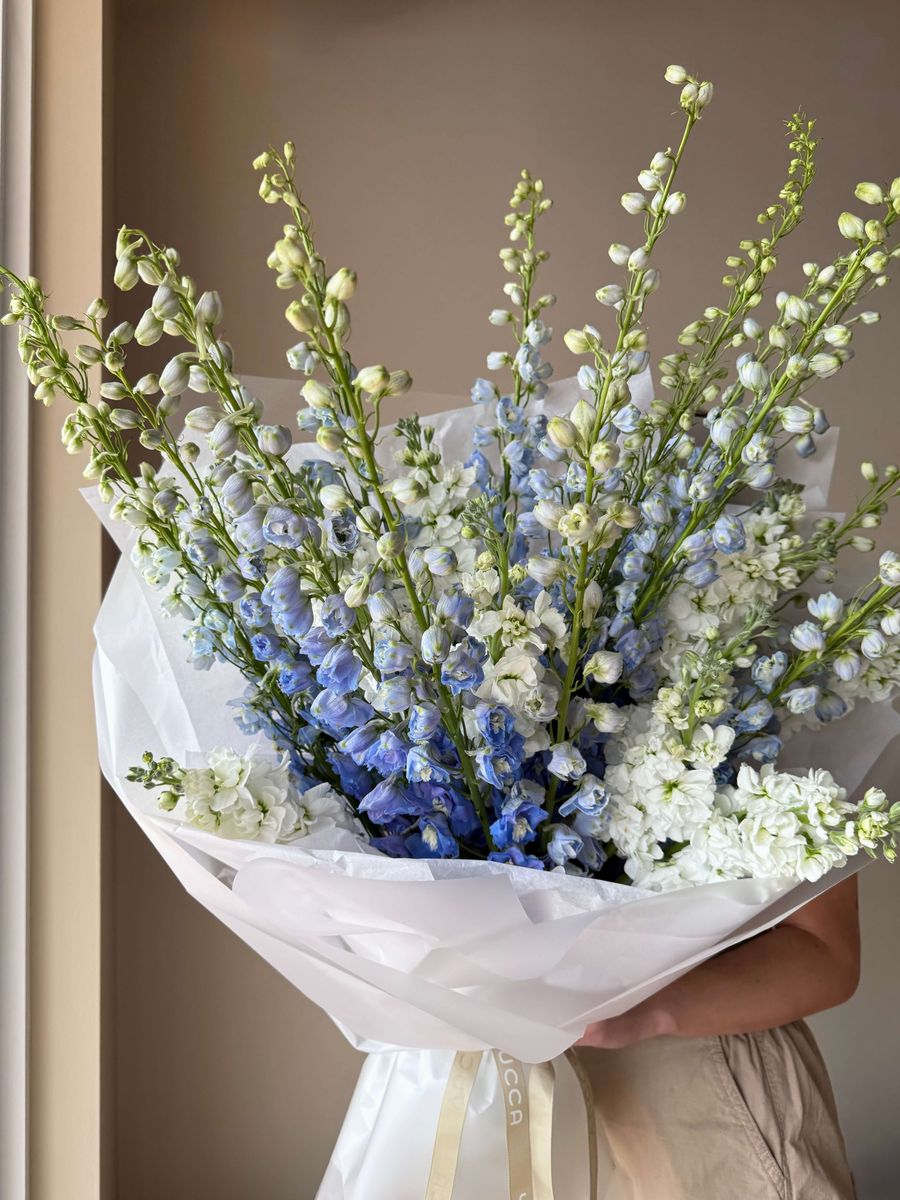
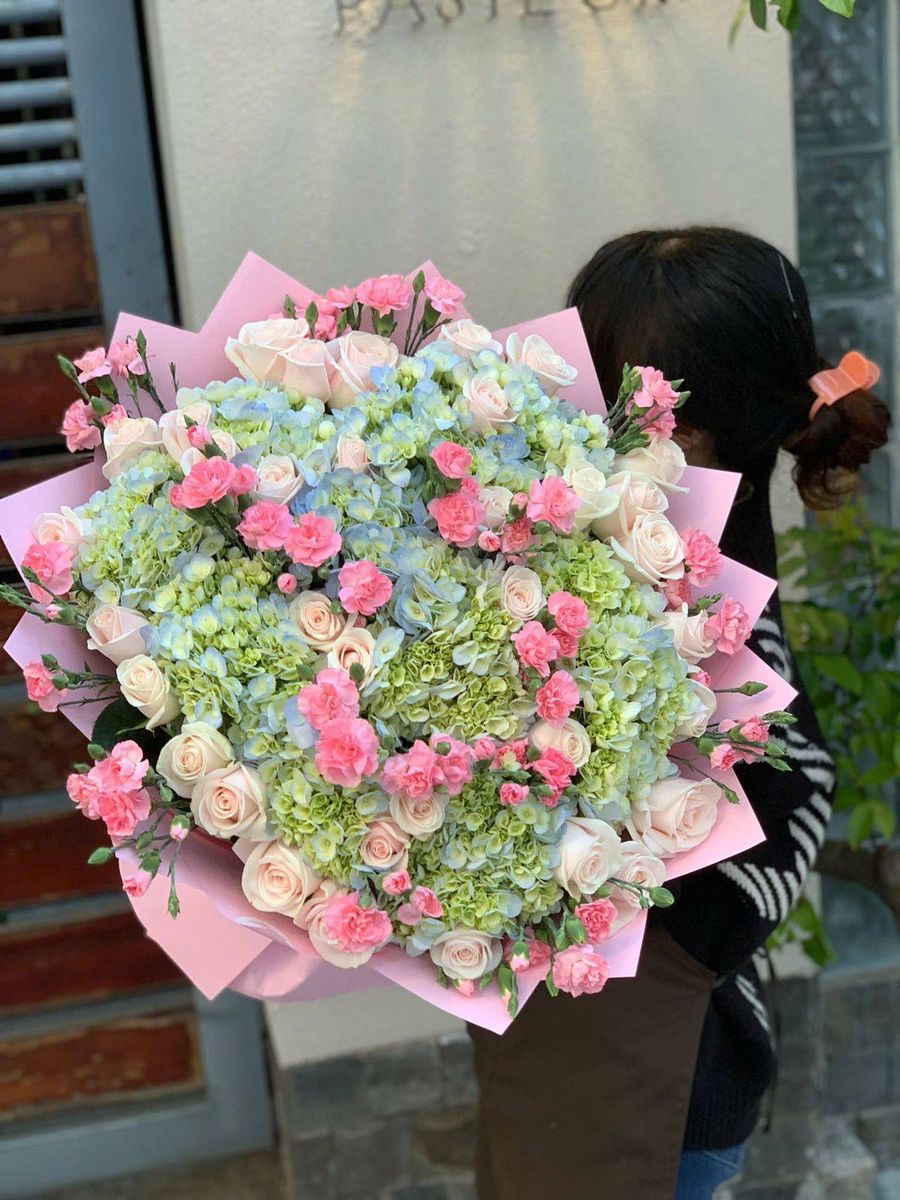
| 'Volksgarten Garden' | roses and greenery in the colours of the rose garden by the City Hall | €176 | the morning of the ball — 'good luck' to a flat |
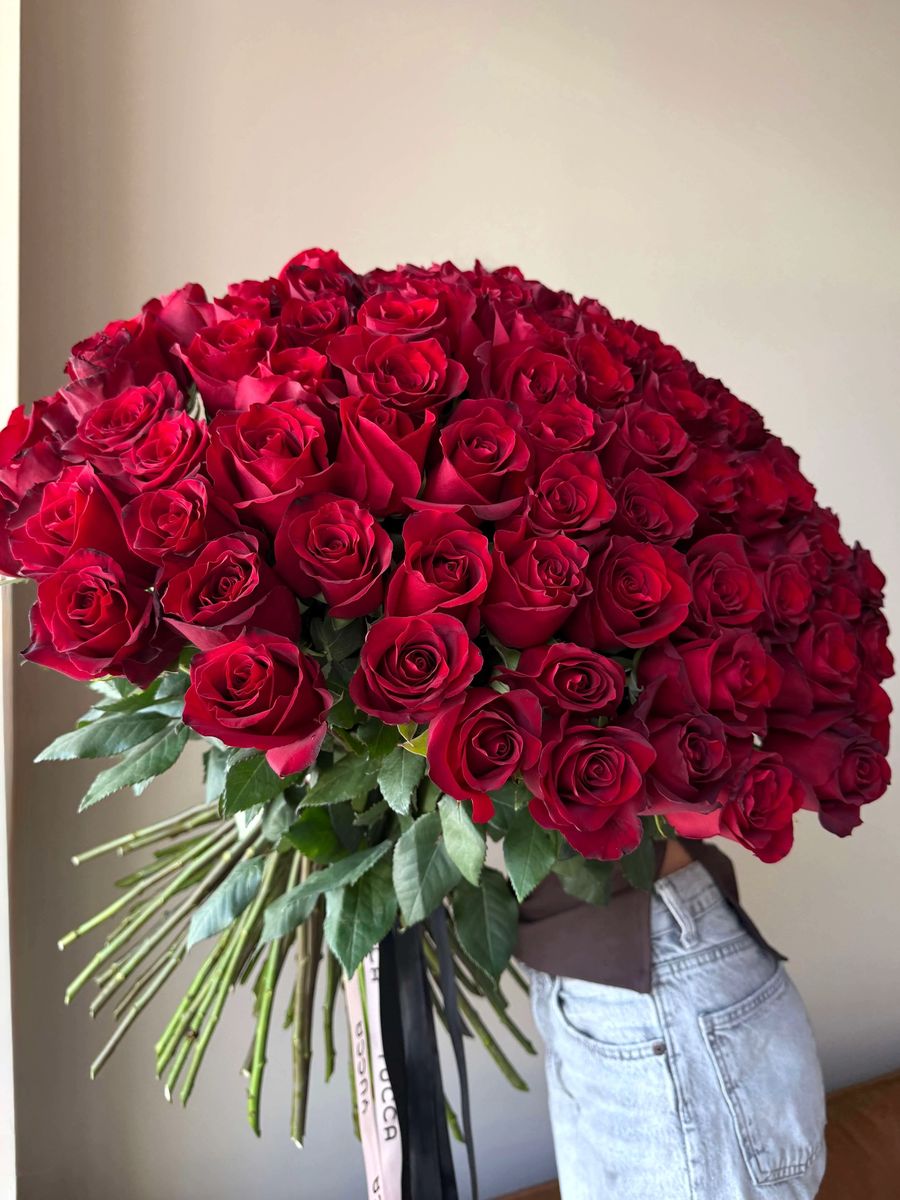
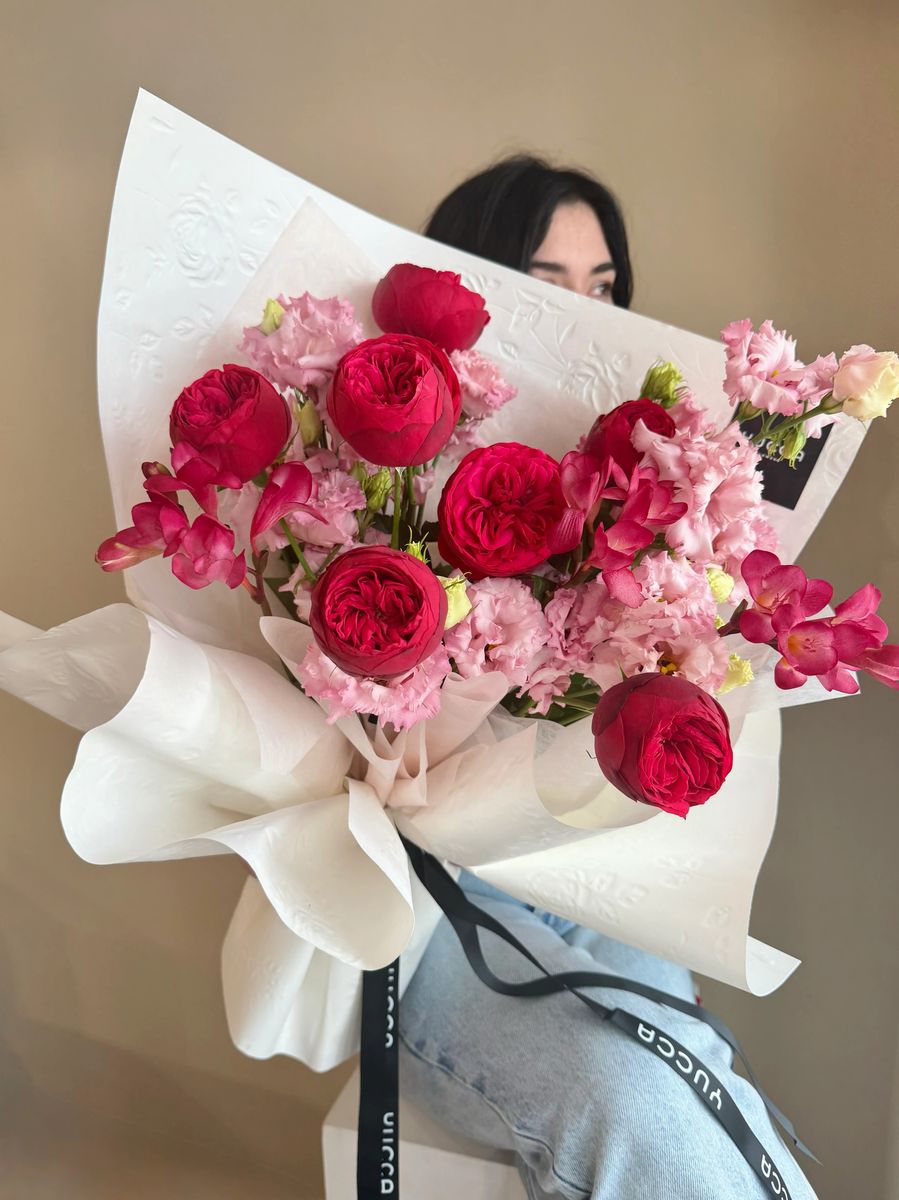
| 'Evening at the Opera' | dark roses with eucalyptus | €322 | an evening gesture to a hotel on the Ring |
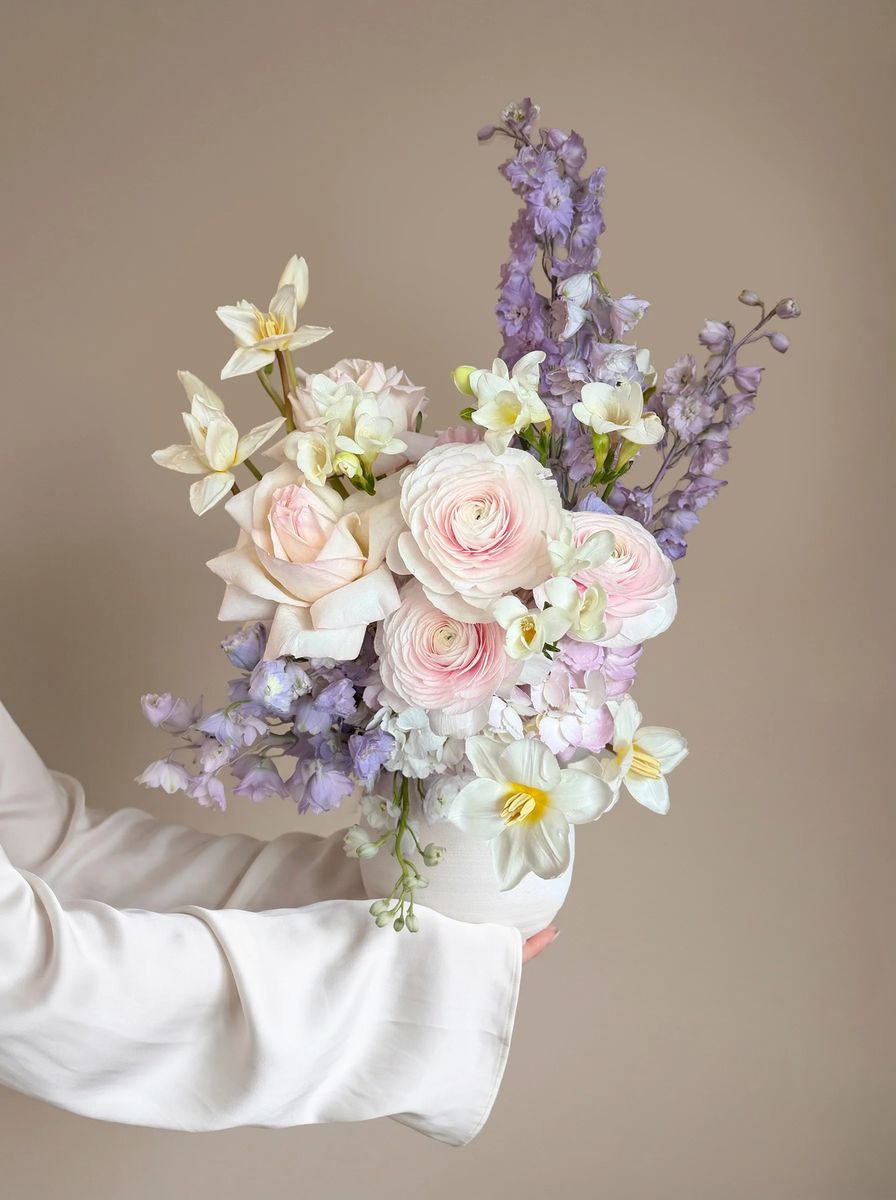
| 'Albertina Orchid' | white orchids | €340 | in the colours of the City Hall decoration; stands a week without a vase |
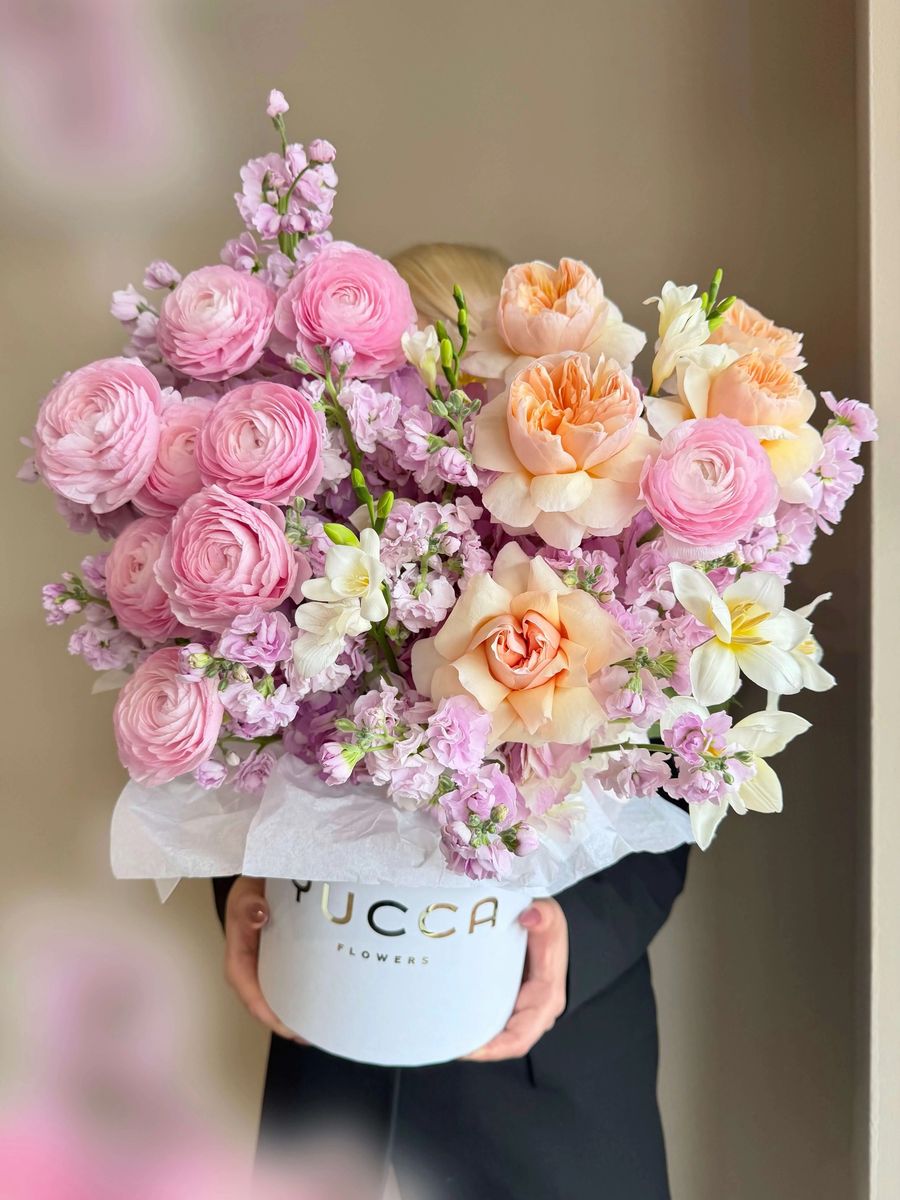
| 'White Ring Box' | white roses in a hat box | €990 | for a debutante — a box needs no vase |
| 'Hofburg Basket' | roses and hydrangeas in a basket | €1170 | 'thank you for the night' the next day |
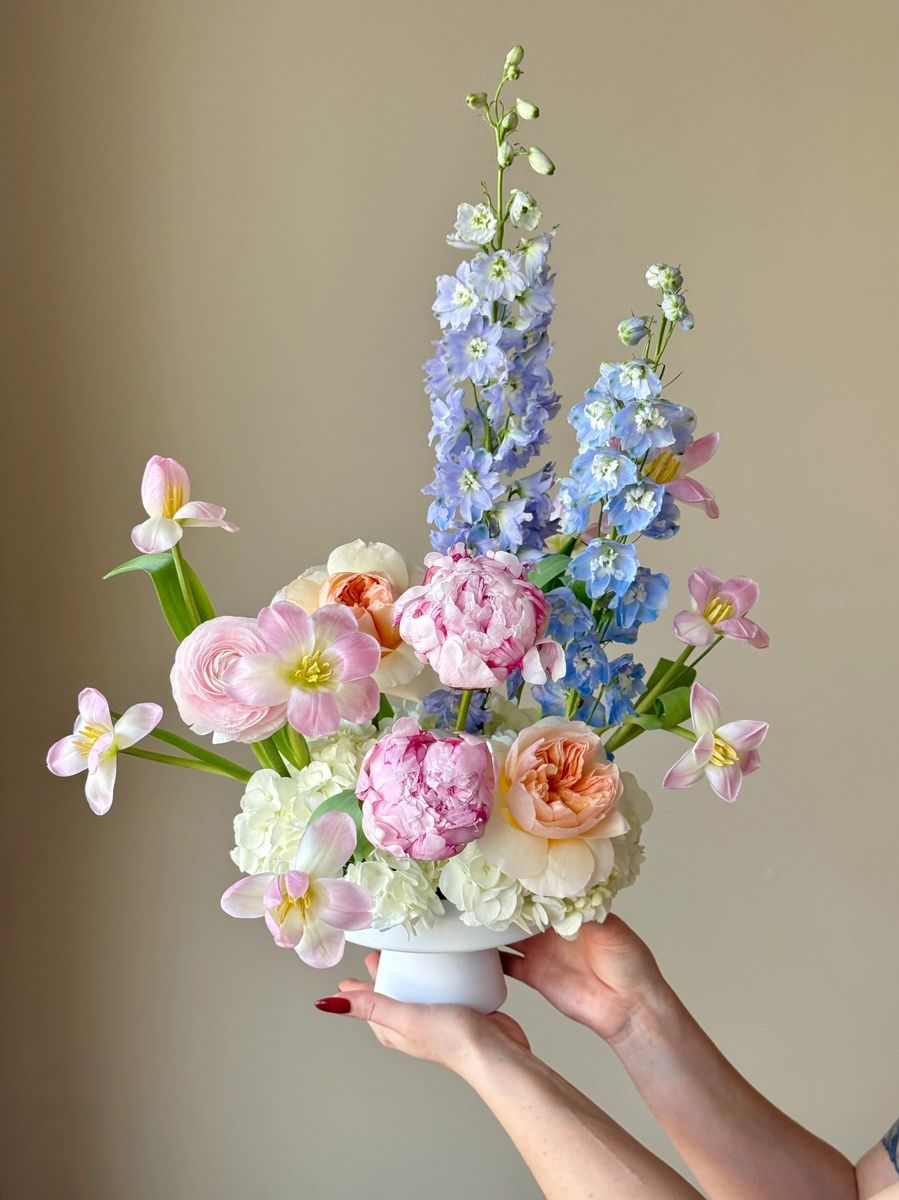
| 'Vienna Ball Vase' | a large arrangement of roses and orchids | €1530 | to a hotel suite for check-in in ball week |
Frequently asked questions about the Vienna Flower Ball
When is the Vienna Flower Ball held? Every year in January, on a Friday: the 102nd ball was held on 16 January 2026, the 103rd will be held on 15 January 2027.
Where is the Flower Ball held? At Vienna City Hall on the Ringstrasse — in the Festival Hall, on the Grand Staircase, in the People's Hall and the smaller rooms.
How many flowers are used for the decoration? Around one hundred thousand fresh flowers: orchids, anthuriums, roses, lilies, carnations, amaryllis and foliage from the city's nurseries.
Who decorates the City Hall for the ball? Vienna's city gardeners (department MA 42) together with floristry apprentices from the 'Youth at Work' programme and students of the school for horticulture and floristry.
How much does a Flower Ball ticket cost? In 2027 — €130 admission (reduced €90), with a table seat from €170 to €210 depending on the hall. Sales start on 11 November.
What is the dress code at the Flower Ball? A long evening gown for ladies; tailcoat, dinner jacket or dark suit for gentlemen. At Viennese balls the dress code is checked.
What time does the ball start and end? Doors at 20:00, the opening with the polonaise at 21:00, the quadrille at midnight and at 2:00, the end at 5:00 in the morning.
Can I go to the ball without knowing how to waltz? Yes: most guests come to see the flowers, listen to the music and dine at their table; the dance floor is open to all after the opening.
What happens to the flowers after the ball? The gardeners take the decoration down the very next morning; surviving plants and foliage go back to the city nurseries and parks, cut flowers go to compost.
Which flowers are customary for a Viennese ball? A small bouquet or a box on the morning of the ball and a thank-you bouquet the next day; flowers are not carried at the ball itself.
Will you deliver a bouquet to a Viennese hotel for the ball if I am in another country? Yes: we make it in Vienna in the morning, send a photo and hand it to reception under the guest's surname — payment by a card from any country in euros.
Are there similar flower balls in other cities? Not on this scale: a gardeners' ball with an entire city hall decorated is a Viennese tradition. Munich, Prague, Zurich and Berlin have ball seasons, but there the flowers are a decoration, not the main event.
Where to next
- Order a bouquet for the ball or for no reason at all — flower delivery in Vienna: from €176, same day across the city.
- How a Viennese address works, the Ring hotels and paying from abroad — how to order flowers to Vienna.
- Neighbouring cities on the map — Munich, Prague, Zurich, Berlin, Venice.
- A question about a date or a hotel — message us on WhatsApp, we answer in English and Russian.
See also: flower delivery in Vienna, Munich, Prague, Zurich, Berlin, Venice.
READER EXCLUSIVE
5% off your first order
Because you came from our blog, enjoy 5% off your first order. Just mention promo code BLOG5 to the florist on WhatsApp.
Popular bouquets in Vienna
Same-day delivery · photo before sending