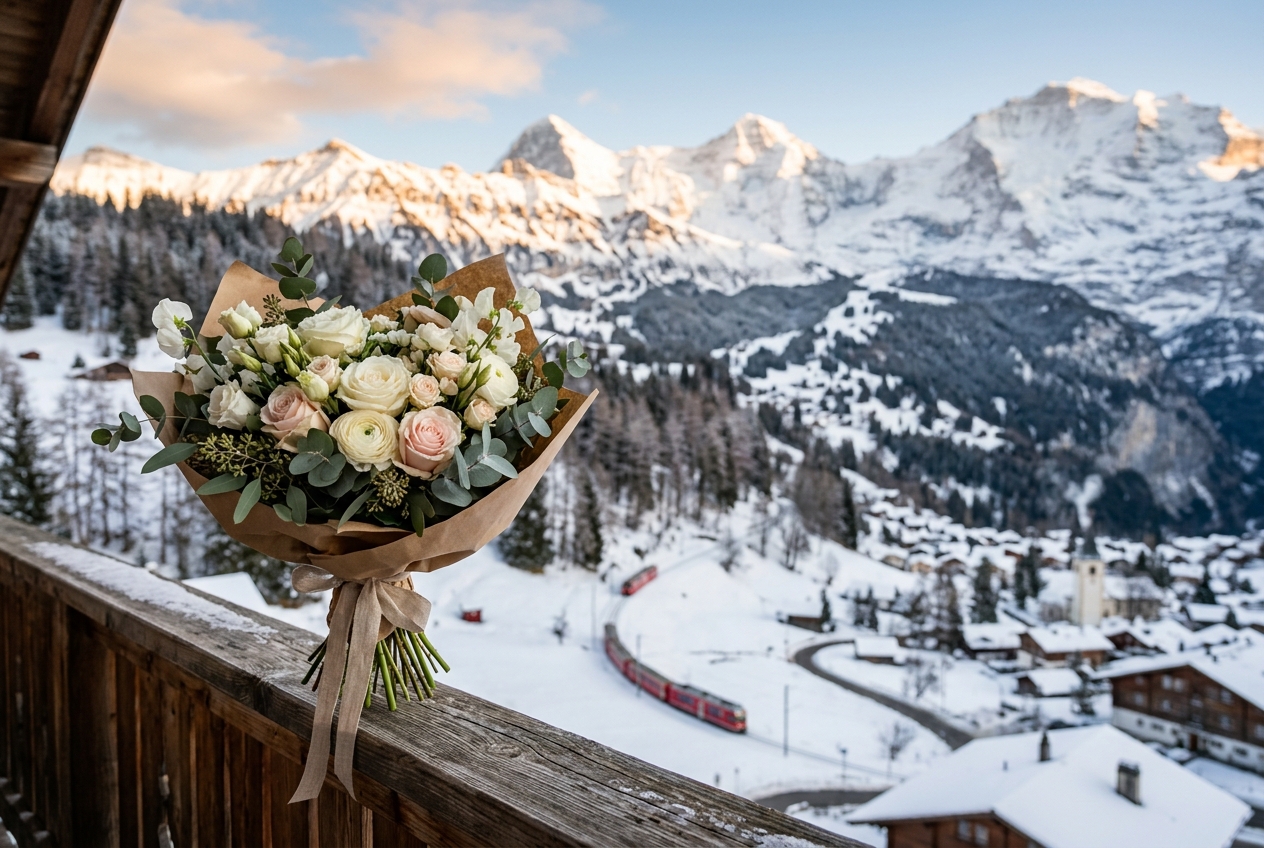
What to See in Genoa: A Guide to "La Superba" and Flower Delivery

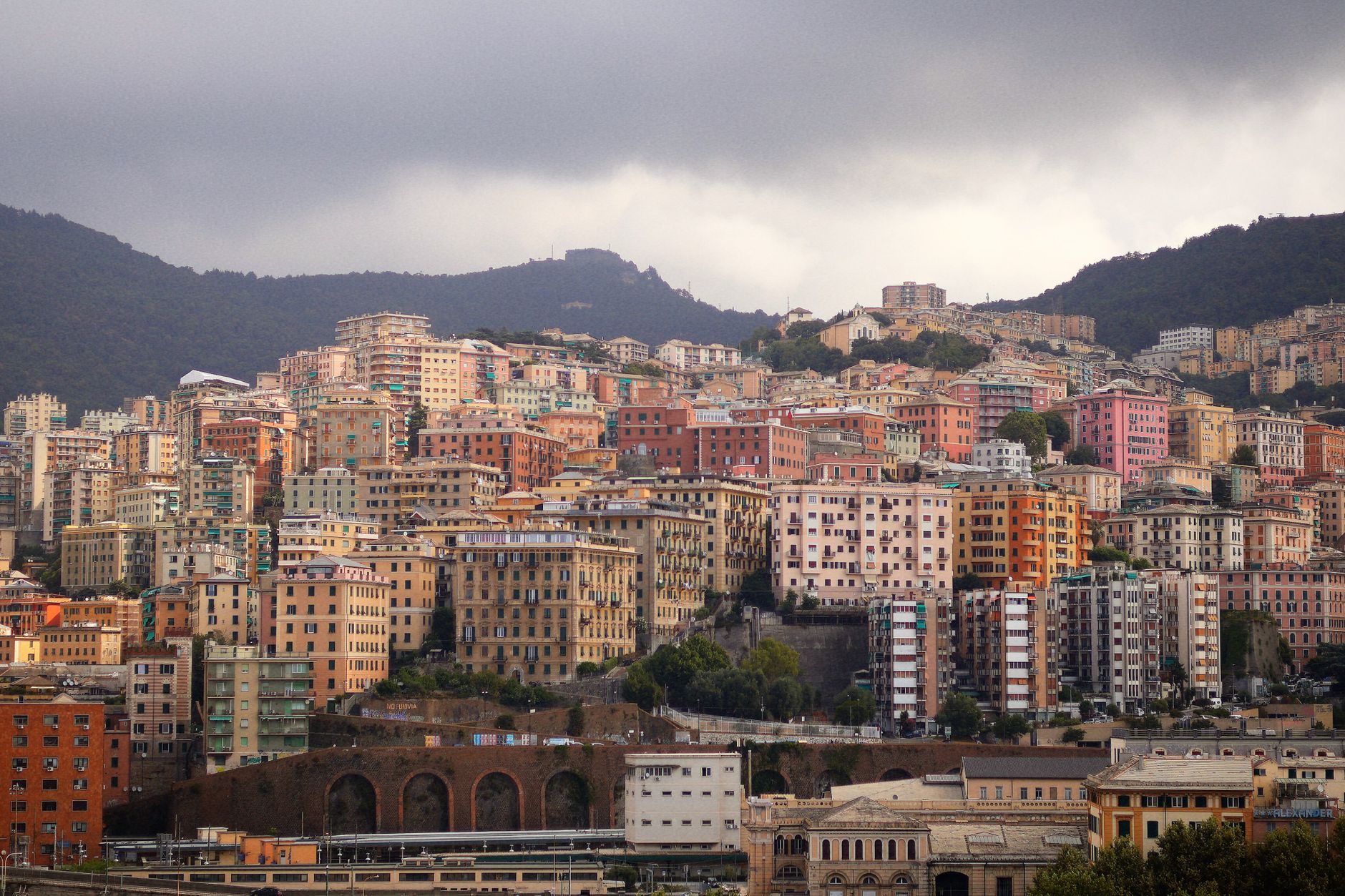
Genoa (Genova) is one of Italy's most underrated cities. The capital of Liguria, birthplace of Christopher Columbus, of pesto and of denim fabric, home to the country's largest old port and a true labyrinth of medieval alleys. Italians have long called it La Superba — "the Proud," "the Magnificent." It lacks the polished tourist gloss of Florence or Venice, but offers an authentic, slightly rugged maritime beauty, sumptuous palaces and the smell of focaccia from every bakery. This guide covers what to see in Genoa, where to walk and what to eat — and at the end you'll learn how to make your trip even warmer with one beautiful gesture.
If you'd like to delight a loved one in Genoa right away — the Genoa flower catalog or message us on WhatsApp.
A Little About Genoa and When to Go
Genoa stretches in a narrow band between the sea and the mountains — hence its verticality: funiculars, lifts and staircases link the lower town with the hills. Its historic centre is one of the largest in Europe, with the densest web of medieval caruggi alleys. The city is lively, portside, a little bohemian and not at all "museum-like."
The best time to visit is from April to June and from September to October, when it's warm but without the summer heat and crowds. Summer is hot and humid, but that's when the beaches of the Ligurian Riviera come alive. Winters are mild, with occasional rain. Thanks to its seaside position, Genoa's weather is comfortable almost year-round. One more plus: Genoa isn't yet overrun by tourists, so prices here are noticeably friendlier than in the well-trodden Venice or Florence, and the atmosphere is far livelier and more authentic.
The Historic Centre: San Lorenzo, De Ferrari and the Caruggi
The heart of Genoa is its Centro Storico, a huge UNESCO-protected historic centre.
The San Lorenzo Cathedral, with its black-and-white striped marble façade, is the city's main church; inside it keeps an unexploded wartime British shell as a symbol of a miracle.
Piazza De Ferrari is the grand square with a large round fountain, ringed by the Carlo Felice Opera House, the Doge's Palace and the stock exchange. It's a convenient place to start a walk.
The caruggi are the famous narrow alleys of the old town, where the balconies almost meet overhead. It's easy to get lost here (and that's the best thing to do): tiny workshops, focaccia bottegas, ancient churches and sudden little squares.
The Rolli Palaces on Via Garibaldi — the "street of kings": sumptuous 16th–17th-century aristocratic palazzi, part of which are UNESCO-listed. Some house museums with works by Rubens, Van Dyck and Caravaggio.
Porto Antico: the Old Port, the Aquarium and the Lanterna
Porto Antico — the Old Port, redeveloped to a design by the famous architect Renzo Piano. Today it's a lively waterfront with museums, cafés and marinas.
- The Genoa Aquarium — the largest in Europe: sharks, dolphins, penguins, jellyfish — a must for families with children.
- The Bigo — Renzo Piano's panoramic lift, rising to a rotating view over the port and the city.
- The Galata Maritime Museum — the Mediterranean's largest maritime museum, with a real submarine.
- The Lanterna lighthouse — Genoa's symbol, one of the oldest working lighthouses in the world (76 m tall).
This is the city's most maritime and photogenic spot, especially at sunset.
Boccadasse, Albaro and the Corso Italia Promenade
To feel a different, seaside Genoa, head east. Corso Italia is the elegant promenade of the Albaro district for walks along the sea. And at its far end hides Boccadasse — a tiny fishing village of colourful houses right by the water, boats on the pebbles and the best gelato with a view of the waves. It's the most romantic spot in Genoa and a favourite for sunsets and marriage proposals. There are almost no cars here — just the sound of the waves, the cries of the gulls and the smell of the sea; time seems to slow down. Pop into a local gelateria, grab a cone and head down to the water's edge — that's exactly how Genoese spend warm evenings.
Nervi: the Cliffside Walk and Parks
Further east lies Nervi — a green seaside district with one of Italy's most beautiful promenades. The Passeggiata Anita Garibaldi runs right above the cliffs and the sea, and beside it stretch the picturesque Nervi parks with historic villas and a rose garden. Quiet, green and very romantic — the perfect place to escape the city bustle. In spring the rose garden blooms, and in summer the parks host open-air concerts and festivals. A walk along the Anita Garibaldi promenade at sunset is one of the most underrated romantic routes in all of Italy.
Genoa — a Proud Maritime Republic: a Little History
Genoa didn't earn the nickname La Superba by chance. In the Middle Ages and the Renaissance it was one of Italy's four great maritime republics (alongside Venice, Pisa and Amalfi) and one of the richest cities in Europe. Genoese bankers lent to kings, and its merchants held trading posts across the Mediterranean and the Black Sea. It was here, in 1451, that Christopher Columbus was born — his presumed house-museum still stands by the Porta Soprana gate.
The republic's wealth is frozen in stone: the sumptuous Rolli Palaces, striped marble churches, a fortified port and the famous Banco di San Giorgio — one of the oldest banks in the world. Even the jeans we all wear are linked to Genoa: the sturdy blue fabric used for sailors' clothing was named after the French name for the city — "Gênes." Walking the caruggi and Via Garibaldi, you literally move through this history — and understand why the city is so proud of itself. That spirit of "restrained grandeur" is felt in everything, including the local aesthetic of bouquets: elegant, deep in colour, without unnecessary frills.
What to Eat
Ligurian cuisine is one of the brightest in Italy, and Genoa is its capital:
- Pesto alla genovese — the original sauce of basil, pine nuts, parmesan and olive oil; here it's served with trenette or trofie pasta.
- Focaccia genovese — a golden flatbread with olive oil and salt, eaten from early morning.
- Farinata — a thin chickpea-flour flatbread, the local street food.
- Pansotti with walnut sauce and fresh seafood — a must-try for foodies.
Wash it all down with local white wine, and be sure to grab focaccia "to go" for the walk. For dessert, try Genoese pandolce — a dense cake with candied fruit and nuts, baked here all year round, not just for the holidays.
Day Trips Nearby: Portofino and the Cinque Terre
Genoa is the ideal base for exploring the Ligurian Riviera. Half an hour to an hour away lie the coast's jewels:
- Portofino — the legendary harbour of yachts and colourful houses, a symbol of la dolce vita.
- Camogli and San Fruttuoso — cosy fishing towns and an abbey by the sea.
- The Cinque Terre — five postcard villages on the cliffs, a UNESCO site easily reached by train.
Such day trips beautifully complement the city itinerary. Many travellers use Genoa precisely as a convenient base: museums and caruggi in the morning, a train to Portofino or the Cinque Terre in the afternoon, dinner overlooking the port in the evening.
Getting to Genoa and Getting Around
The main air gateway is Cristoforo Colombo International Airport, named after Columbus and located just 6 km west of the centre, right by the sea. From there it's an easy 20–30 minutes into town by taxi or the Volabus shuttle. Genoa also sits on the main rail line: it's easy to arrive by train from Milan, Turin, Pisa and the Riviera (the Genova Piazza Principe and Genova Brignole stations).
Because of the hilly terrain the city "grows upward," so there are historic funiculars, public lifts and a rack railway — an attraction in themselves, with great panoramas. The centre is best explored on foot (cars barely enter the caruggi), while a metro, buses and taxis serve the outer districts.
Practical Tips for Your Trip
- Footwear. Genoa is a city of staircases and cobblestones — bring comfortable shoes for long uphill-and-down walks.
- The caruggi. It's easy to get lost in the old-town labyrinth — part of the fun, but keep a map on your phone handy; in the evening stick to the livelier streets.
- Focaccia. Real focaccia and farinata are eaten in the morning and "on the go" — don't miss the bakeries (panificio) in the alleys.
- Panorama. Ride the Bigo lift or the funicular up to Spianata Castelletto for the best views over the rooftops and the port.
- Weather. Even in summer it can be cool by the sea in the evening — a light jumper won't hurt.
What to Bring Home from Genoa
From Genoa and Liguria people usually bring back gastronomic souvenirs: a jar of real pesto alla genovese, Ligurian olive oil, dried herbs, sun-dried tomatoes and local white wine. "Maritime" souvenirs, ceramics and, of course, nods to denim are popular too (the word jeans comes from the French name for Genoa — Gênes). The best places to shop are the old-town shops and the Mercato Orientale. And for loved ones back home, the best "reverse souvenir" is attention: a bouquet sent to them while you wander "La Superba" also becomes part of your trip.
A Sample Plan: How to Spend 2–3 Days
- Day 1. The historic centre: Piazza De Ferrari, the San Lorenzo Cathedral, the caruggi and the Rolli Palaces on Via Garibaldi.
- Day 2. Porto Antico: the Aquarium, the Bigo lift, the Maritime Museum; in the evening, sunset by the Lanterna.
- Day 3. Sea and romance: the Corso Italia promenade, Boccadasse, the Nervi parks — or a trip to Portofino.
This rhythm gives you history, the sea and real Ligurian food.
Romantic Genoa — and a Beautiful Gesture
Genoa is made for romance: sunsets in Boccadasse, dinners overlooking the port, walks along the cliffside promenade of Nervi, and quiet caruggi where it's easy to get lost together. This is exactly the place where you'll want to surprise someone you love — and flowers are perfect for it.
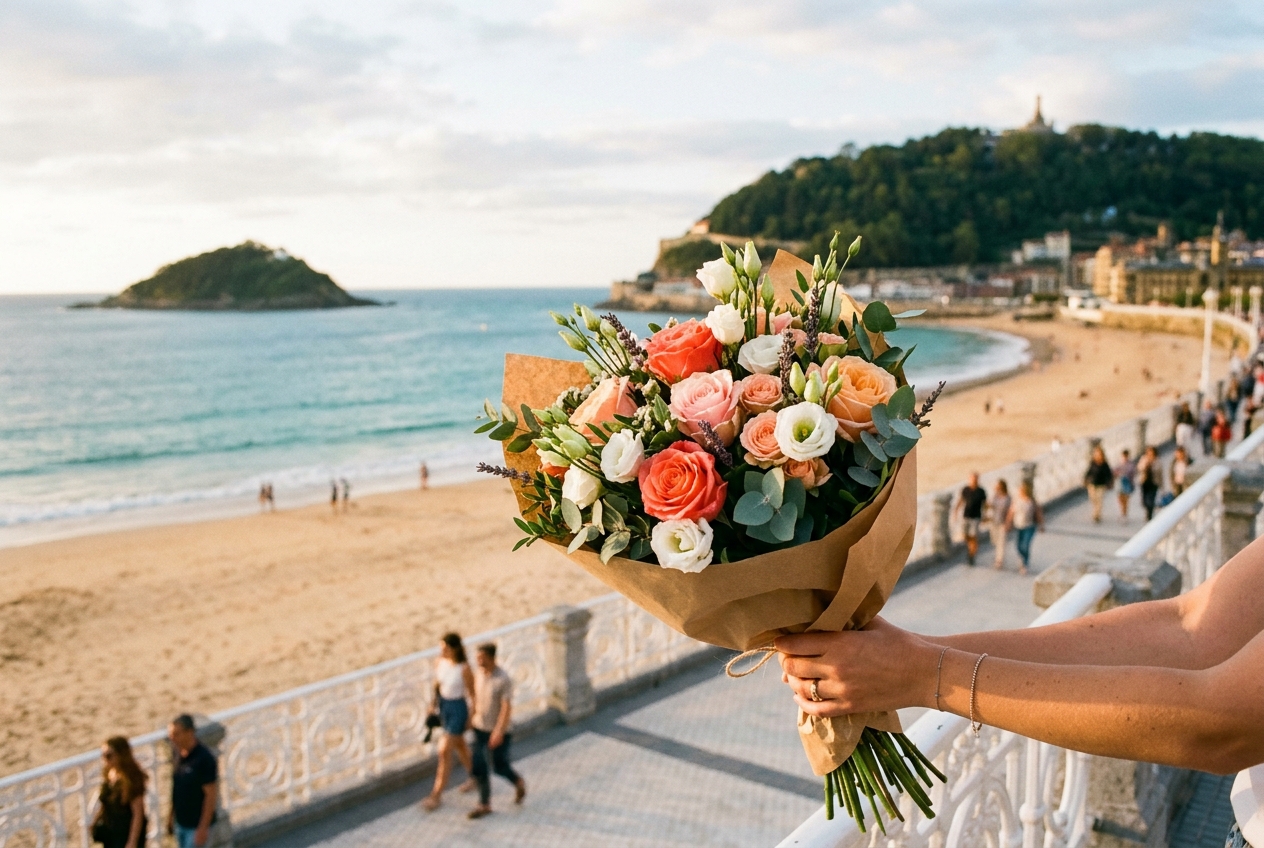
Picture this: you return to the hotel after a day of walking, and a fresh bouquet with a card is already waiting in the room. Or your partner comes down to dinner at a seaside restaurant and finds roses on the table. Or you're planning a marriage proposal at sunset in Boccadasse, and the bouquet becomes part of the most important moment. These details turn a trip into a lifelong memory.
How to Order Flowers in Genoa
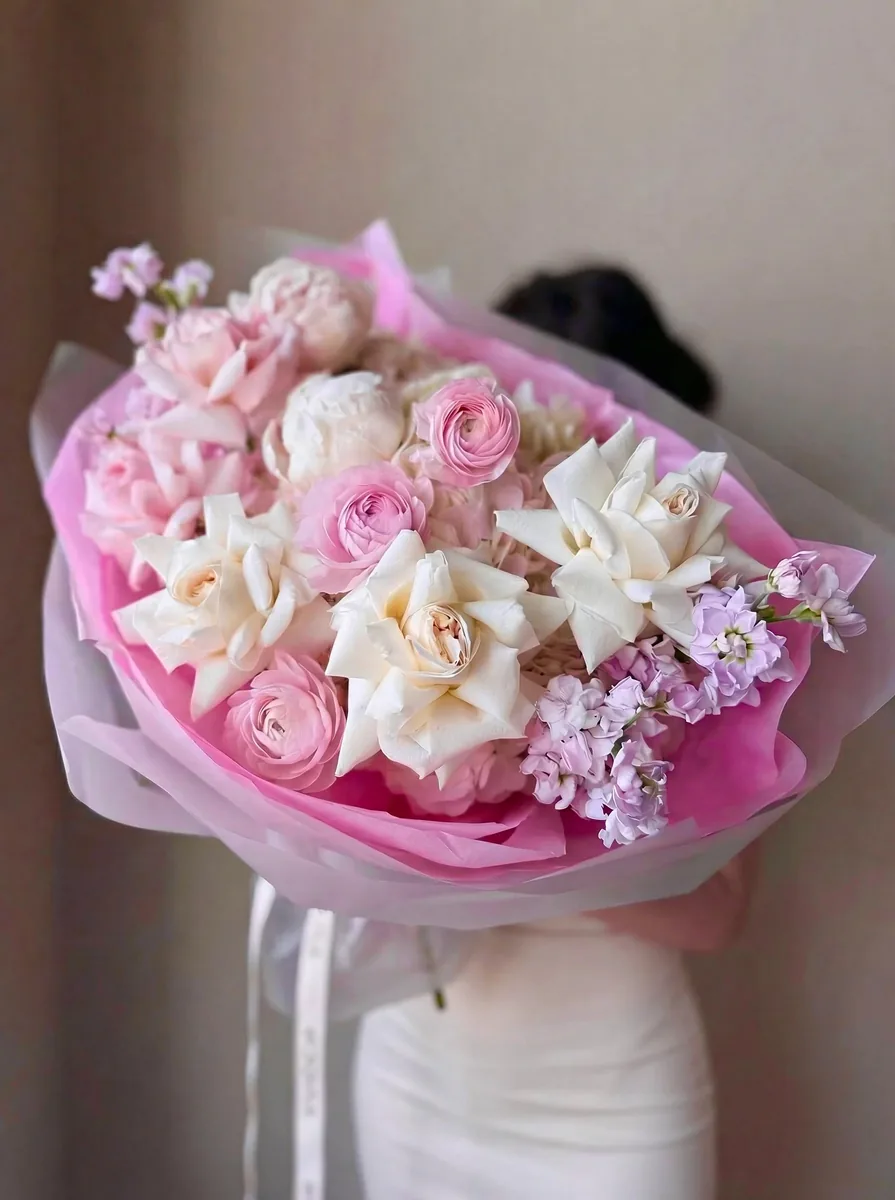
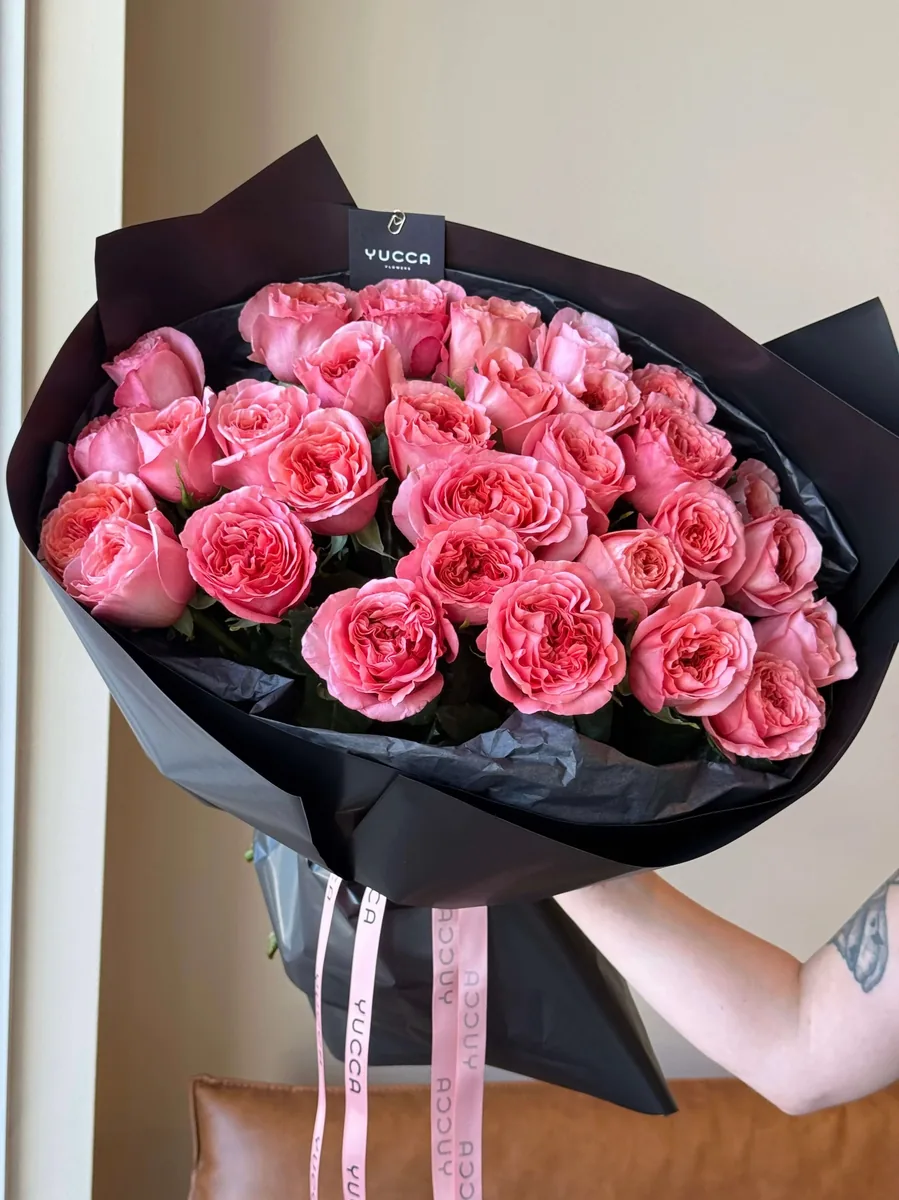
YUCCA Flowers delivers fresh bouquets across all of Genoa — to hotels, apartments, restaurants and the Old Port marinas. We work in Russian and English, so ordering a surprise is easy even from another country.
Hotel delivery (Flowers to Hotel). The most popular scenario: the bouquet waits in the room on arrival or after a walk. We deliver to the Grand Hotel Savoia, Hotel Bristol Palace, Meliá Genova, NH Collection Genova Marina and others — coordinating with reception.
Romance and proposals (Romantic Flowers). We'll help arrange a surprise at dinner or at sunset in Boccadasse, add a handwritten card and, if you wish, send a photo of the moment.
Birthdays (Birthday Flowers). Marking a date away from home is nicer with flowers. We'll pick a bright festive bouquet and deliver it on time.
Weddings (Wedding Flowers). Genoa and the Ligurian Riviera are a beautiful setting for ceremonies. We create bridal bouquets and floral styling, including for seaside weddings.
How Much It Costs and How It Works
Prices are in euros: compact bouquets start from €84, medium arrangements are roughly €258–494, and premium bouquets of roses, peonies, hydrangeas and lilies are from €538 upwards. City delivery is usually included. You can order in a couple of minutes:
- Choose a bouquet in the Genoa catalog or describe your idea on WhatsApp.
- Give the address (hotel, restaurant, apartment or a marina berth) or the recipient's name and phone.
- Pay by card from any country, crypto or transfer.
- Get a photo of the finished bouquet before delivery and confirmation of hand-over.
Our florists choose fresh, hardy varieties so the bouquet lasts longer.
Bouquets for Genoa — With Real Prices
A few popular options — from elegant to prestigious. Tap any bouquet to open it in the catalog.
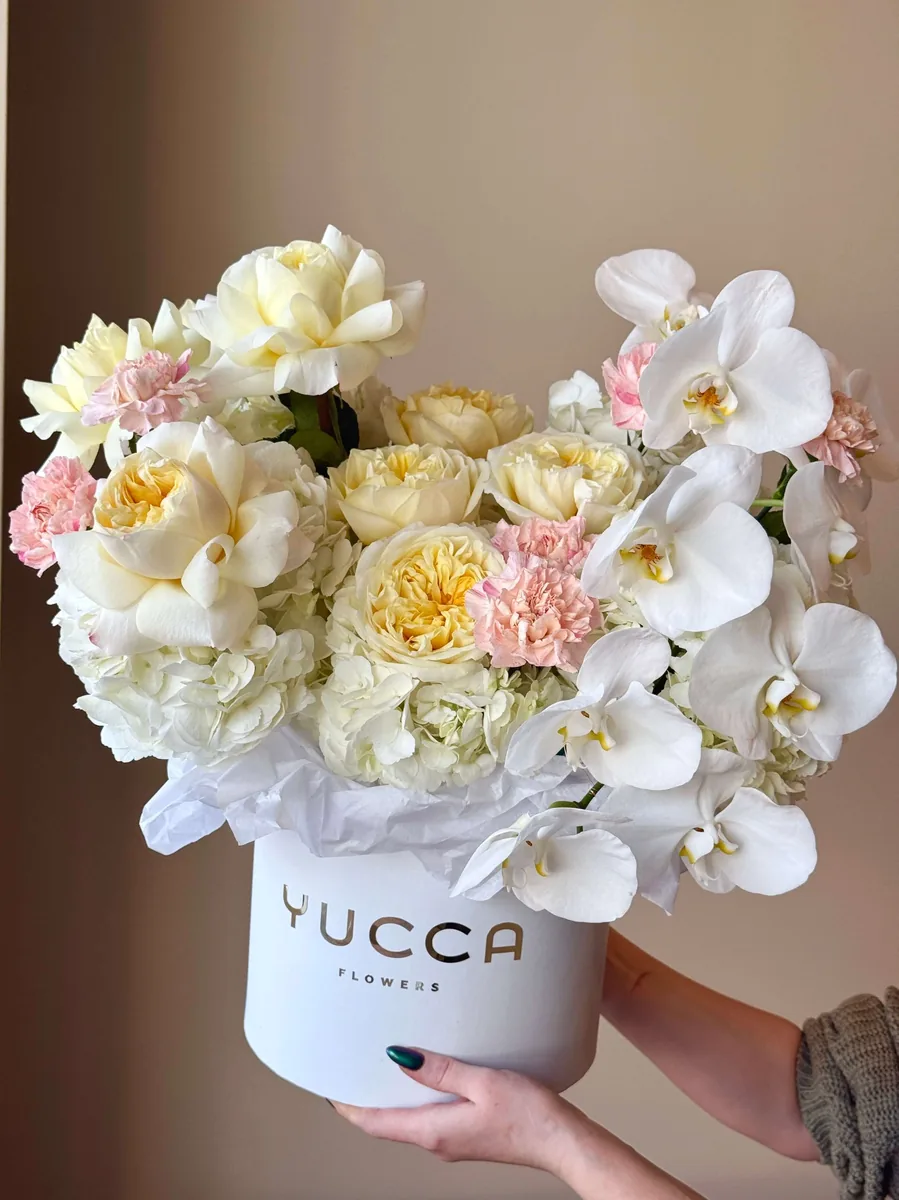
Genova Blu
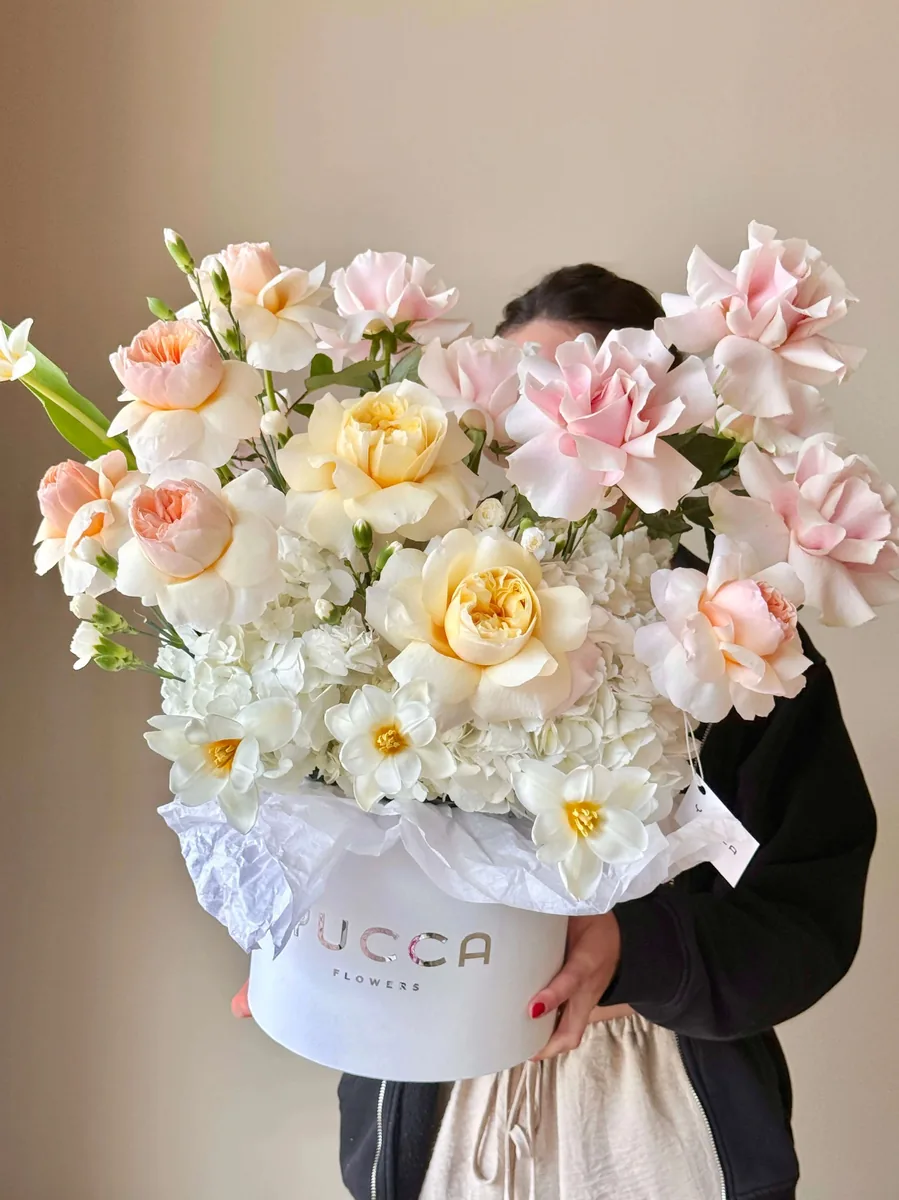
Boccadasse
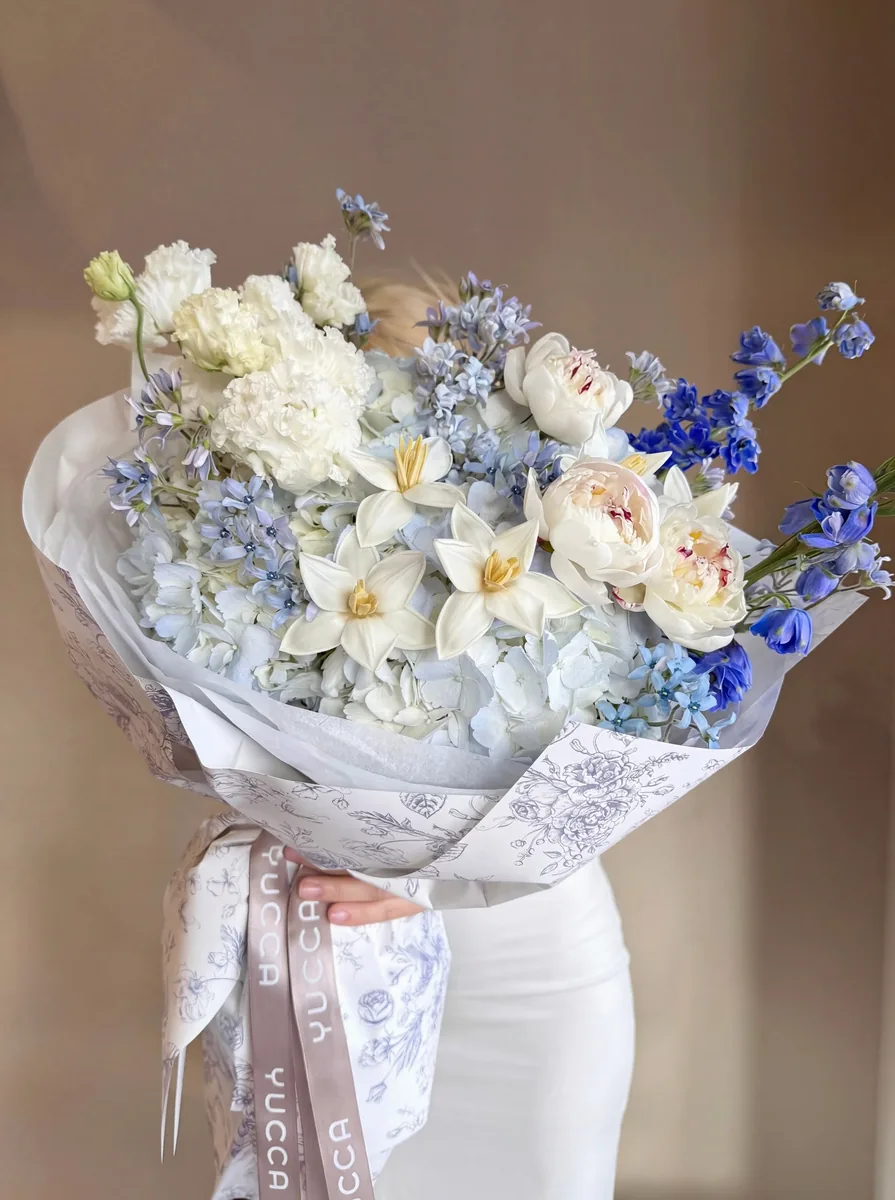
Corso Italia
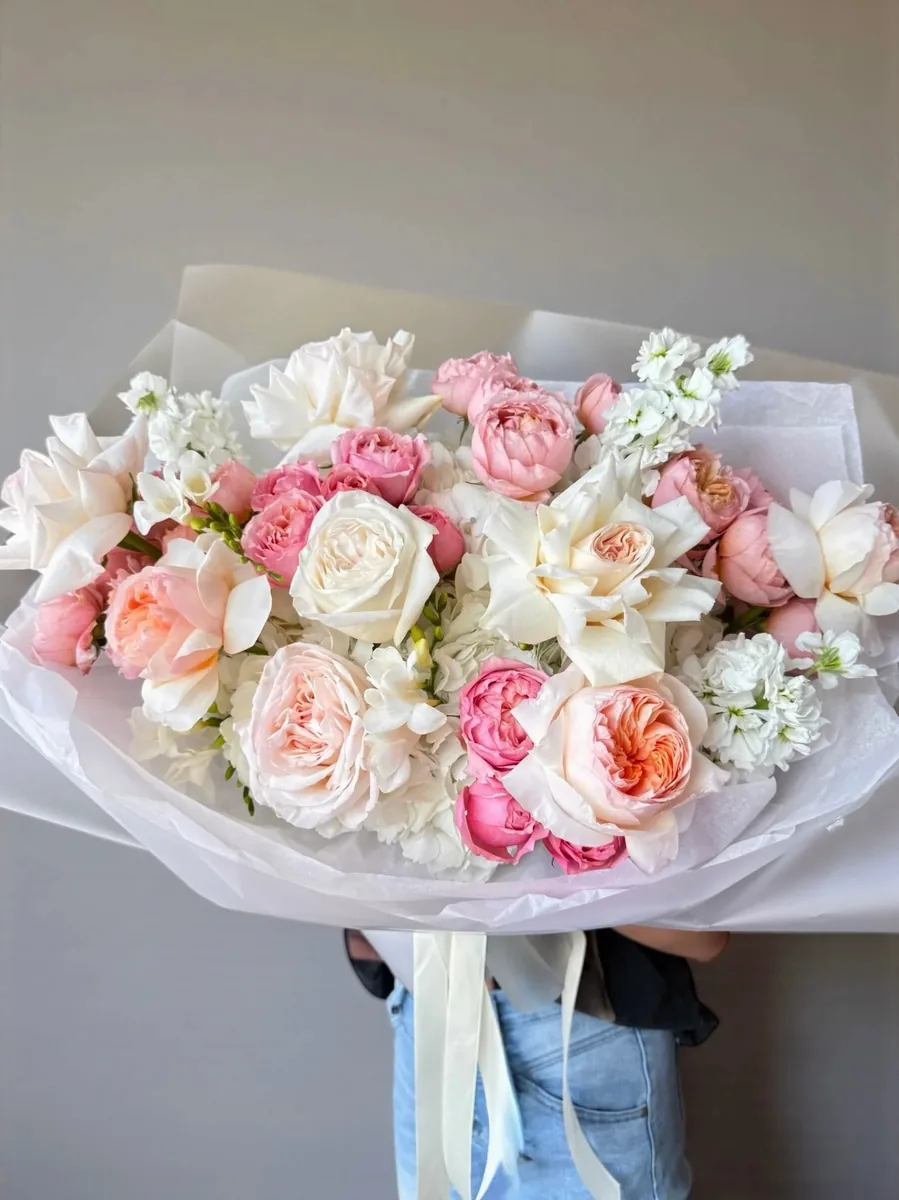
Riviera
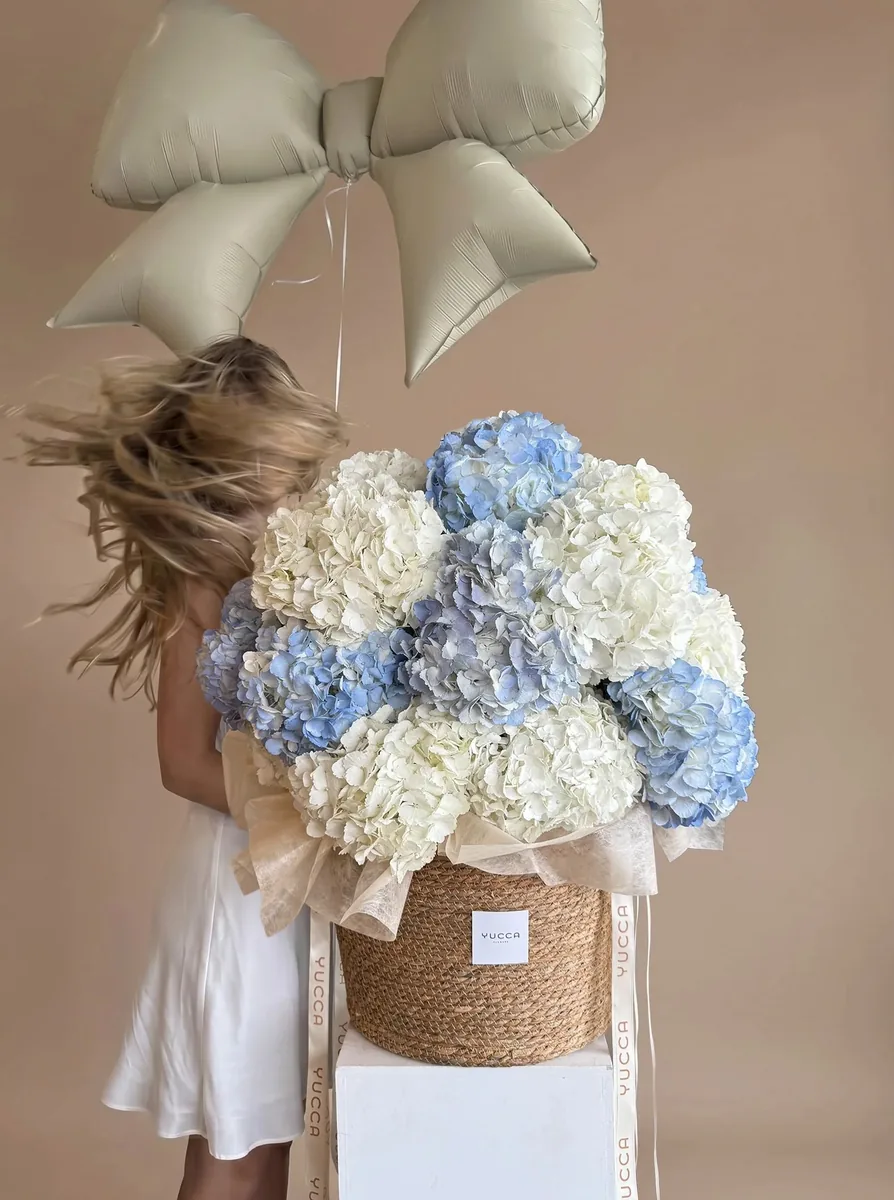
Palazzi dei Rolli
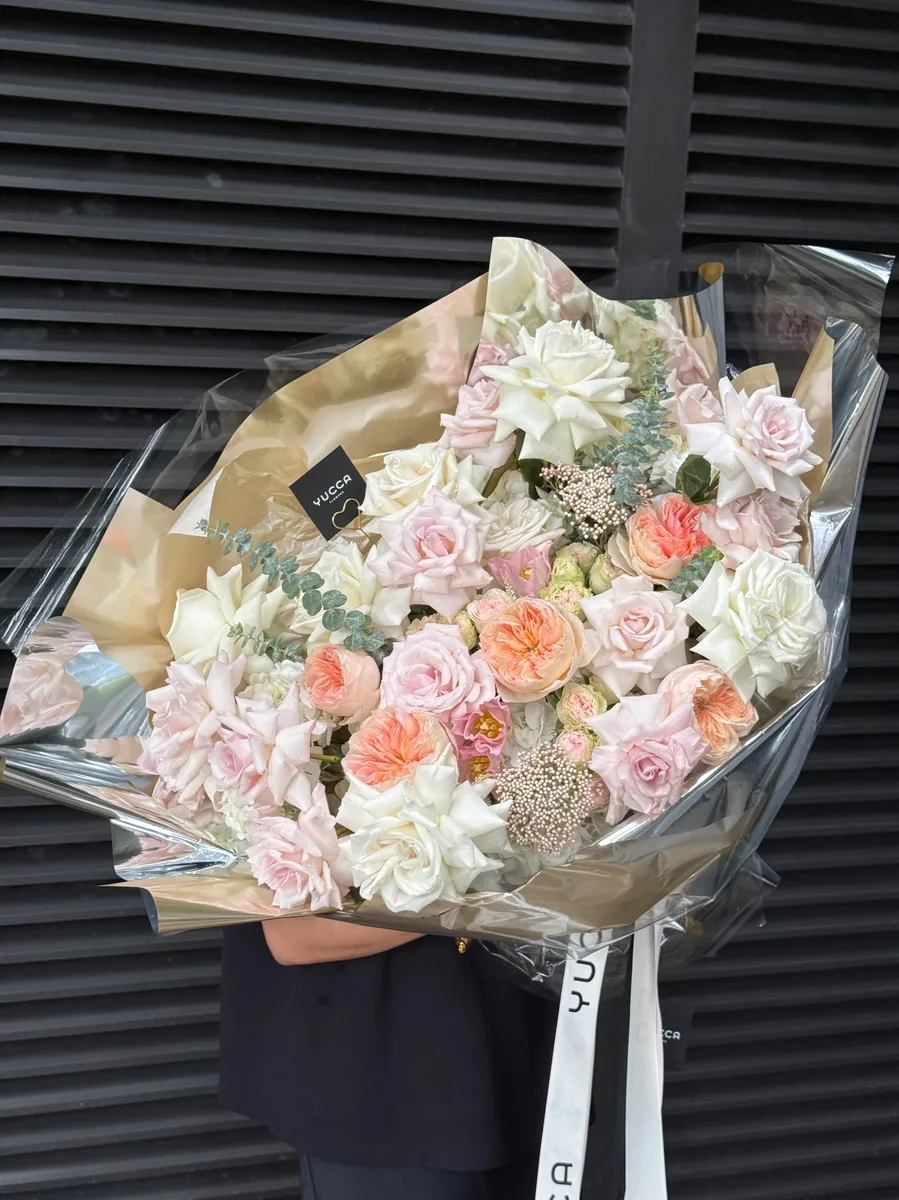
Royal Genoa
The Genoa catalog has many more bouquets for any occasion and budget.
FAQ — Genoa and Flowers
When is the best time to visit Genoa? Ideally April to June and September to October — warm but without the summer heat and crowds. Winters are mild; summer is beach season on the Riviera.
What must I see in Genoa? Piazza De Ferrari and the San Lorenzo Cathedral, the caruggi and the Rolli Palaces, Porto Antico with the Aquarium and the Lanterna lighthouse, Boccadasse and the Nervi parks.
Can I order flower delivery to a Genoa hotel? Yes, it's the most frequent order. Give the hotel name and room number — we coordinate hand-over with reception.
Which currency are bouquet prices in? In euros (€). You can pay by card from any bank worldwide, crypto or transfer. Bouquets start from €84.
Do you deliver the same day? Yes, across the historic centre and most areas we usually deliver the same day — within 1–2 hours of confirmation.
Will you send a photo of the bouquet before hand-over? Yes, always — before the courier sets off you'll see the finished arrangement.
Flowers in Other Italian Cities
YUCCA Flowers works across Italy — handy when your loved ones are travelling:
- Portofino and the Amalfi Coast — the coast's jewels nearby.
- Florence, Verona and Bologna — the Renaissance and the north.
- Lake Como — the Lombardy lakes.
Order Flowers in Genoa
Want to make a trip to "La Superba" truly special? Open the Genoa flower catalog or message us on WhatsApp — we'll help choose the perfect bouquet and deliver on time, with a photo before hand-over. You can order from anywhere in the world.
YUCCA Flowers — flower delivery in Genoa, Italy: San Lorenzo, Piazza De Ferrari, the Old Port, the Aquarium, Boccadasse, Nervi and the whole city. Same-day delivery, to hotels and marinas, payment from any country in euros, photo before delivery.
READER EXCLUSIVE
5% off your first order
Because you came from our blog, enjoy 5% off your first order. Just mention promo code BLOG5 to the florist on WhatsApp.
Popular bouquets in Genoa
Same-day delivery · photo before sending