Roses or Peonies — Which to Choose, and Where the Tradition of Giving Flowers Came From

Roses or peonies — probably the most common question a florist ever hears. Both flowers are beautiful, both are considered "royal", and both are perfect for romantic occasions. But behind that similar role lie very different characters: the rose is a universal symbol of love, available all year round, while the peony is a capricious seasonal aristocrat that many people are happy to wait for through its short spring. In this guide we'll honestly compare roses and peonies across all the parameters that matter — seasonality, vase life, fragrance, symbolism, budget and occasion — and help you decide which suits your situation. Along the way we'll also tell you where the tradition of giving flowers actually came from: it has a surprisingly long and beautiful history.
Want to pick a bouquet right away — message us on WhatsApp or open any city catalogue: Antalya, Istanbul, Mykonos. We'll help you choose between roses and peonies for your occasion.
Where the Tradition of Giving Flowers Came From
The custom of presenting flowers is older than most of today's countries. Archaeologists find traces showing that people adorned one another — and their dead — with flowers back in prehistoric times: Palaeolithic burials contain pollen that chance alone cannot explain. Even then a flower was neither food nor tool but a pure gesture — a sign of care and remembrance.
In Ancient Egypt, flowers became part of ritual. The lotus — a sacred symbol of the sun and rebirth — was woven into garlands, used to decorate temples, offered to the gods and presented to guests at feasts. The Egyptians were among the first to turn a bouquet into a meaningful message: particular flowers stood for particular wishes.
Ancient Greece and Rome made flowers a language of love and glory. The Greeks dedicated the rose to Aphrodite, the goddess of love, and crowned victors and poets with wreaths of laurel and roses. In Rome, roses flowed freely at banquets: petals were scattered over couches and floors, and garlands were woven for lovers. It is from there that the rose inherited its enduring reputation as the flower of passion.
In the East, the tradition took its own path. In China the peony was revered as the "king of flowers" — a symbol of wealth, honour and high rank; it was painted on imperial robes and given as a mark of deep respect. In Japan the art of arranging flowers grew into a whole philosophy — ikebana — where it is not volume that matters but meaning, line and the empty space between the blooms.
The true golden age of the "language of flowers" came in the Victorian era of the 19th century. In a reserved society where feelings were not spoken aloud, flowers became a secret code. An entire science appeared — floriography: dictionaries were published in which every flower, its colour and even which hand you passed it with carried a special meaning. A red rose meant passionate love, a peony meant bashfulness and a happy marriage, and a badly chosen bouquet could accidentally "say" quite the wrong thing. Lovers exchanged bouquet-letters and read them like genuine messages.
The 20th century democratised flowers: greenhouses, air freight and international trade made roses and peonies available at any time of year and almost anywhere in the world. But the essence of the gesture did not change. We still give flowers to say what is hard to put into words: "I love you", "congratulations", "thank you", "I'm thinking of you". Fashions and logistics change; the meaning does not. And that is exactly why the choice between a rose and a peony is not only about beauty, but about the message you want to send.
The Rose: a Universal Symbol of Love
The rose is the most recognisable flower in the world and the absolute champion by number of bouquets given. Its main strengths are year-round availability and a huge range of choice.
Seasonality. Roses are grown in greenhouses continuously, so you can order them in any month — in July as easily as in December. This makes the rose a "fail-safe" option when the occasion doesn't line up with a season.
Vase life. With proper care roses last 7–12 days, and some varieties longer. They are one of the hardiest cut flowers, which matters if a bouquet has to "survive" until the celebration or travel a distance.
Variety. The rose comes in dozens of shades and forms: from classic tall Dutch roses to lush David Austin garden roses (such as the peach Juliet variety), beloved at weddings. There are spray roses, garden roses and peony-shaped roses (which look like peonies but are available all year round!).
Symbolism. Here everything depends on the colour: red is passion and declaration, pink is tenderness, white is purity and respect, burgundy is a deep, mature feeling. There's more on this in our guide "Flower Meanings".
Quantity as a statement. With roses the language of numbers works: a single stem says "you're the only one", 15 is a warm greeting, 51 or 101 roses is a grand romantic gesture. We broke down the numbers by occasion in "Roses in Mykonos" and "Roses in Antalya".
The Peony: a Seasonal Aristocrat
The peony is a flower you fall in love with once and for all. Lush, fragrant and full of layered petals, it looks luxurious and touching at the same time. But that beauty comes at a price — it is temperamental.
Seasonality. This is the main difference from the rose. The classic peony season is short — from late spring to early summer (roughly May–June in the Northern Hemisphere). Imports from different countries help stretch the season, but on the whole the peony remains a seasonal flower, and in winter it is either unavailable or noticeably more expensive.
Vase life. Peonies are more demanding than roses. As cut flowers they last on average 5–8 days, they love cool conditions and cannot bear heat. But they have a magical quality: they are cut as tight "balls" and open up dramatically right in the vase, turning from a bud into a huge, lush bloom.
Fragrance. Here the peony often wins: many varieties have a rich, fresh, slightly sweet scent that fills a room. Not all roses are so fragrant.
Symbolism. The peony traditionally symbolises a happy marriage, prosperity, honour and romantic tenderness. In Eastern culture — wealth and high status. That makes it a wonderful choice for weddings, anniversaries and declarations of love. There's a detailed breakdown in our guide "Peonies in Antalya".
Roses vs Peonies: an Honest Comparison
To make the choice easier, let's compare them across the key parameters.
Availability. The rose — all year round. The peony — mainly in season (spring to early summer). If the occasion falls in winter, the rose is almost the only option, or choose peony-shaped roses as a substitute.
Vase life. The rose lasts longer (7–12 days versus 5–8 for the peony). If a bouquet has to keep giving joy for a long time or survive travel, the rose is more reliable.
Fragrance. The peony is more often fragrant and "fills" a space. There are very scented rose varieties too, but on average the peony smells stronger.
Appearance. The rose is classic and elegant, with a recognisable silhouette. The peony is lush and voluminous, a "cloud" of petals; a single peony visually replaces several flowers.
Budget. In season, peonies can cost about the same as roses, but out of season the peony is more expensive. The rose is more predictable in price all year round.
Symbolism of the occasion. The rose is a universal language of love and passion (especially the red one). The peony means tenderness, a happy marriage, romance without pomp; it's ideal for weddings and anniversaries.
The one-line verdict: if you need a reliable, year-round, recognisable symbol of love, go for roses. If you want a luxurious, fragrant, seasonal "wow" bouquet and you're in spring, choose peonies.
Which to Choose for a Specific Occasion
A first date, a declaration of love. Red or pink roses are the foolproof classic choice, read unambiguously. If it's spring and you want to surprise, peonies will make a powerful impression.
A wedding. Both are wonderful. Peonies (in season) and David Austin peony-shaped garden roses are favourites of wedding floristry for their fullness and soft shades. Out of season — roses in the right palette.
An anniversary. Red or burgundy roses symbolise a mature feeling; a meaningful quantity (say, one per year together) adds significance. In spring — peonies as a romantic accent.
A birthday. Here you have more freedom: bright roses or lush peonies in the recipient's favourite colour. Go by their taste, not by the rules.
An apology, "I'm sorry". The classic is roses (white or pink as a sign of sincerity). Peonies also fit, with their softness.
A business or restrained occasion. Roses in a calm palette (white, cream) are safer and more universal; the peony reads as more personal and celebratory.
Why Not Both at Once?
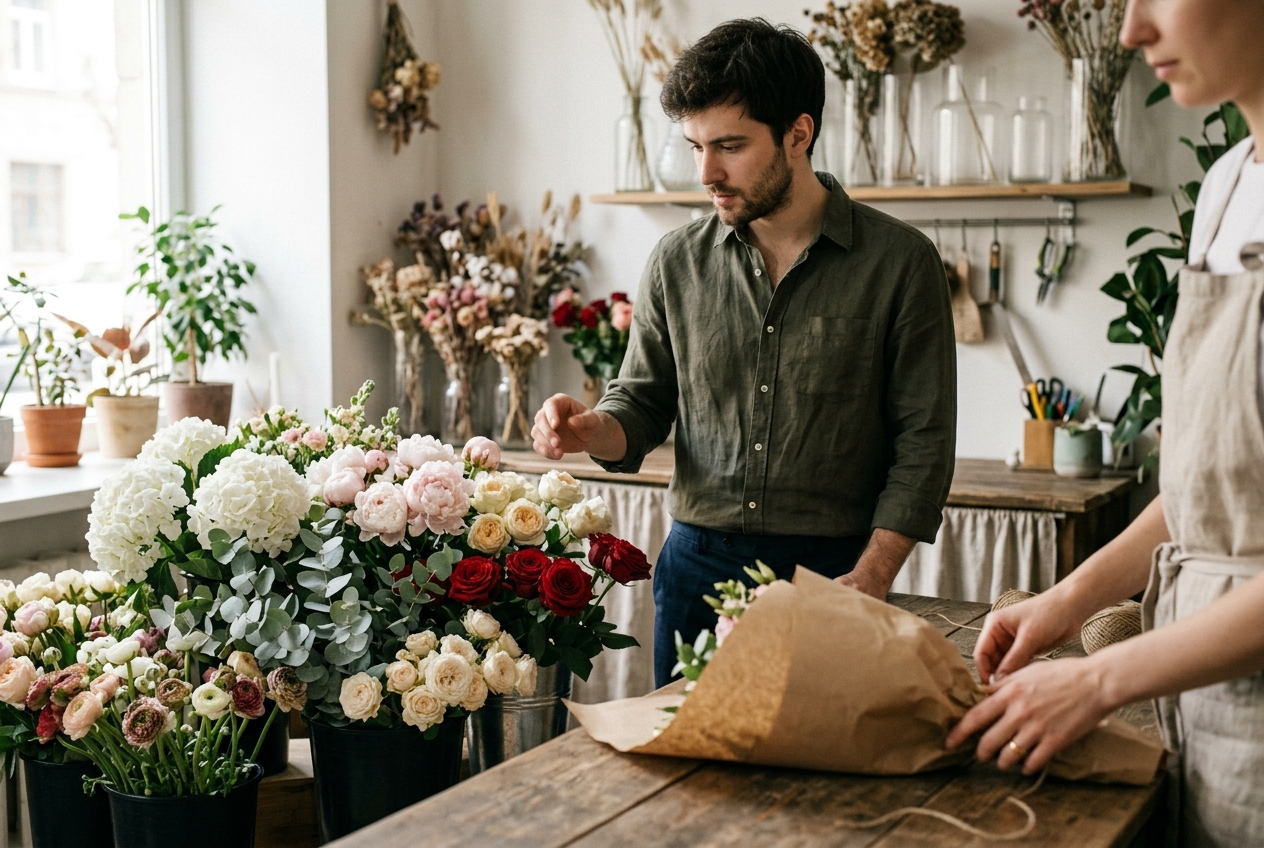
Often the best answer to "roses or peonies" is "both". Mixed bouquets of roses and peonies are among the most beautiful: the roses give structure and staying power, the peonies give volume and fragrance. Such a bouquet looks rich, holds its shape longer (the roses "hold" the arrangement when the peonies begin to fade) and suits almost any romantic occasion. If you're unsure, ask the florist to make a mix, and you'll get the best of both flowers.
How to Make a Bouquet Last
Whether you have roses or peonies, the basic care rules are the same:
- Put the flowers in a clean vase with cool water as soon as you receive them.
- Cut the stems at a 45° angle with a sharp knife and refresh the cut every 2–3 days.
- Remove any leaves that would sit below the waterline so the water doesn't spoil.
- Change the water every couple of days.
- Keep the bouquet away from direct sun, draughts, heaters and ripe fruit (which releases ethylene and speeds up wilting).
Peonies especially need cool conditions — in a hot room they open and drop their petals faster. There's more in our guide "How to Keep Flowers Fresh Longer".
FAQ — Roses or Peonies
Which is more expensive — roses or peonies? In season (spring to early summer) peonies cost about the same as roses, but out of season the peony is noticeably more expensive because of imports. Roses are stable in price all year round.
Which lasts longer in the vase? Roses: on average 7–12 days versus 5–8 days for peonies. Roses are more reliable if the bouquet has to last a long time or travel.
Can I order peonies in winter? Sometimes yes, thanks to imports from other countries, but the choice is smaller and the price higher. A good year-round alternative is peony-shaped roses, which look very much like peonies.
Which to choose for a wedding? In season — peonies and David Austin peony-shaped garden roses (full, soft shades). Out of season — roses in a suitable palette. Both look beautiful.
Which is more romantic? Red roses are the most direct symbol of passion and love. Peonies speak of tenderness and a happy marriage — romance without pomp. It all depends on the message you want to send.
Can I mix roses and peonies in one bouquet? Yes, and it's one of the most successful options: the roses give staying power and structure, the peonies give volume and fragrance.
Which flower is more fragrant? Usually the peony — many varieties have a rich, sweetish scent. But there are very fragrant rose varieties too; ask your florist.
Where did the tradition of giving flowers come from? It goes back to antiquity: flowers adorned even prehistoric burials, Egyptians wove garlands of lotus, the Greeks dedicated the rose to Aphrodite, and the Victorian era gave rise to the "language of flowers" — floriography — where every bouquet was a coded message.
The Verdict: How to Choose
If you need a reliable, recognisable and year-round symbol of love, choose roses. If you want a luxurious, fragrant, seasonal bouquet and you're in spring, go for peonies. And if you can't decide, order a mix and get the best of both. The main thing is to remember that you're continuing a tradition thousands of years old: you're giving not just flowers, but a feeling.
Related reading
- "Peonies in Antalya" — everything about the most romantic flower of the season.
- "Roses in Mykonos" — the 15/51/101 rose breakdown by occasion.
- "Flower Meanings — What Each Colour Says" — the language of colour in floristry.
- "How to Choose the Perfect Bouquet" — occasion, budget, presentation.
- "How to Keep Flowers Fresh Longer" — so the gift lasts longer.
Order a Bouquet of Roses or Peonies
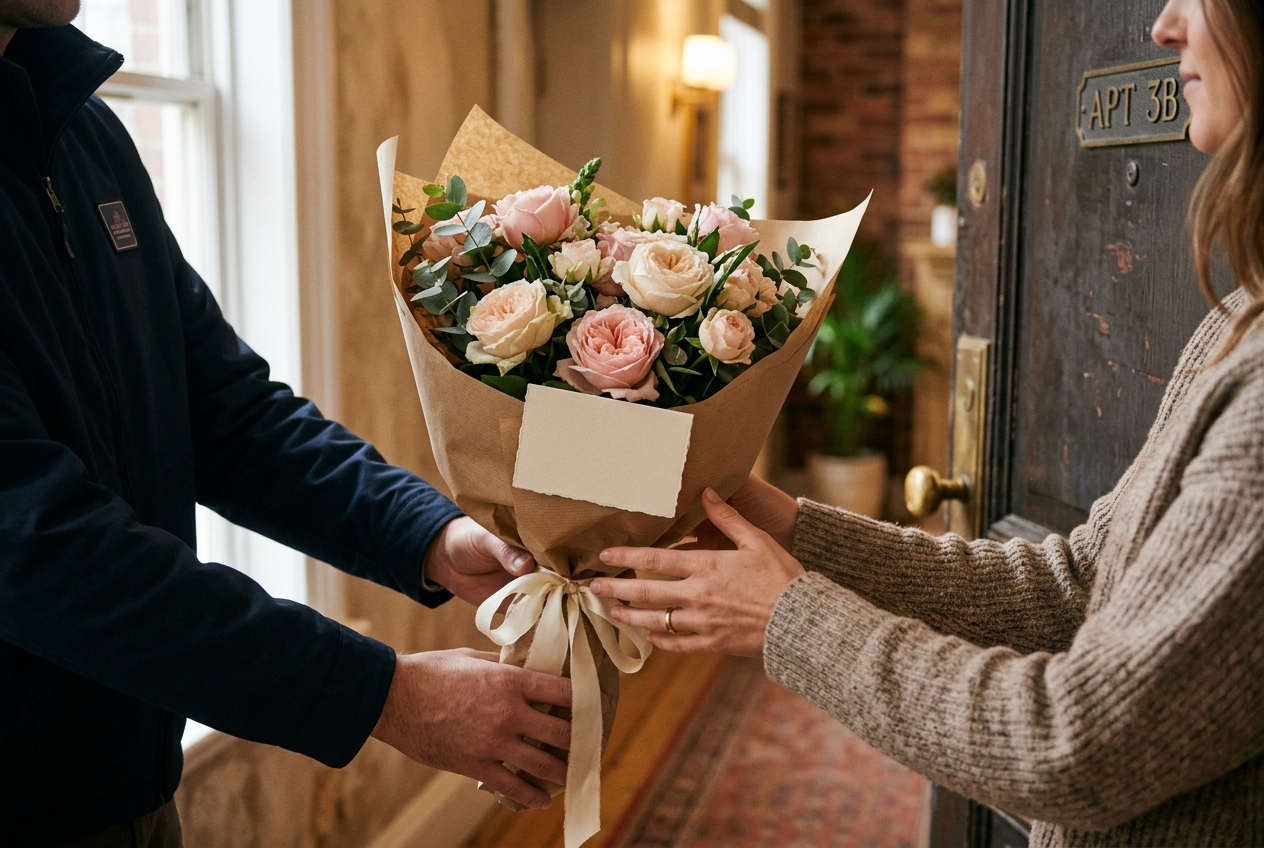
Now that you know the difference, choosing is easier. Open your city's catalogue — Antalya, Istanbul, Bodrum, Barcelona, Mykonos — or simply message us on WhatsApp: tell us about the occasion, and we'll let you know what's in season and send a photo of the bouquet before delivery.
YUCCA Flowers — flower delivery across Turkey, Spain, Greece, the UAE and beyond. Roses, peonies, peony-shaped roses, tulips and orchids in any palette. Photo before sending, delivery from 1 hour. Roses or peonies — which to choose, and where the tradition of giving flowers came from.
READER EXCLUSIVE
5% off your first order
Because you came from our blog, enjoy 5% off your first order. Just mention promo code BLOG5 to the florist on WhatsApp.
How many roses to give — a quick cheat-sheet
The number of roses is a language. Here's how it's read.
"Just because", a date, a dinner. A light, elegant gesture.
A declaration, anniversary, apology. The most popular size.
Engagement, wedding anniversary, a big surprise.
A marriage proposal, a large villa celebration.